Manchester City have undergone a clear tactical shift under Pep Guardiola, moving away from the wide, methodical positional play that defined their previous dominance and toward a more compact, vertical, and flexible game model. This transition is not cosmetic. It is rooted in structural adjustments, changes in spacing, and an acceptance that the modern game requires faster vertical threat, greater efficiency in transitions, and more flexible defensive behaviors than the carefully choreographed positional dominance that defined City between 2017 and 2023. The result is a Manchester City side that attacks and defends with an updated logic — still rooted in Guardiola’s principles, but shaped by the demands of opponents who press higher, transition faster, and defend more aggressively than ever before.
On paper, City remain a 4-2-3-1 side with Donnarumma in goal; Dias and Gvardiol in central defense; Nunes and O’Reilly as fullbacks; Gonzalez and Bernardo Silva in midfield; Foden as the No. 10; Doku and Cherki out wide; and Haaland as the striker.

Yet their functional structure — the way they occupy space, manipulate pressure, and control transitions — has changed far more drastically than the formation suggests.
This analysis explores how Guardiola has rebuilt City’s attacking, defensive, and transitional behaviors into a system that is sharper, more direct, and more suited to the demands of elite football today.
Offensive Tactics
Low Build-Up
City’s low build-up often takes the form of a 4-3-2-1 formation.
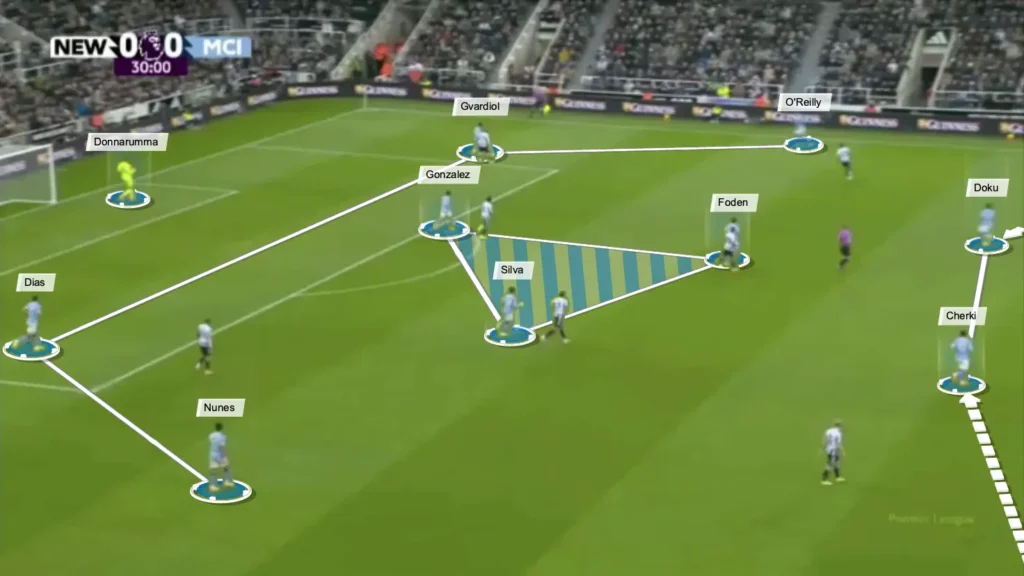
Foden drops from the No. 10 position to play alongside Bernardo Silva and Nico Gonzalez, creating a deeper midfield trio that supports circulation and offers short options under pressure. Doku and Cherki invert extremely early, moving into central zones where they help create numerical advantages against the opposition midfielders, which is crucial when opponents try to press City with high-intensity structures.
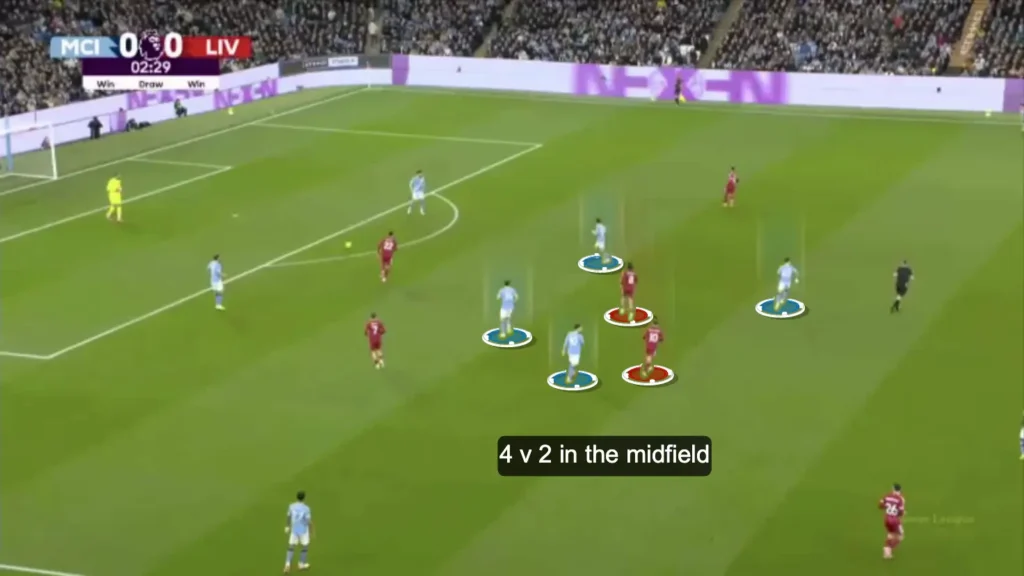
Haaland stays extremely high, pinning the opposition center-backs and preventing them from stepping out. His presence creates a vertical threat that dissuades opponents from compressing midfield, and because of this, City often enjoy clean conditions to build short despite having fewer players wide than in traditional Guardiola systems.
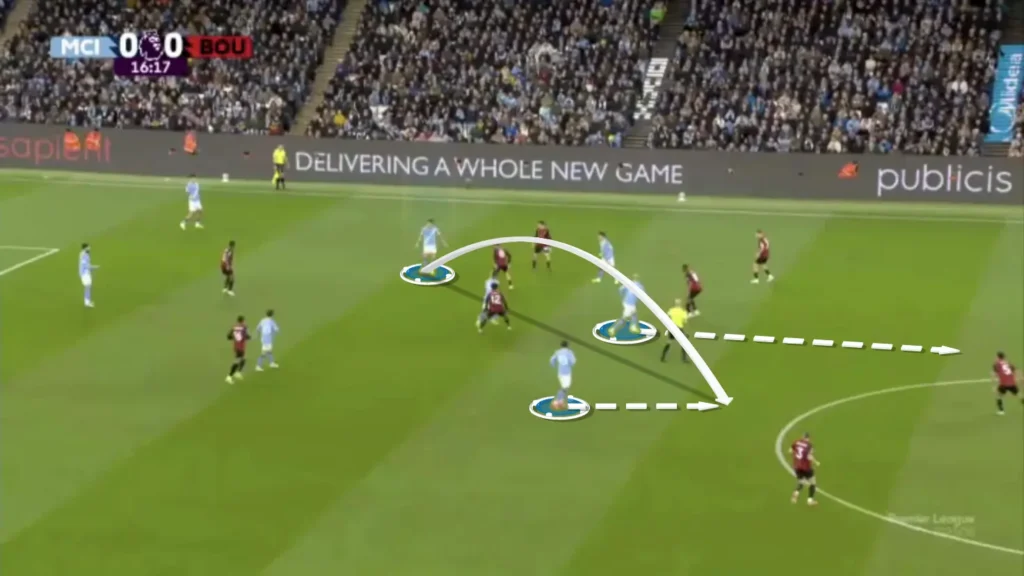
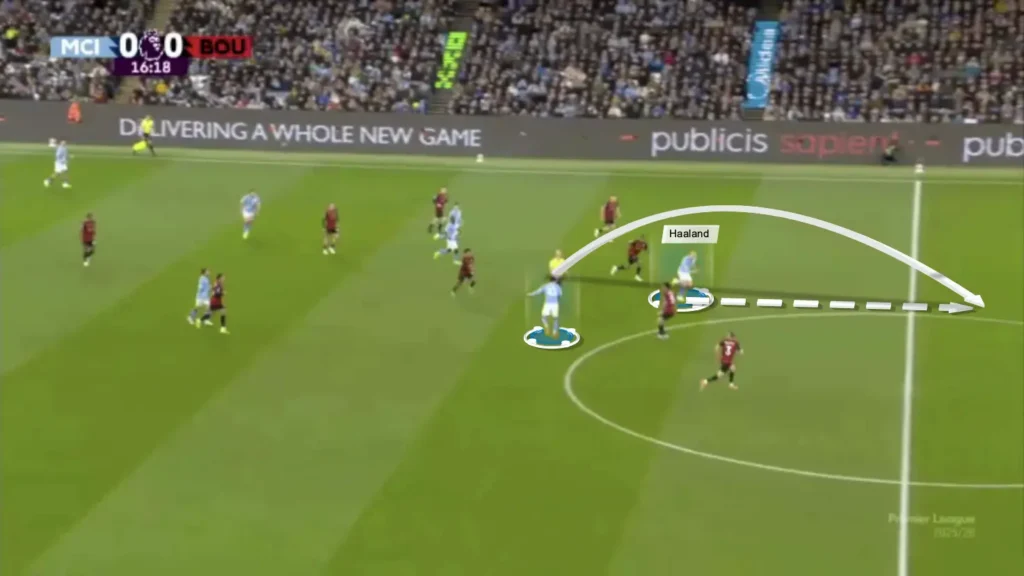
However, when opponents do press in a committed man-to-man fashion, City become far more direct than anything we have associated with Guardiola in his career. Donnarumma, Dias, and Gvardiol play long balls early into Haaland, who frequently wins aerial duels or competes well enough to bring the ball down into the path of forward-facing teammates.
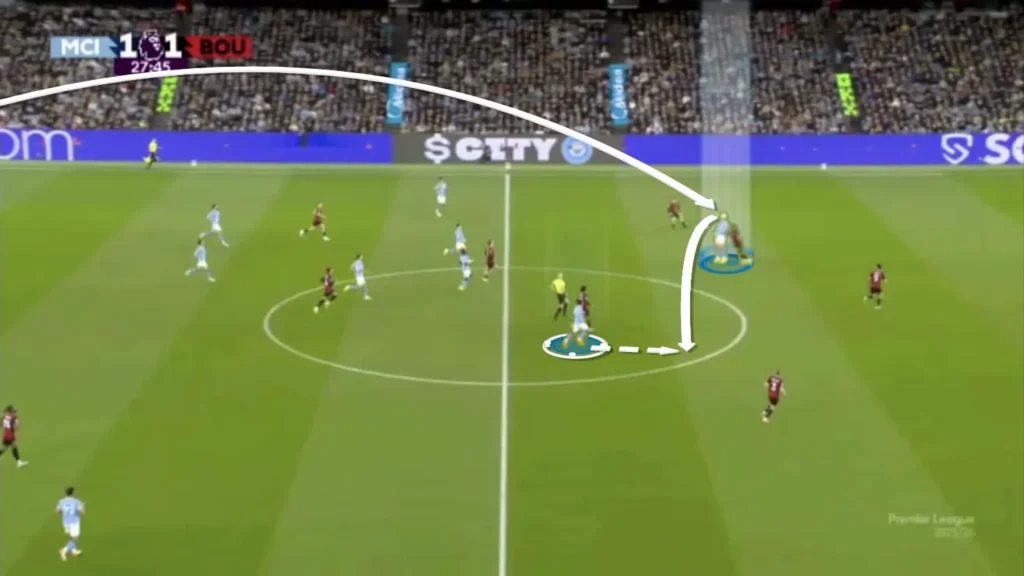
With Doku and Cherki already positioned between the opposition midfield and defensive line, they are perfectly placed to collect second balls or receive direct long passes as well.
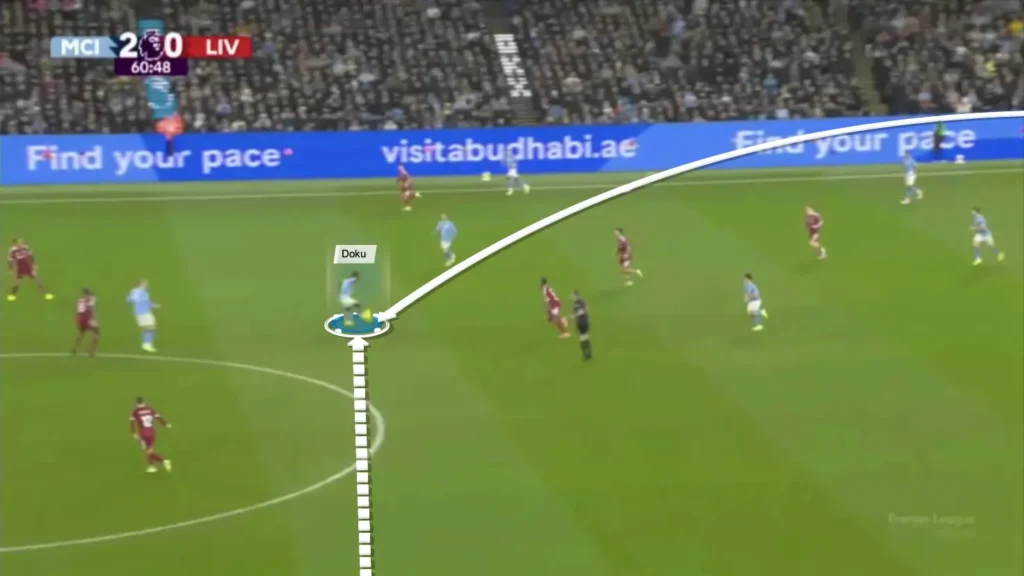
Once City secure those actions, they attack immediately with speed instead of resetting possession, using aggressive forward runs and fast combinations to strike before the opponent is settled.
This combination — compact overloads when unpressed and direct release when pressed — makes City extremely difficult to trap, because they can escape both slow and fast defensive behaviors.
High Build-Up
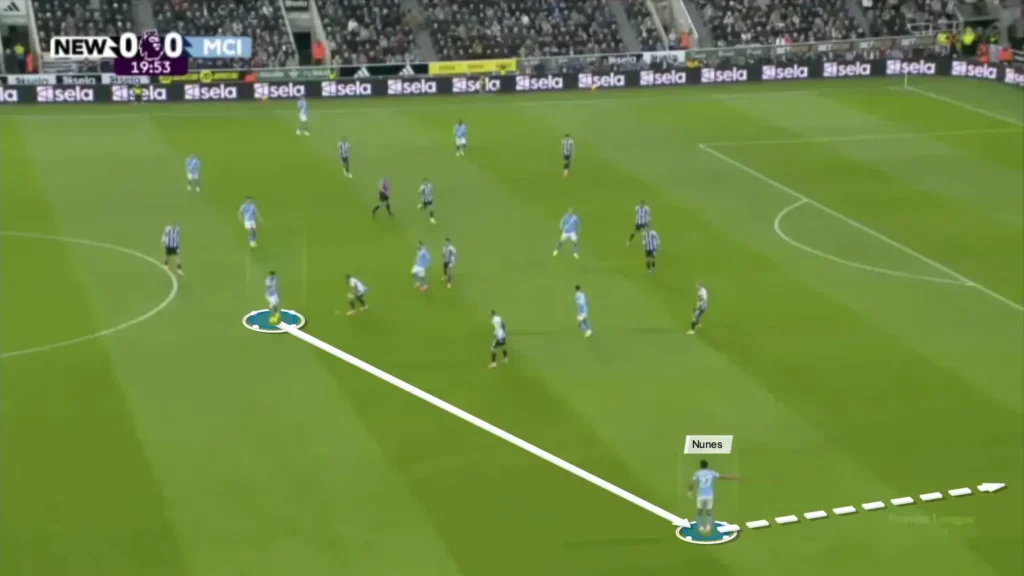
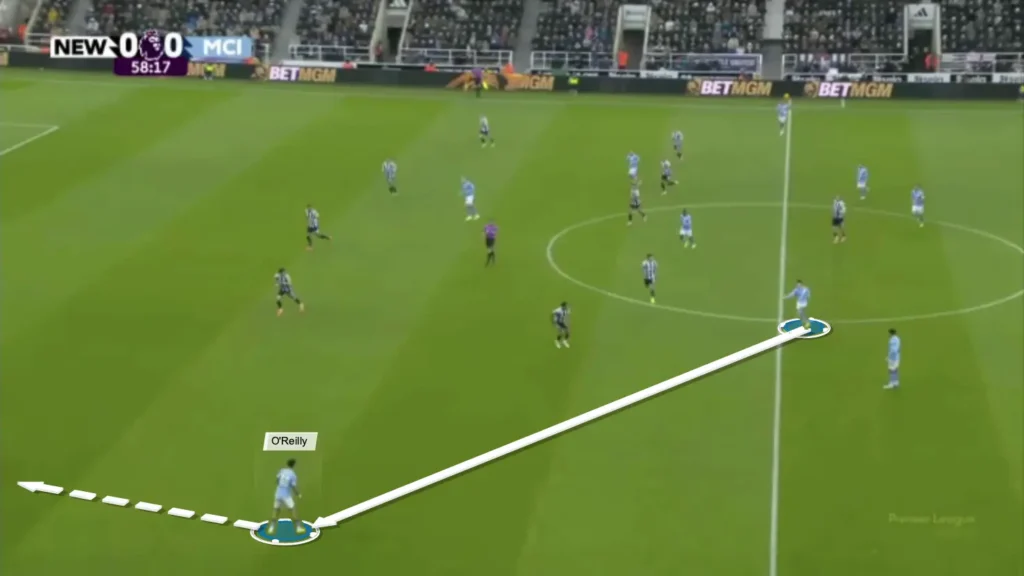
As City shift into the high build-up, Bernardo Silva and Nico Gonzalez often drop closer to the center-backs to stabilize circulation. Meanwhile, the fullbacks, Nunes and O’Reilly, push up just beyond the opposition midfield line, and the wingers, Doku and Cherki, invert into the middle and position themselves alongside Foden, creating a three-man attacking midfield that operates between the lines and constantly seeks to receive in pockets behind the opposition midfield.
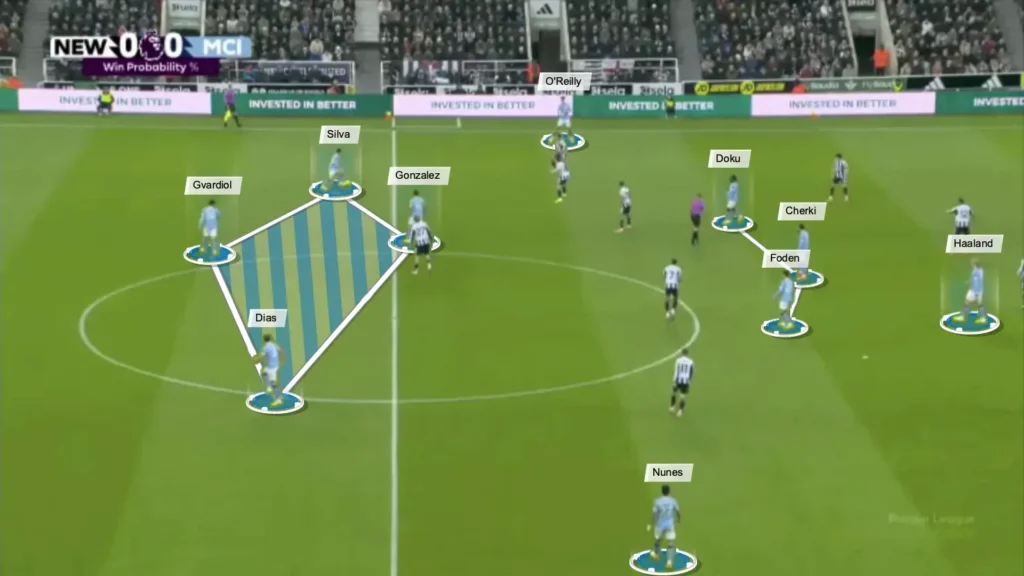
This structural change is crucial because it not only gives City far more presence in central areas but also forces opponents into extremely uncomfortable defensive decisions. When the fullbacks advance into that ambiguous zone between midfield and defense, the opposition’s wide midfielders usually remain inside to protect the center, which leaves the City fullback free. If the opposing fullback steps out to press, he vacates a huge space behind him — a space the inverted winger can immediately attack with runs in behind.
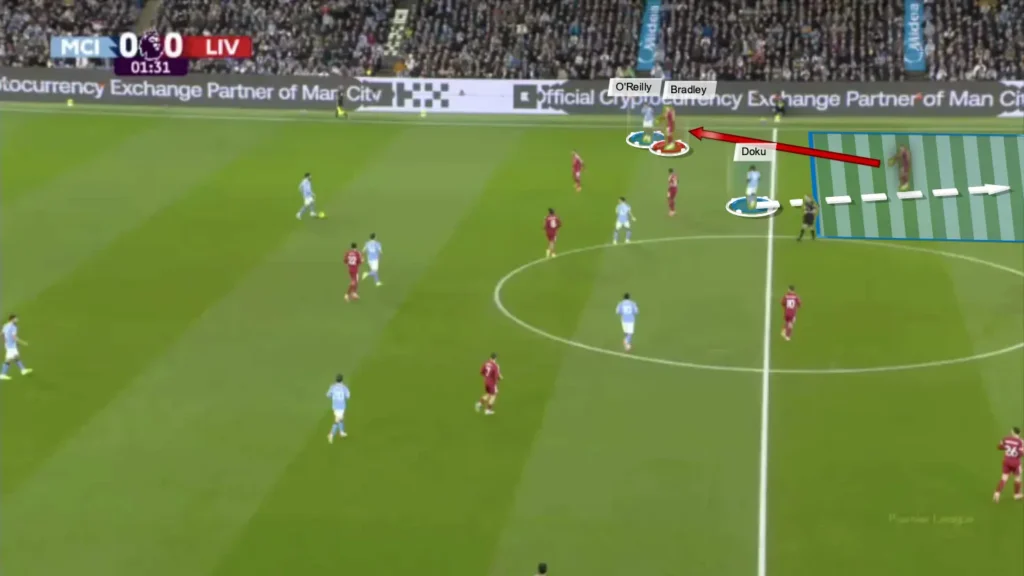
Most teams, therefore, choose to keep their fullbacks deep, and this allows City’s fullbacks to receive with large amounts of time and space.
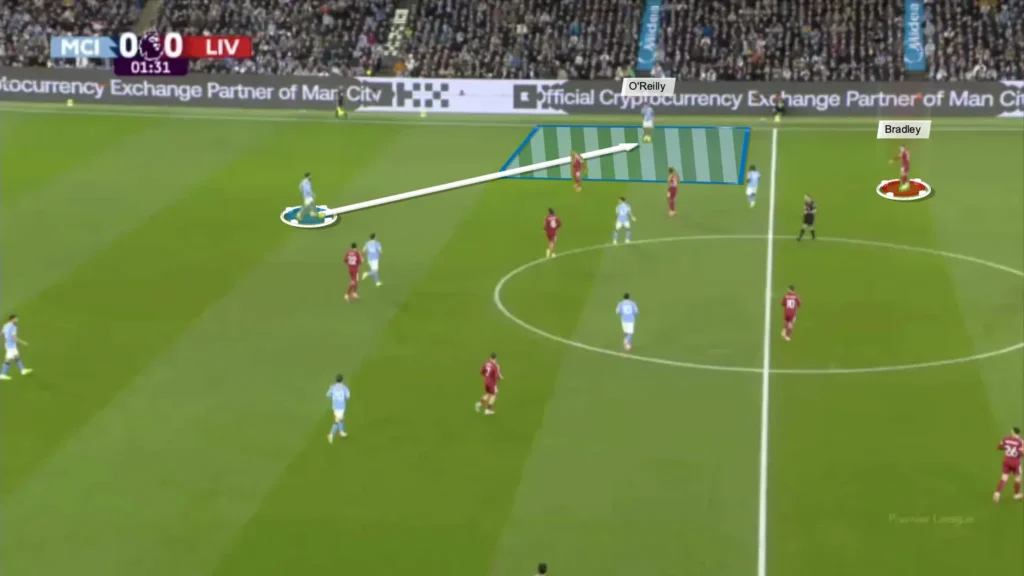
Although they are not positioned as high or as wide as Guardiola’s wide players in previous teams, this height — just beyond the opposition midfield line — is extremely effective because it exploits the defensive line’s uncertainty about when to step and when to hold. City will often find the fullbacks in big spaces out wide, and, from there, they will progress the ball up the pitch very easily.
Finding the Space In Between the Lines
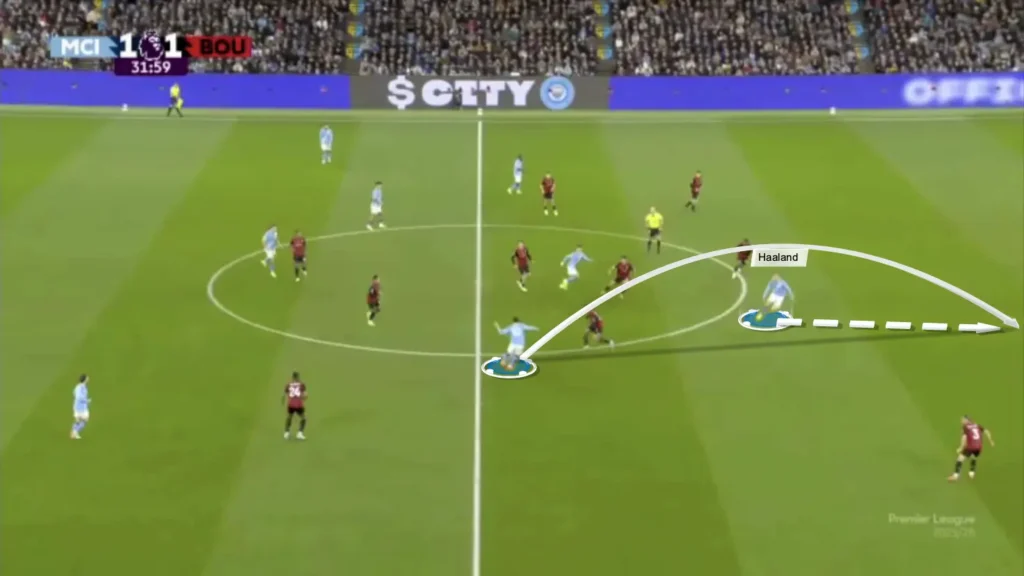
Meanwhile, Haaland continues to play extremely high, pinning the backline and stretching the pitch vertically. Any team brave enough to maintain a high line risks being punished by early balls in behind, as Bournemouth learned when Haaland exploited their aggressive positioning and scored.
Consequently, most opponents drop their defensive line, which opens an enormous vertical pocket for City’s attacking midfielders between the opposition’s midfield and defense.
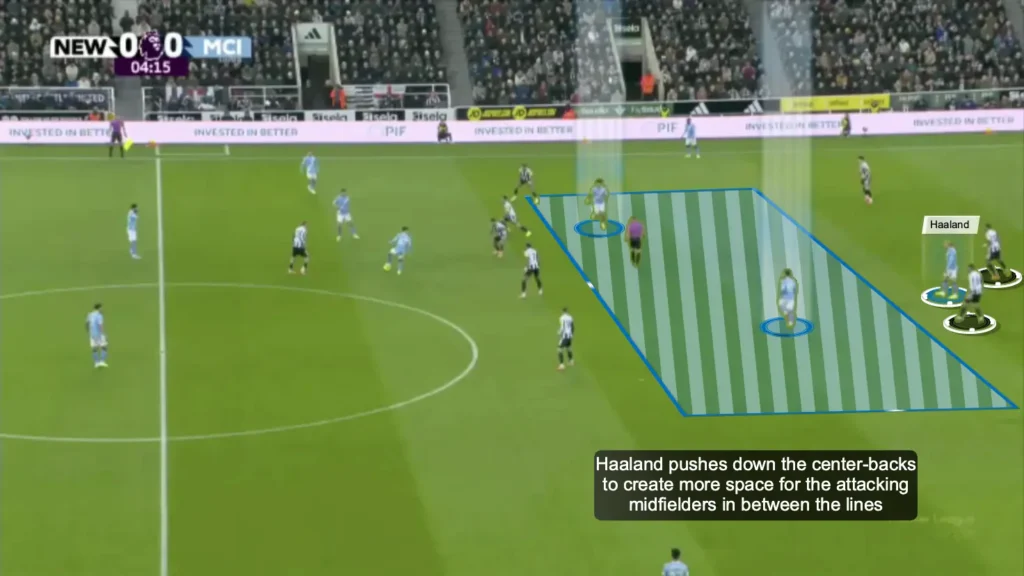
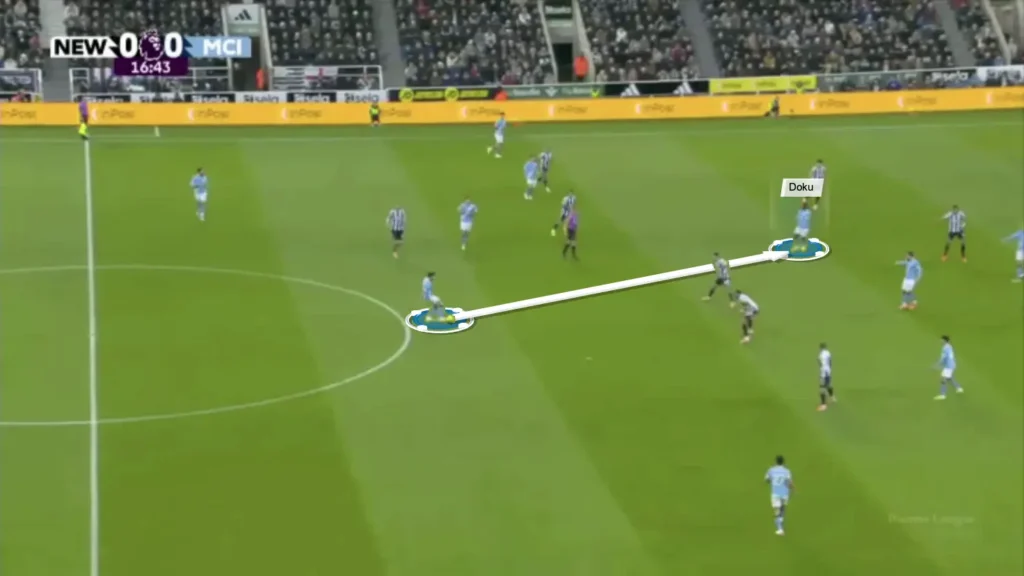
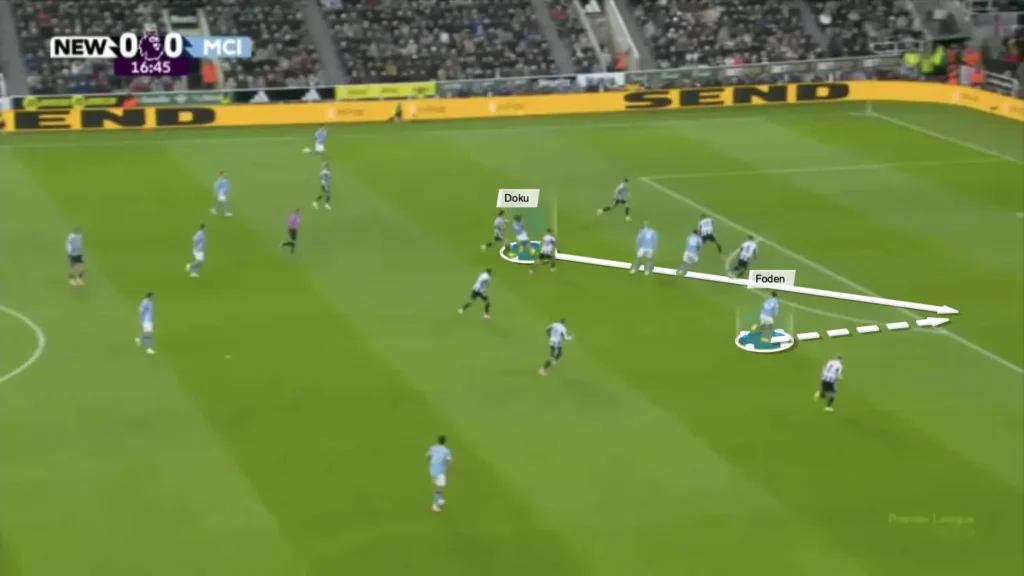
City consistently target this area with straight or diagonal line-breaking passes into Foden, Doku, or Cherki.
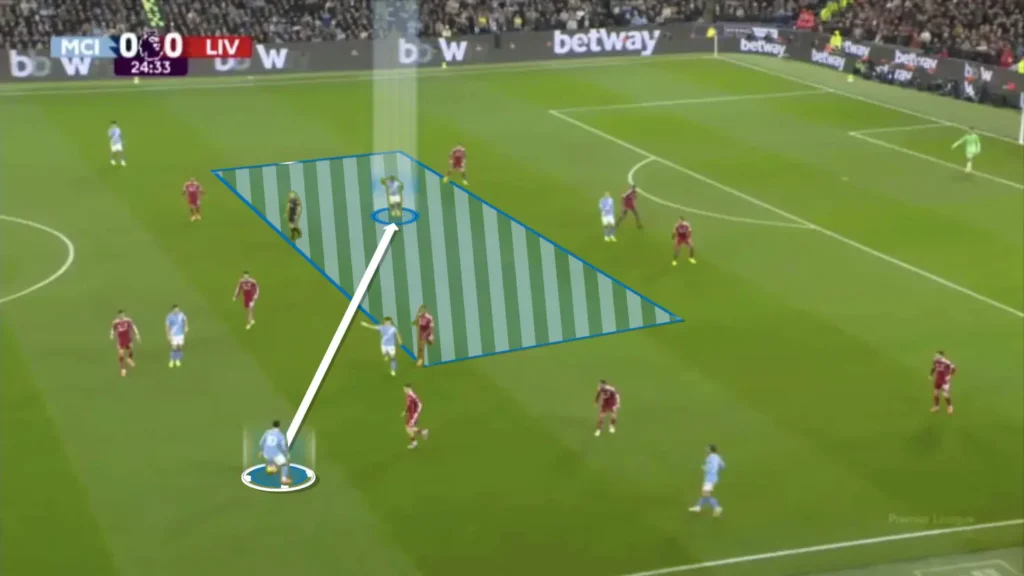
Once the receiver turns, City immediately threaten the backline through carries, combinations, or play through-balls into attackers running in behind.
Compact Attacking Shape
The defining characteristic of City’s possession game this season is compactness. Unlike the classical Guardiola shape — a wide player on each touchline, with structured staggering across all five lanes — the current version collapses many players into tight central distances.
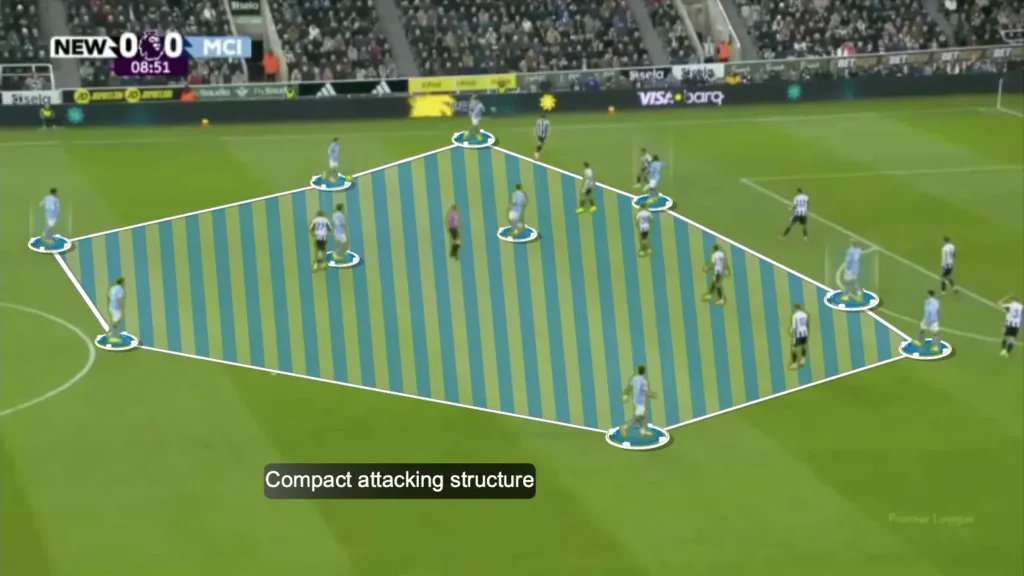
This approach produces several key advantages:
Harder to Press
Short passing distances reduce the “pressing window” created by ball travel time. Since the ball arrives quickly, even correctly timed pressure struggles to arrive on the receiver before he controls and releases the next pass. Defenders are not only racing toward the ball but racing against an entire cluster of short passing options that can shift the point of attack instantly.
Faster Combinations
Compact spacing enables one- and two-touch combinations that move the ball faster than defenders can adjust their body orientations. These combinations accelerate the speed of attack, making City more unpredictable and more capable of breaking lines without relying on wide, slow circulation.
Rest-Defence Stability
Compactness gives City immediate counterpressing superiority when they lose possession. With so many players around the ball, they can swarm, close angles with cover shadows, and shut down counterattacks before they begin. This addresses one of their biggest weaknesses from last season, where stretched structures repeatedly left them vulnerable in defensive transitions.
This compact model marks a deliberate shift away from classic width-based positional play and toward a structure built for tempo, protection, and immediate attacking threat.
Positional Fluidity
City are extremely fluid in possession, especially in the midfield, where constant rotations reshape the picture for defenders from one moment to the next. The interactions among Doku, Cherki, Foden, Bernardo Silva, and Gonzalez create a dynamic and often unpredictable structure, with each player capable of occupying multiple heights and widths depending on the phase of play.
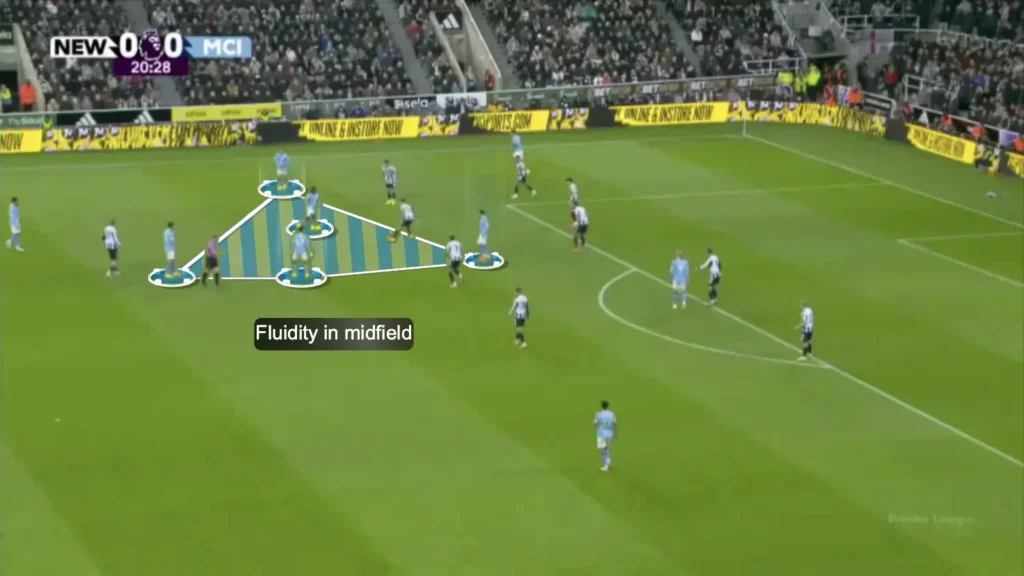
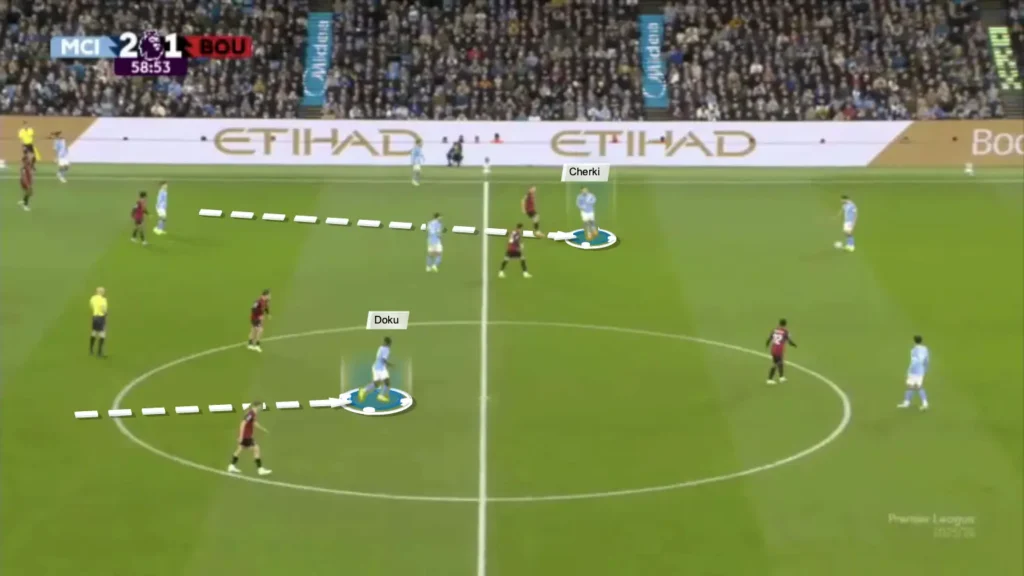
Doku and Cherki frequently drop unusually deep, at times positioning themselves close to the double pivot. This makes it almost impossible for the opposition fullbacks to follow them without leaving large spaces behind for City to exploit.
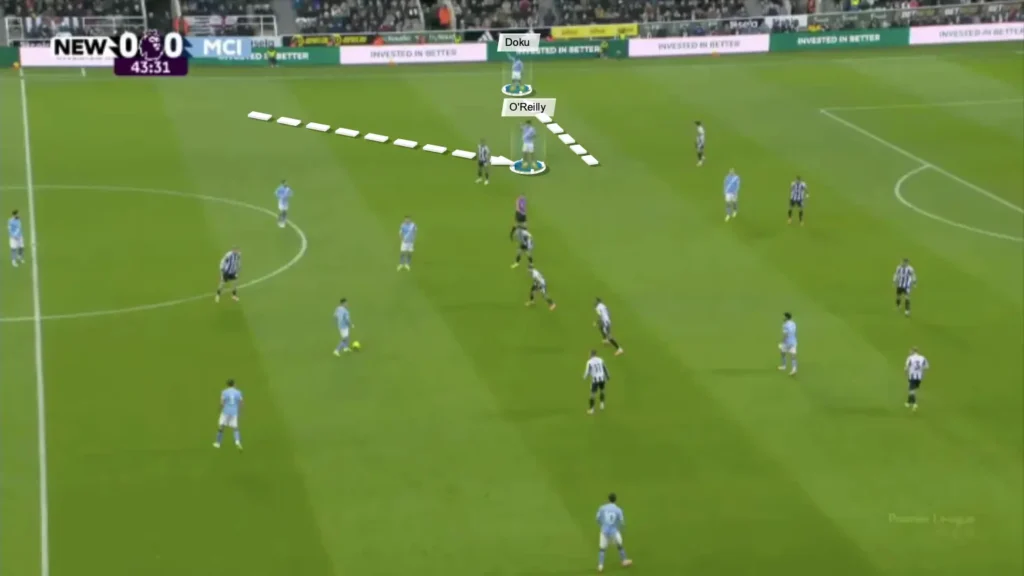
O’Reilly also inverts at times from his left-back position, which allows the winger on his side, Doku, to stay wider and make more use of his incredible 1v1 dribbling ability.
These rotations constantly break defensive reference points and open new passing lanes, especially when City manipulate opponents with movements that pull markers away from their natural zones. The fluidity also provides the foundation for some of City’s most dangerous patterns — particularly the 2v1s on the wings.
Wide 2v1s and Mechanisms
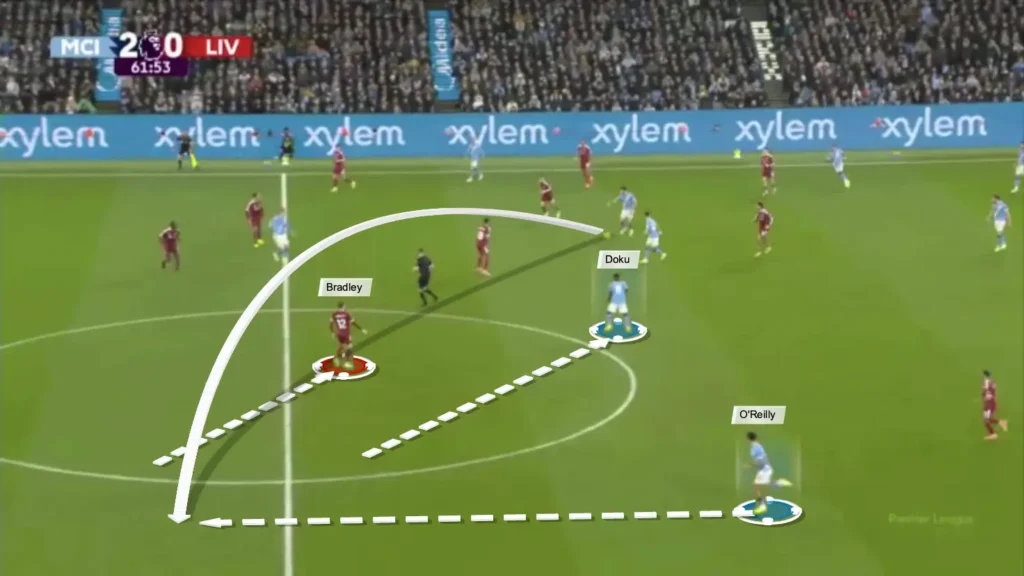
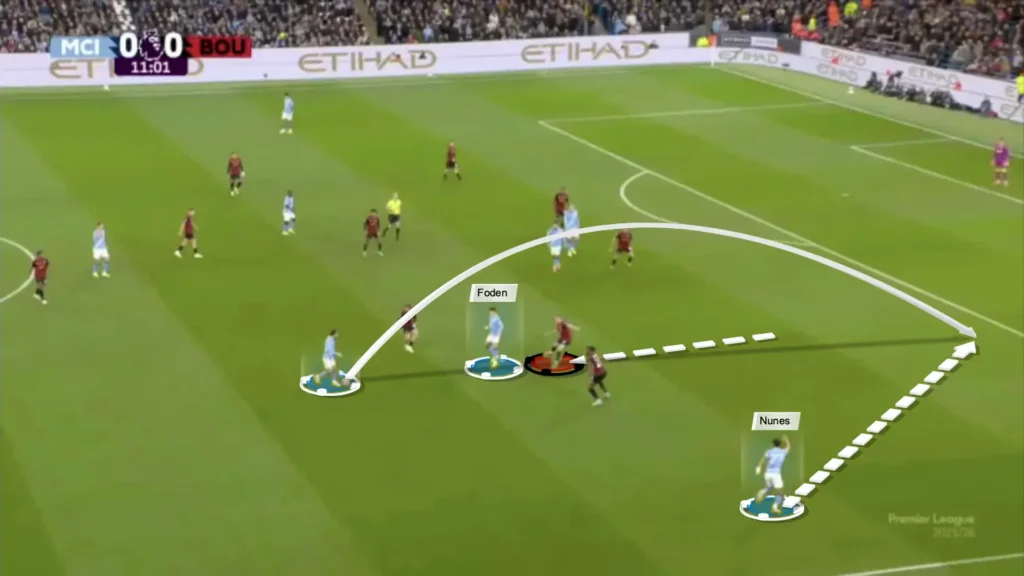
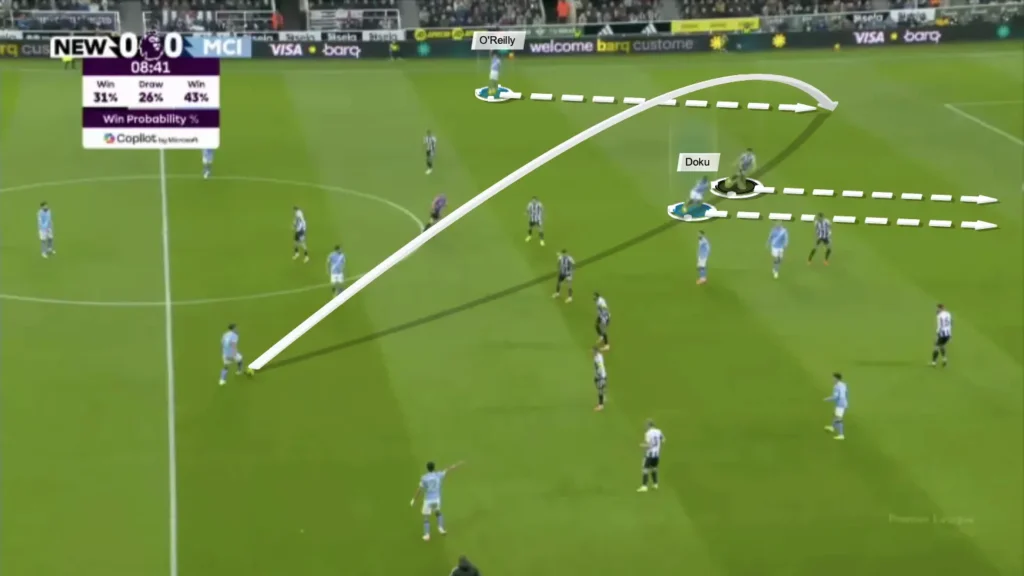
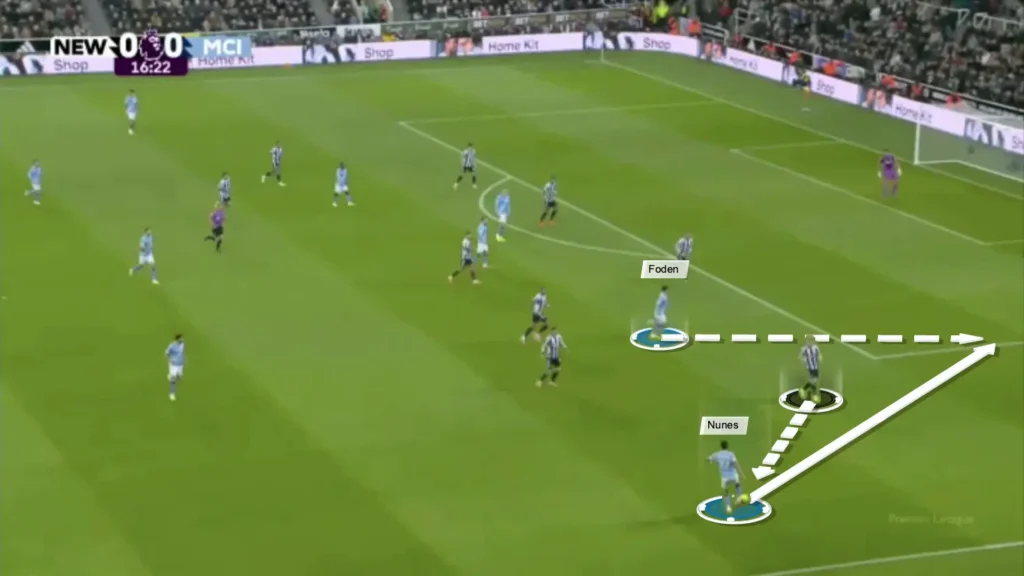
City frequently generate 2v1 situations with their fullback and inverted winger against the opposing fullback.
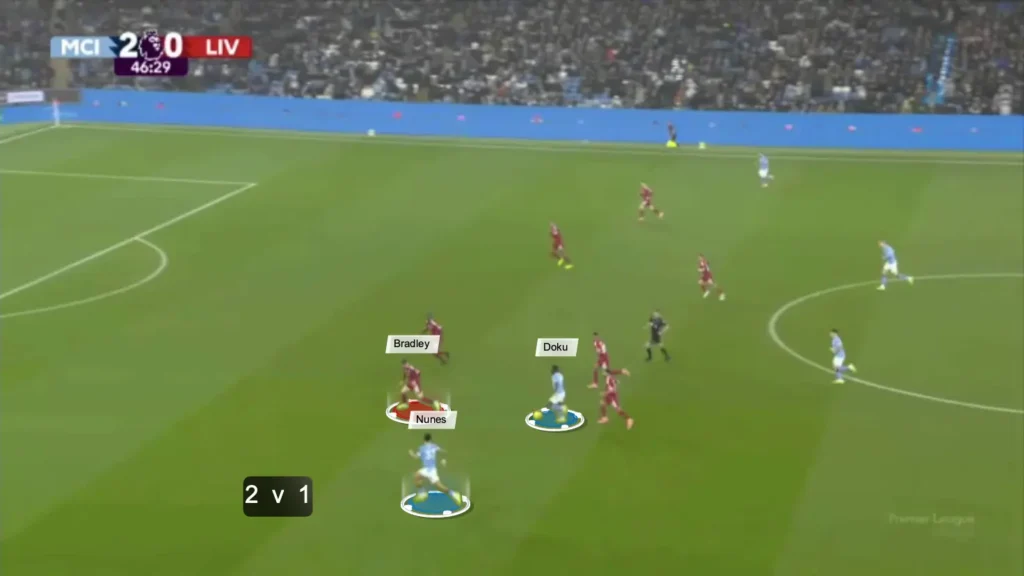
They exploit these in multiple ways:
Fullback steps out → space behind
If the opposing fullback follows the winger inside when he inverts, the City fullback attacks the exposed space behind immediately and receives a through ball from midfield.
Winger runs diagonally → fullback free
If the inverted winger makes a diagonal run that drags the opposition fullback inside and backward, City can switch the ball to the fullback isolated in wide space.
Underlapping runs
If the fullback receives wide and draws pressure, the inverted winger underlaps into the space behind the opposition fullback, receiving in space and creating crossing or cut-back opportunities.
Because these patterns are layered and read in real time by both players, opponents face a series of lose-lose decisions. The slightest misstep creates free access into the final third.
Final Third Play
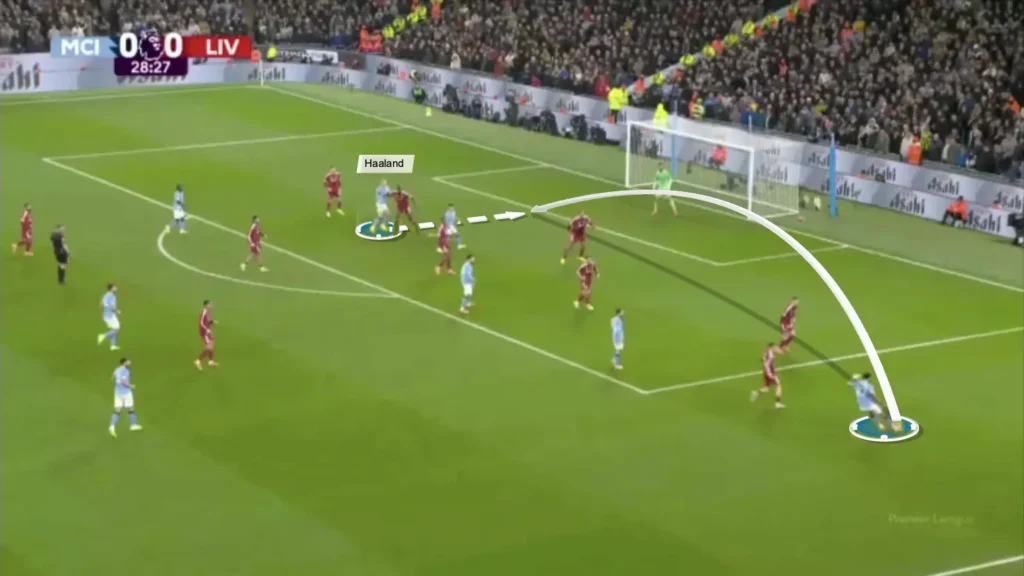
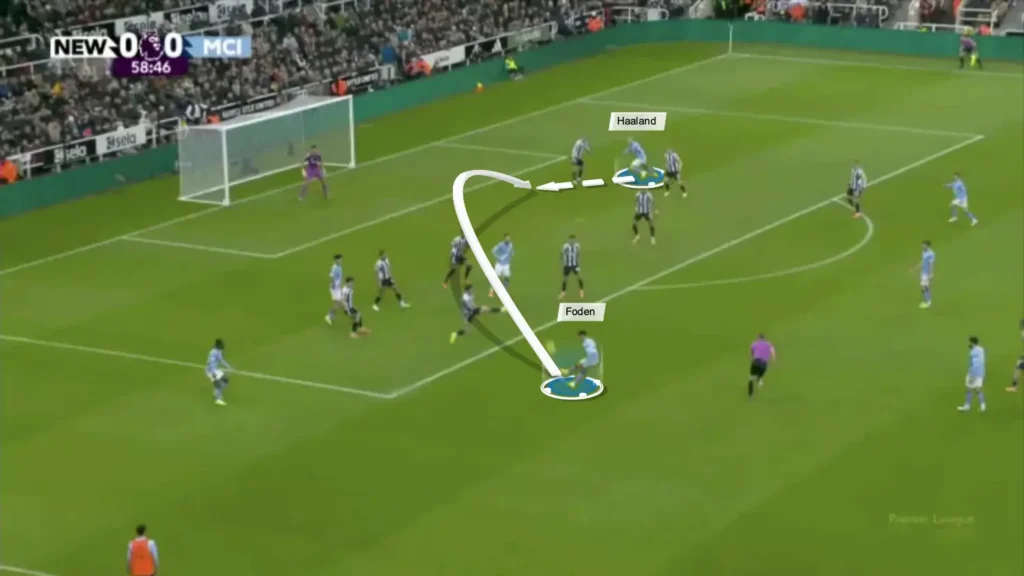
City now rely heavily on crossing, an intentional adaptation to Haaland’s strong qualities in the penalty area. They deliver from wide zones and from deeper half-spaces, using the fullbacks, inverted wingers, or even midfielders arriving in the channels. Haaland’s penalty-box movement is elite; he attacks blindside spaces and times his leaps in ways that make him extremely difficult to track, especially when defenders must monitor multiple runners around him.
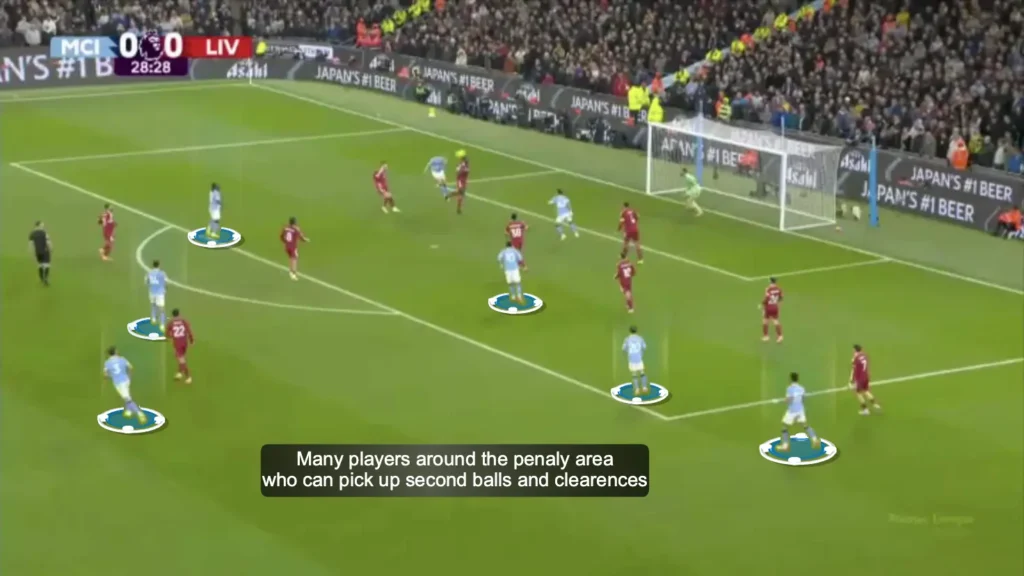
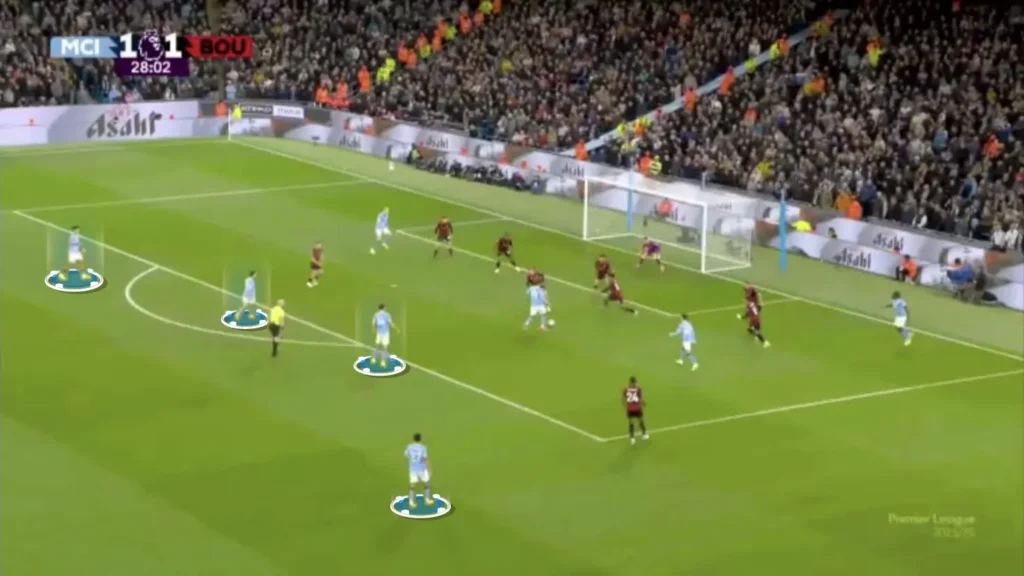
City also consistently position several players around the edge of the box, which gives them excellent structure for winning second balls, sustaining momentum, and launching repeated waves of attacks without allowing the opponent to reset.
Defensive Tactics
High Press
City press in a 4-4-2 high-block with a diamond-like midfield. Haaland starts the press with a curved run that blocks the pass to the left center-back and forces play toward the opposite side. Foden then jumps onto the receiving center-back, while the midfield shifts laterally to keep compactness on the ball side.
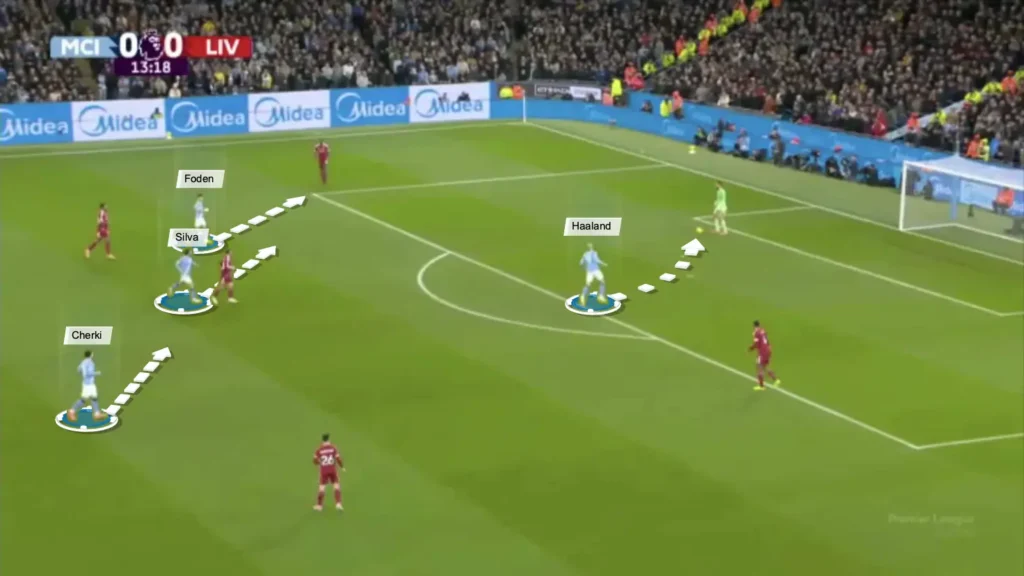
Haaland cuts the pass back to the goalkeeper, Foden applies pressure, and the midfield’s compactness removes central options.
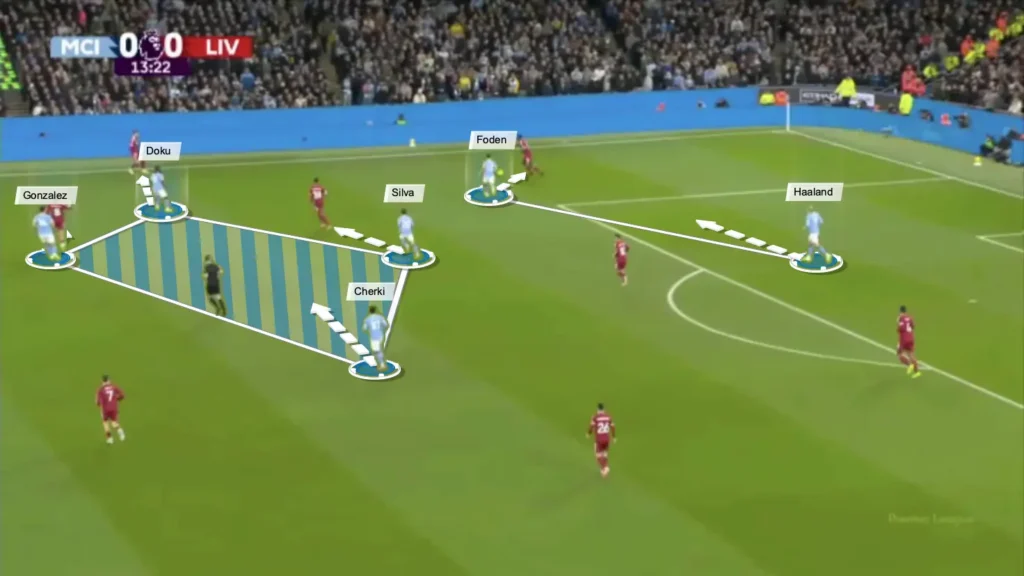
With the backline pushed up to compress the space between the lines, opponents often end up forced into long, uncontrolled clearances. City typically win these due to strong numbers behind the pressing line.
This system is less aggressive than the modern man-to-man presses used by most elite clubs today, yet it is extremely hard to break through because it removes central progression entirely and funnels play into predictable zones.
Mid-Block and Low-Block Defending
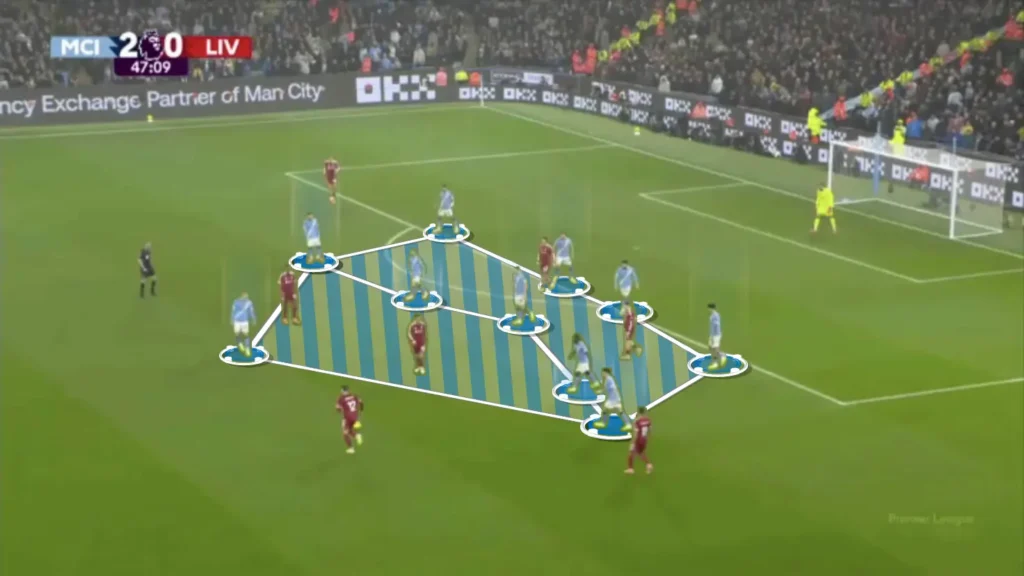
In deeper phases, City defend in a 4-1-4-1 that prioritizes central compactness.
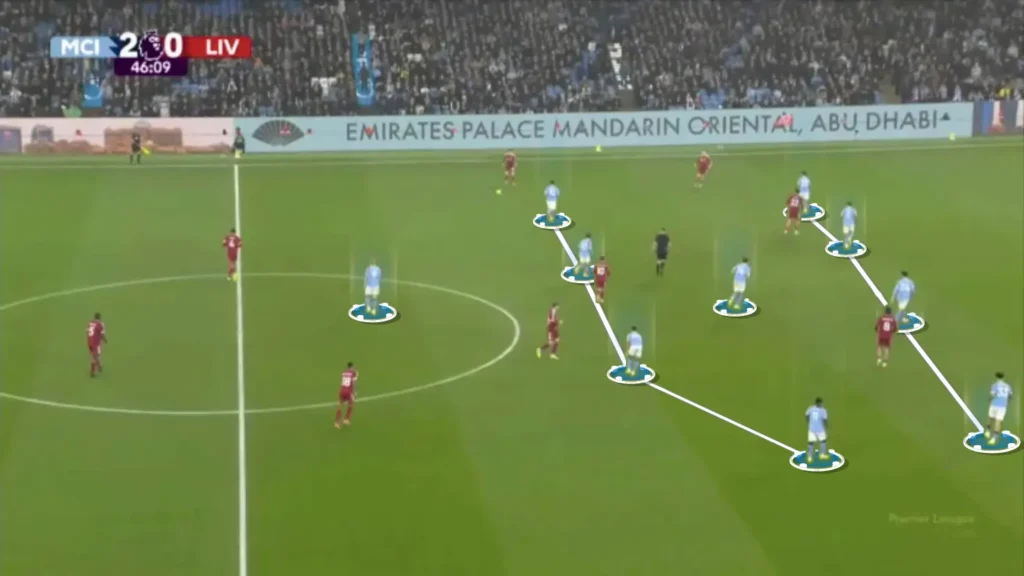
Haaland stays close to one opposition center-back, usually the left-sided one, to shut down that side entirely. The opponent is effectively forced to build through the right center-back. When a pass is made to the right center-back, Foden breaks out from his attacking midfield position to press, and Gonzalez steps up slightly from his defensive midfield position to cover the gap behind him.
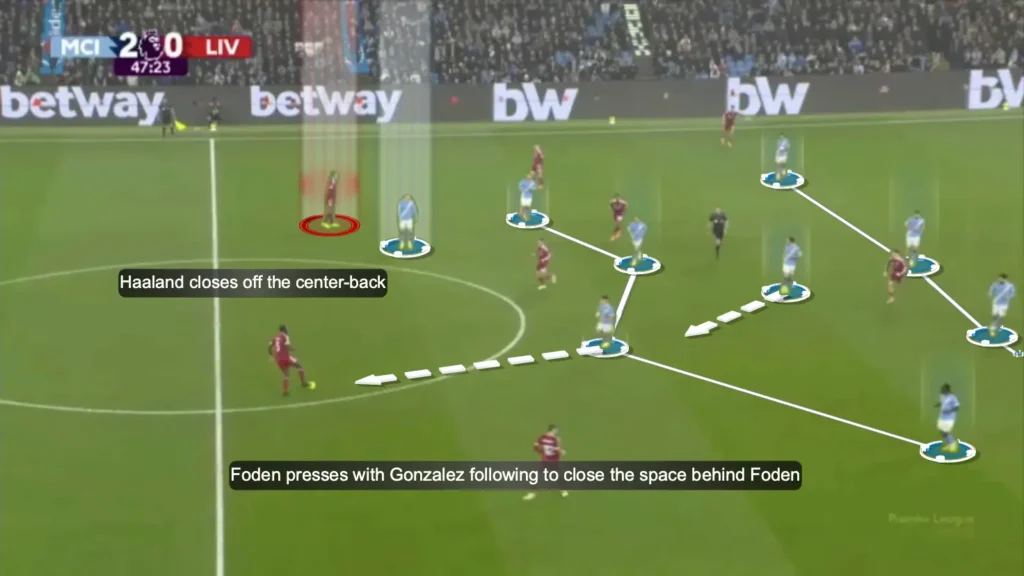
This shape funnels play wide and denies all central access, which suits City well because their compactness and numbers allow them to defend the box with discipline. Crucially, this City side is willing to defend far deeper than Guardiola teams of the past. Their 32% possession performance at Arsenal — one of the lowest figures of Guardiola’s entire career — exemplifies this shift. They have shown multiple times this season a willingness to defend with all eleven players near their own penalty area.
This pragmatism is one of the clearest signs that Guardiola has adapted to the modern game rather than forcing the modern game to adapt to him.
Transition Tactics
Attacking Transitions
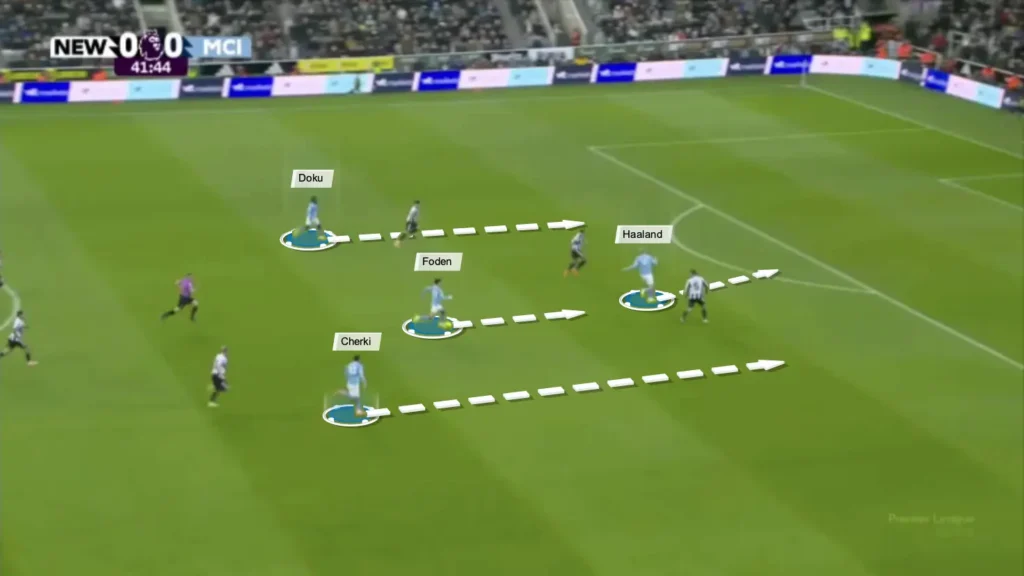
Because City spend more time in mid- and low-block situations and because they encourage opponents to commit more players forward, they have more opportunities to counterattack than previous Guardiola teams. Their first instinct after winning possession is now vertical: releasing Doku, Cherki, or Haaland early and attacking space before the opponent can reorganize.
They commit four or five runners when they counter, which gives them strong numerical presence against retreating defenses and allows them to create chances with far fewer passes.
Defensive Transitions
Last season, defensive transitions were arguably City’s biggest structural weakness. Their stretched attacking shape left them exposed after losing the ball, and they conceded too many chances because they could neither counterpress effectively nor delay counters.
This season, their compact attacking structure fundamentally changes that dynamic. With so many players close to the ball, City can counterpress immediately, surround the opponent, and block passing lanes through cover shadows. Their intensity is high, their timing is synchronized, and their ability to kill counters early is significantly improved.
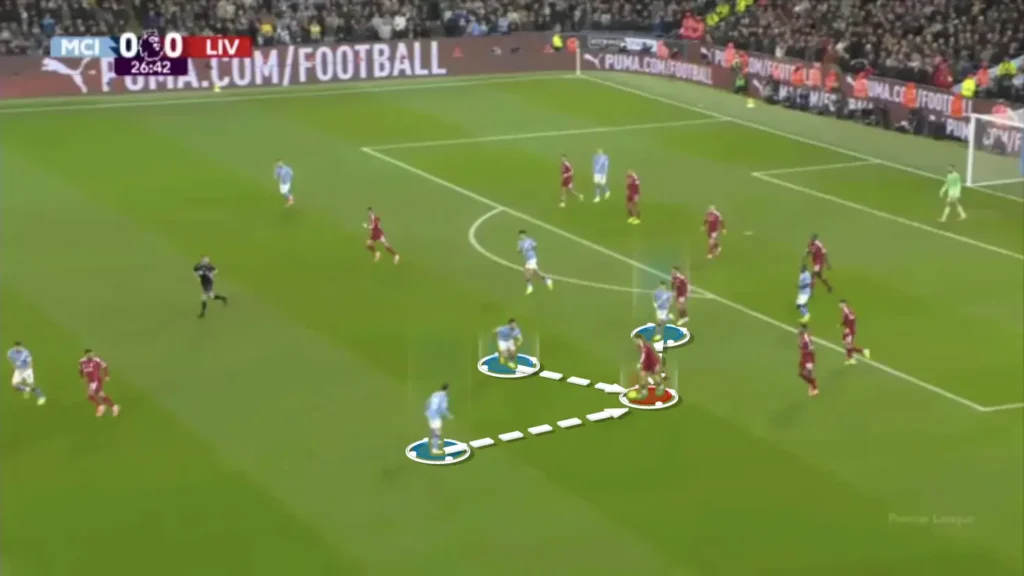
Nico Gonzalez is especially important here. His ability to win duels, make tactical fouls, and stop transitions before they gather speed makes him essential to the balance of this new Manchester City.
Conclusion
Manchester City have undergone a stylistic transformation that may represent a decisive evolution in Guardiola’s career. The hallmark traits of his earlier teams — wide positional structures, slow-tempo circulation, and territorial dominance — have been replaced by compact spacing, vertical progression, pragmatic defensive phases, and far more emphasis on transitional threat.
This shift raises a broader question: Has traditional, slow positional play reached its limit in an era where opponents press better, transition faster, and defend more aggressively than ever before?
Guardiola appears to believe that the game has moved on. By embracing compactness, directness, and vertical play — while still maintaining the principles of spacing, superiorities, and collective organization — he has built a City side that is tactically modern, structurally secure, and extremely difficult to prepare for.
This evolution might define the next era of elite football, and it may very well set the benchmark for how positional play adapts to the demands of the contemporary game.
All images and visuals in this article are made with Once Sport — a powerful and easy-to-use tactical analysis platform. It helps you annotate clips, visualize movements, and create professional analysis videos. Readers of The Football Analyst get 10% off plus one month free with the code TFA10 at checkout.