Modern football analysis increasingly values how teams reach dangerous areas, not just how often they shoot. Among the many advanced metrics used to evaluate attacking performance, Deep Completions provide one of the clearest pictures of a team’s ability to penetrate the final third and create genuine scoring opportunities.
What Are Deep Completions?
A Deep Completion refers to a non-cross pass that is successfully completed within 20 meters of the opponent’s goal. These are typically ground passes or cut-backs that break defensive lines and reach teammates in advanced, central, or half-space positions — areas closely associated with chance creation.
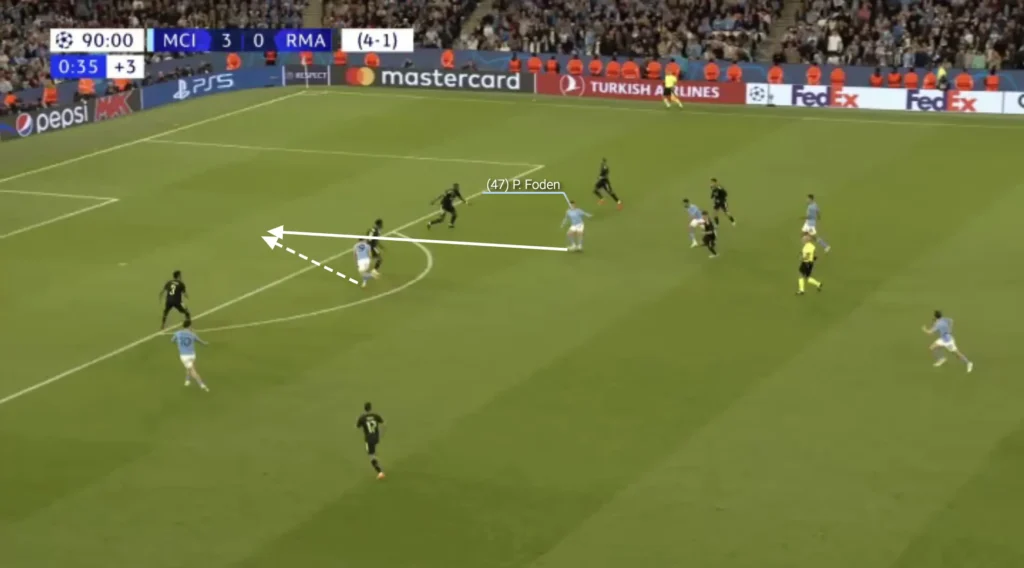
Unlike simple possession metrics, deep completions go beyond counting touches or entries into the final third. They measure precision and intent — how effectively a team converts territory into meaningful attacking actions.
Why Deep Completions Matter
Deep completions link directly to the quality of possession. A team might dominate the ball yet struggle to reach the final 20 meters of the pitch. On the other hand, a side with fewer passes but a higher number of deep completions may be much more effective at advancing through compact blocks.
This makes the metric particularly useful for identifying:
- Teams that can play through pressure rather than around it.
- Players who excel at final-third passing, especially attacking midfielders and wingers.
- Structures that create consistent penetration, such as overloads or third-man combinations in half-spaces.
Deep Completions vs. Crosses
Crosses are excluded from this metric for an important reason: they tend to be less controlled and less repeatable. Deep completions, by contrast, represent deliberate, ground-based passes that are part of structured attacking play.
While a high crossing volume can suggest directness, a high deep completion rate shows precision, coordination, and positional understanding. Elite possession teams — like Manchester City, Barcelona, or Bayer Leverkusen — often register large numbers of deep completions because they consistently break defensive lines with well-timed passes into key central zones.
Player-Level Insights
At the individual level, deep completions reveal which players are true connectors between midfield and attack.
- Advanced midfielders who occupy half-spaces often record the most deep completions, threading passes between defenders.
- Fullbacks or inverted fullbacks can contribute by playing disguised passes into runners behind the defensive line.
- Strikers dropping between lines also play a role, receiving deep completions that set up quick finishing actions or third-man runs.
For example, a midfielder like Kevin De Bruyne might lead his team in deep completions due to his constant delivery of low, driven passes into the box — not crosses, but precision entries that set up high-quality chances.
Tactical Applications
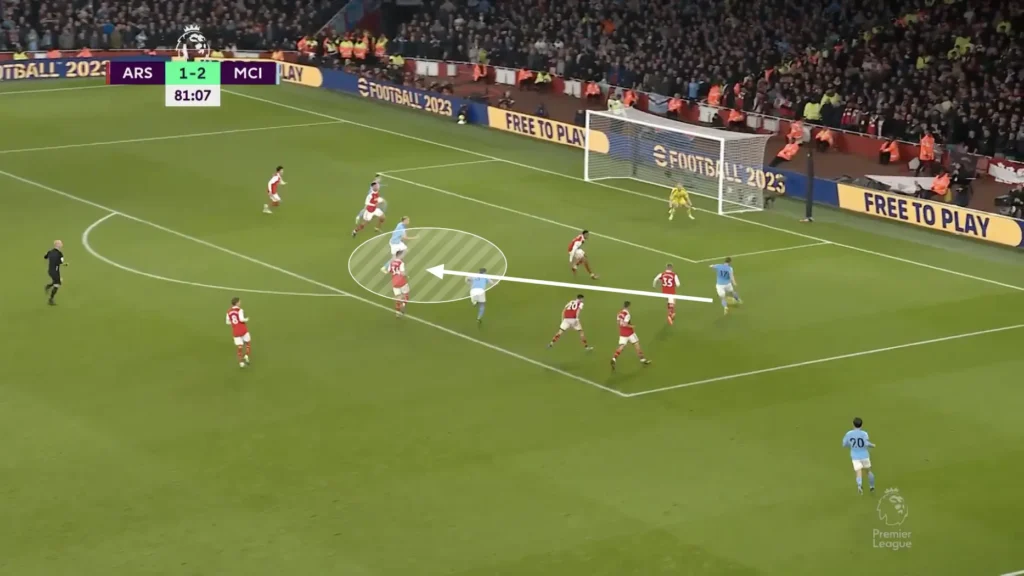
Deep Completions are especially useful for understanding how teams build attacks against compact defensive structures.
- In positional play systems, high numbers of deep completions indicate that the team is successfully manipulating space between lines.
- In transitional teams, spikes in deep completions often follow counter-attacks where runners are found in advanced positions before the defense resets.
Analysts can also use deep completions to measure how consistently a team accesses the “golden zone” — the central corridor just outside or inside the box — which correlates strongly with high Expected Goals (xG) values.
Contextualizing the Metric
Like any isolated statistic, deep completions should be viewed in context. A team might register many deep completions without converting them into shots if they lack presence in the box or finishing quality. Conversely, a low number could still be effective if the team is highly direct and efficient with its chances.
The most valuable insight comes from combining Deep Completions with xG or Shot-Creating Actions (SCA). Together, they reveal not only how often a team reaches dangerous zones, but also what happens next.
Using Deep Completions in Scouting and Analysis
For scouts and analysts, this metric helps:
- Identify creative passers who can break lines with precision rather than volume.
- Spot teams with strong positional play structures that consistently find players between lines.
- Evaluate tactical fit — for example, a club emphasizing control and penetration over directness.
Tracking deep completions over time can also highlight tactical evolution — whether a side becomes more risk-taking in possession, or more patient and secure in its build-up.
Conclusion
Deep completions reveal one of the most valuable aspects of attacking play: the ability to pass into danger, not just around it. By quantifying how teams and players penetrate the final third with precision, analysts can better understand the difference between sterile possession and true attacking effectiveness.