
Relationism has become one of the most influential ideas in modern attacking football. Instead of relying on fixed positions, predetermined patterns, or rigid automatisms, relationism emphasises dynamic, fluid relationships between players. The goal is to help players interpret situations collectively, combine intuitively, and exploit space through constant interaction rather than strict positional scripts.
To train relationist football, you must design drills that develop behaviour, not just patterns. Players must learn how to recognise each other’s movements, respond to spatial cues, rotate positions naturally, and create advantages through coordinated timing. This requires training environments that are unpredictable, relational, and decision-based.
Below you’ll find a set of carefully constructed relationism drills designed for competitive teams with advanced environments. Each drill focuses on fostering synergy, creating emergent combinations, and teaching players how to interpret evolving structures rather than rehearsing memorised patterns.
1. The Triangular Interaction Rondo (3v3 + 2 Jokers)
This drill builds the foundation of relational play: triangles, support angles, and rotational synergy.
Set-up:
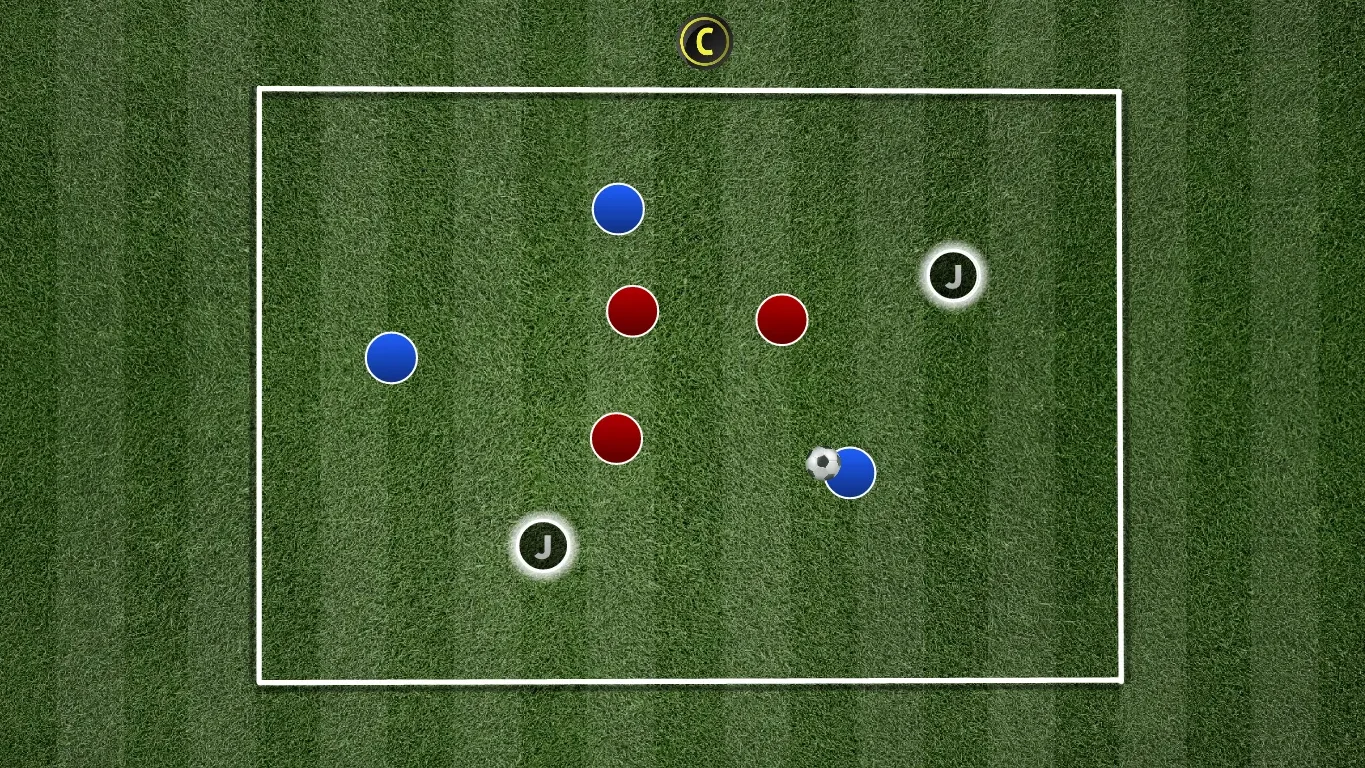
Create a 20x15m rectangle with two neutrals (jokers) supporting the team in possession. The three attackers attempt to keep the ball against three defenders.
Rules & Behaviours to Train:
- The two jokers must constantly reposition to maintain triangles with the ball-carrier.
- Attackers rotate naturally when a teammate moves into their line of pass.
- No fixed roles; positions change based on who steps up, who drops, and who widens.
- Encourage third-man runs to break lines and free the next pass.
Why it trains relationism:
Players learn how to maintain functional shape without being told where to stand, developing intuition for spacing, angles, and collective movement.
2. The Dynamic Lane-Changing Drill (4v4 + 3 Floaters)
Relationist football requires players to interpret space rather than occupy a fixed lane. This drill forces constant repositioning based on teammates’ actions.
Set-up:
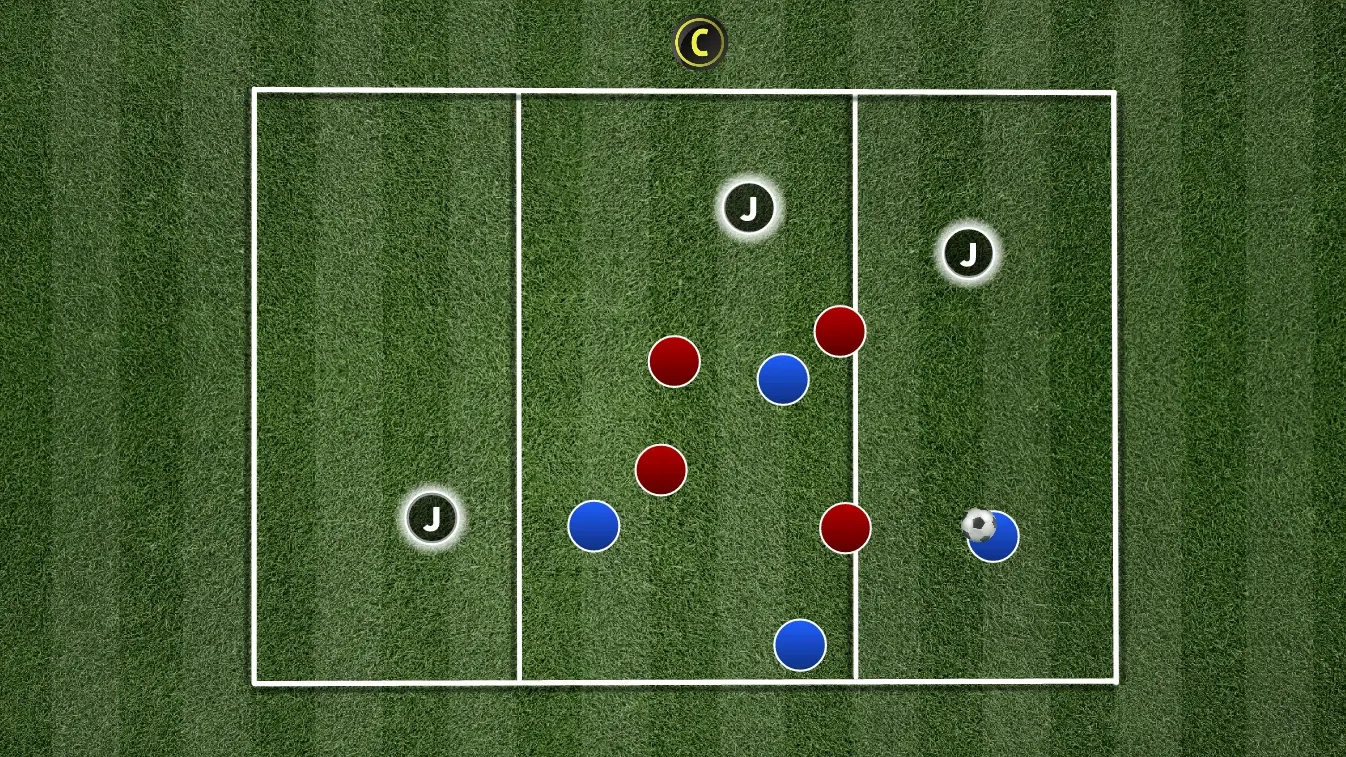
Divide a 30x25m grid into three vertical lanes. Four attackers play against four defenders, with three floaters supporting the team in possession.
Rules:
- Players must change lanes immediately after passing.
- Floaters move freely but must avoid occupying the same lane as each other.
- Points are awarded not for passes or goals but for disorganising the opposition with rotations (tracked by coaches).
What players learn:
- Spacing and staggering emerge organically.
- No player stays in the same vertical relationship for long.
- The team must maintain structure even while rotating aggressively.
3. The Relational Finishing Wave (5v4 Transition Game)
This drill links relational build-up with final-third synergy.
Set-up:
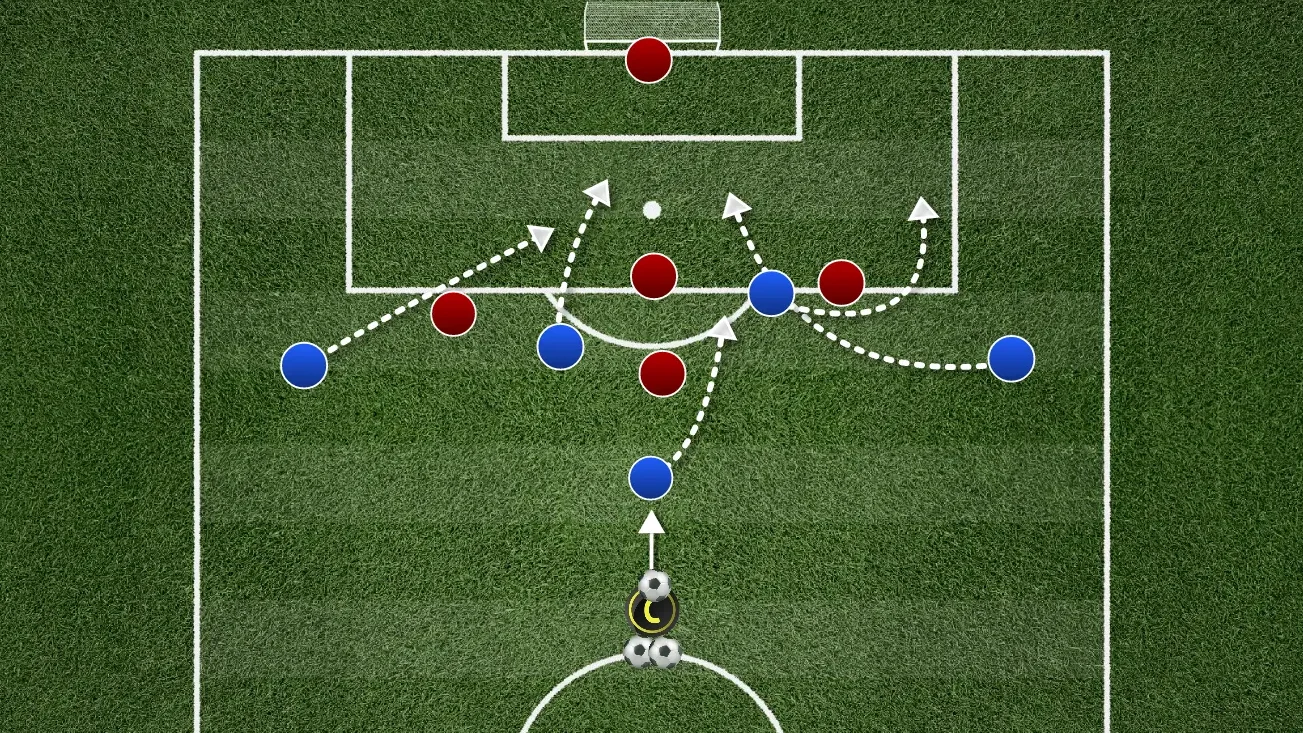
In a 40x30m pitch, five attackers counter into goal against four defenders after a turnover or coach-initiated restart.
Rules:
- Attackers must create at least one positional rotation before finishing.
- Goals count double if scored after a third-man combination.
- Defenders counter into mini-goals if they regain possession.
Relationist principles developed:
- Players learn to read teammates’ movements in real time.
- Overloads emerge through coordinated intuition, not fixed pattern play.
- Finishing actions become the end-product of collective behaviour rather than “pre-programmed routes.”
4. The Free-Rotation Possession Game (6v6)
This is the closest training representation of relationist football. It teaches teams how to play with fluid occupation of spaces rather than strict positional lanes.
Set-up:
A 45x35m pitch divided into four quadrants. Two equal teams play a possession game.

Rules:
- At least three quadrants must be occupied at all times.
- Any player can enter any quadrant, but rotations must occur naturally.
- Teams earn points for breaking lines after a rotation or attracting pressure before releasing a free man.
- If all six players end up in the same half for more than three seconds, possession goes to the other team.
Outcomes trained:
- Constant rebalancing of shape as players move.
- Reading teammates’ intentions early.
- Releasing the ball at the optimal moment when pressure has been attracted.
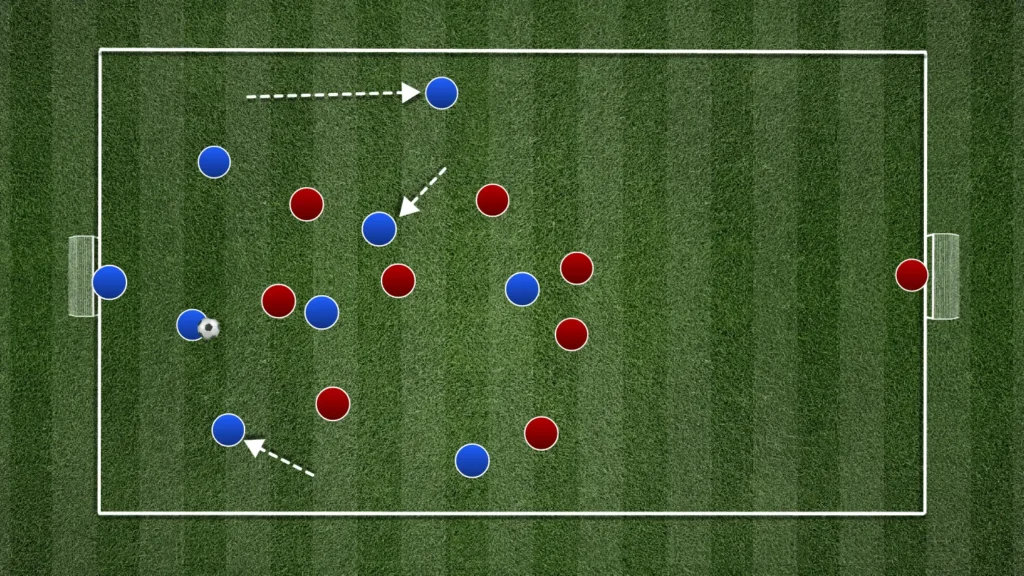
5. The “Emergent Structure” Drill (9v9 + 1 Joker)
This drill focuses on how relational teams form temporary structures depending on where the ball is — without being instructed to build in a fixed shape.
Set-up:
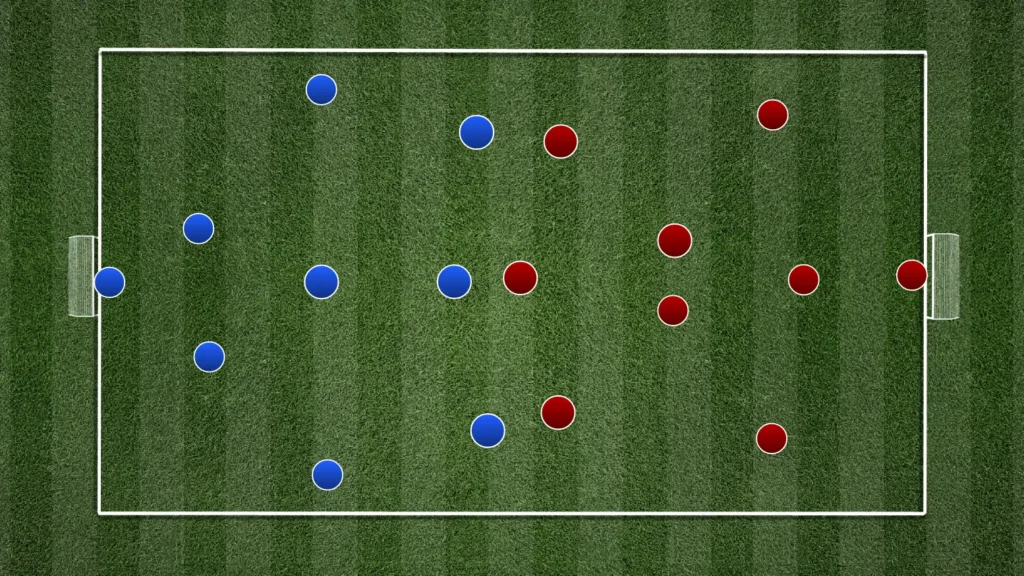
A 60x40m pitch with two teams of nine players and one neutral (joker). Both teams try to progress the ball through rotations and score on the opposition.
Rules:
- Players may move freely between zones.
- At ball circulation moments, the team must naturally form a new emergent structure (example: a temporary back three if a fullback advances).
- Coaches reward moments where the team creates a stable occupation without being instructed.
Why it works:
This drill teaches the foundational idea of relationism: structure is emergent, not enforced. Players experience how collective behaviours create stable patterns — but only after they interpret each other’s movements.
Final Thoughts: Why These Drills Matter
Relationism is not about chaos; it is about intelligent, fluid order that emerges from player interaction. These drills push players to communicate implicitly through movement, develop intuitive understanding of spacing, and coordinate rotations without rigid instructions. By creating unpredictable and constraint-based environments, players learn to interpret space and stabilise shape dynamically, which is the foundation of relational football.
Teams that train relationist principles develop attackers who can combine without rehearsed patterns, midfielders who constantly adjust their height and angle to support the ball-carrier, and defenders who understand how their positioning affects the entire collective structure. Over time, the group develops a shared “language” of movement that becomes extremely difficult for opponents to anticipate.