
Football is too fluid, too fast, and too collective to rely on fixed patterns alone. The best teams do not merely memorize movements — they operate according to underlying ideas that guide how they behave across all phases of the game. These are the Principles of Play: the strategic rules that give structure to a team’s actions without dictating every step.
Principles of play form the framework that links individual decisions to the team’s larger tactical identity. They ensure that when the game becomes chaotic — as it often does — players still make decisions that support the collective intention. Without principles, a team may perform isolated actions well, but it will struggle to create consistent advantages or solve emerging problems on the pitch.
What Are Principles of Play?
Principles of play are the fundamental guidelines that shape a team’s behavior both in and out of possession. They apply to every phase — build-up, progression, creation, pressing, defending deep, transitions, and everything in between.
They are not set patterns (“fullback overlaps here,” “eight receives there”), but overarching rules such as:
- Create width to stretch the defensive block
- Support the ball-carrier with at least two options
- Protect the center before defending the outside corridors
- Press with the intention of forcing the opponent into wide areas
These principles remain stable even as the game changes around them. The exact behavior of players may differ from match to match, but the logic that guides those behaviors stays intact.
Good principles enable a team to be both structured and adaptable. They give players reference points that help them improvise with purpose rather than react with panic.
Why Principles Matter
Modern football is defined by speed, pressure, and constant reorganization. Players must process information in fractions of a second while opponents try to manipulate their decisions and exploit hesitation. Principles of play reduce complexity by giving players a mental framework for choosing their next action.
A team with strong principles:
- Plays more consistently:
Even when the match becomes chaotic, players know the core ideas that shape their responsibilities. - Solves problems faster:
Instead of waiting for explicit instructions, players use principles to find solutions in real time. - Avoids disconnection between lines:
The team moves as a unit because players are guided by the same shared reference points. - Maintains identity regardless of formation:
A 4-3-3 can become a 4-2-4 or a 3-2-5 in possession, but the principles remain the same. - Transitions more effectively:
Because players understand why they are positioned a certain way, they react more intelligently after losing or winning the ball.
At the highest level, the difference between a “system team” and a truly cohesive one often lies in how deeply players understand and internalize these principles.
Principles in Possession
When in possession, principles guide how the team creates superiority, stretches the opponent, progresses the ball, and prepares for the next phase.
Most possession principles fall into a few key categories:
1. Creating Space
- Use width to pull the block horizontally
- Use depth to pin the backline
- Position between the lines to destabilize midfielders
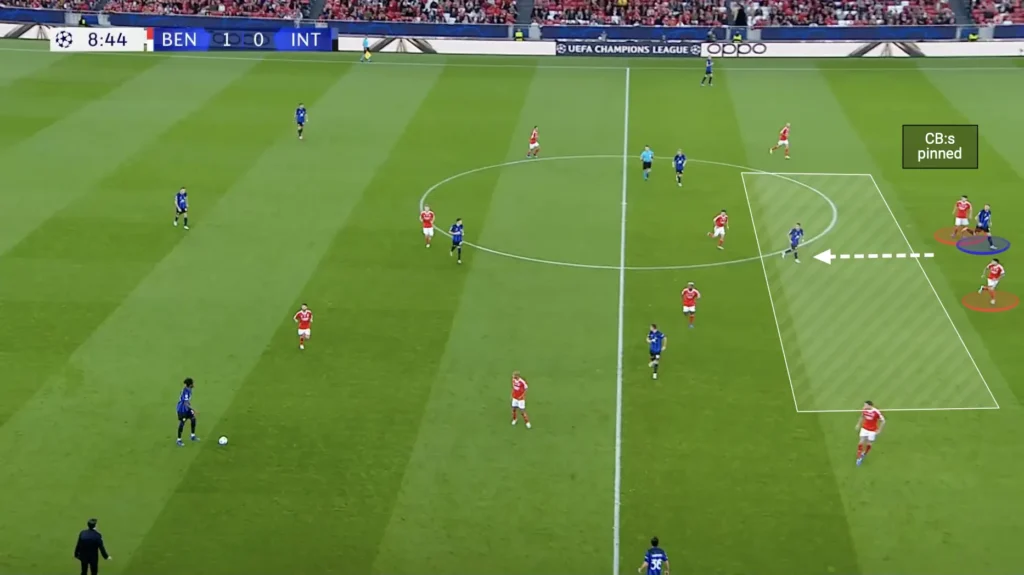
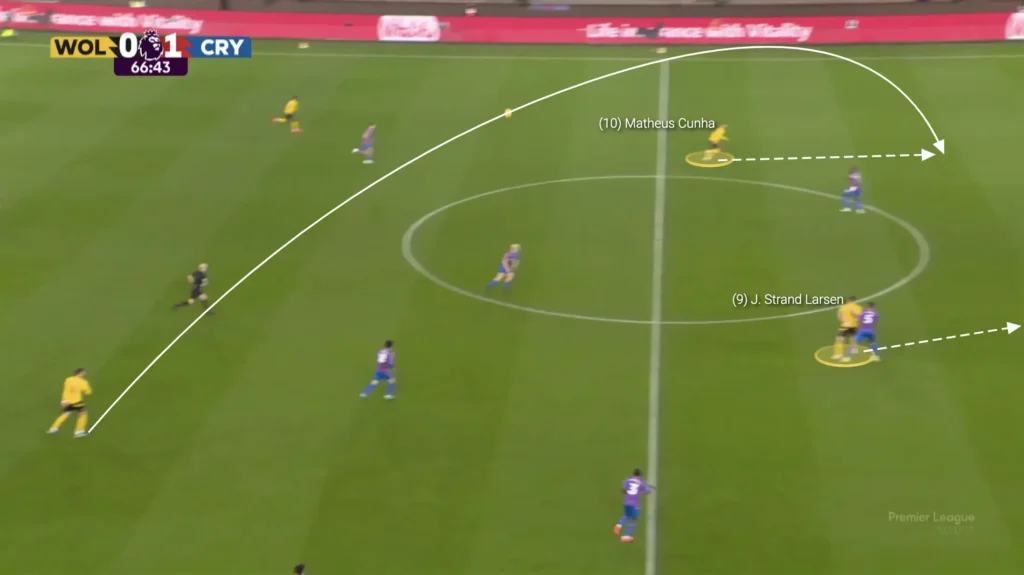
Many teams also add the principle of creating multiple types of space at once — for instance, using the striker to pin both center-backs while an attacking midfielder drops into the free pocket that opens beneath them.
2. Supporting the Ball
Players must create:
- A vertical option (in front of the ball)
- A horizontal option (to provide security)
- A diagonal option (to break pressure through angles)
Longer sequences depend on these constant support structures. Even a technically gifted side cannot progress without coordinated support.

3. Breaking Lines With Purpose
Penetration is not just about bypassing opponents; it’s about doing so at the right moment.
A team may value:
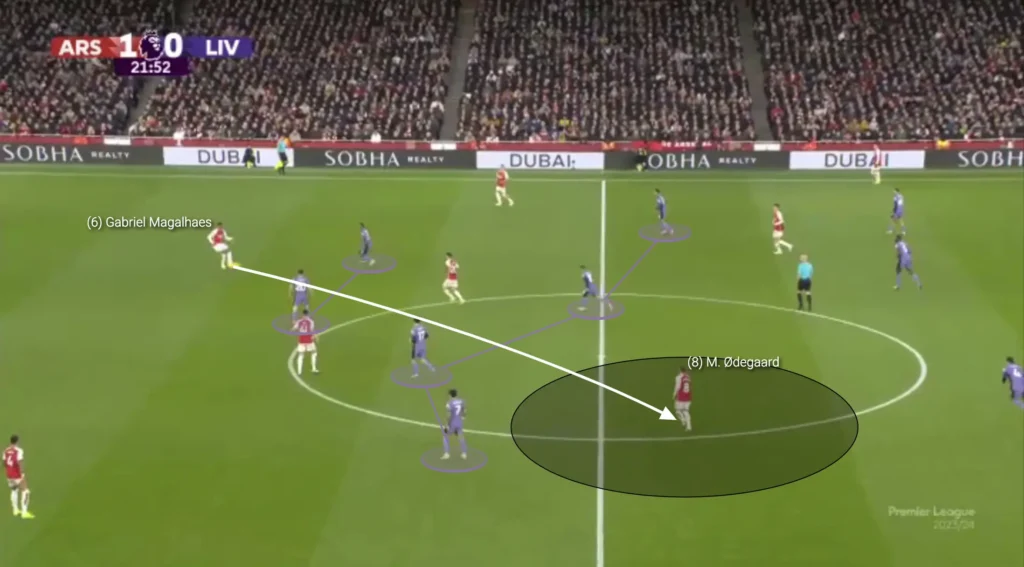
- Finding the free man between lines
- Using third-man combinations to defeat cover shadows
- Provoking pressure to open new lanes
Teams with mature principles know that not every line-breaking pass is a good one — timing and context matter as much as the execution itself.
4. Preparing for Transition
Top sides structure their attack around transition control.
This means:
- Rest-defenders positioned to stop counters
- Midfielders close enough to counterpress
- A shape that allows immediate recovery of the ball
In modern football, every attacking principle must also be a defensive one.

Principles Out of Possession
Defensive principles form the logic of how a team protects space, pressures the ball, and reacts to opponent movements.
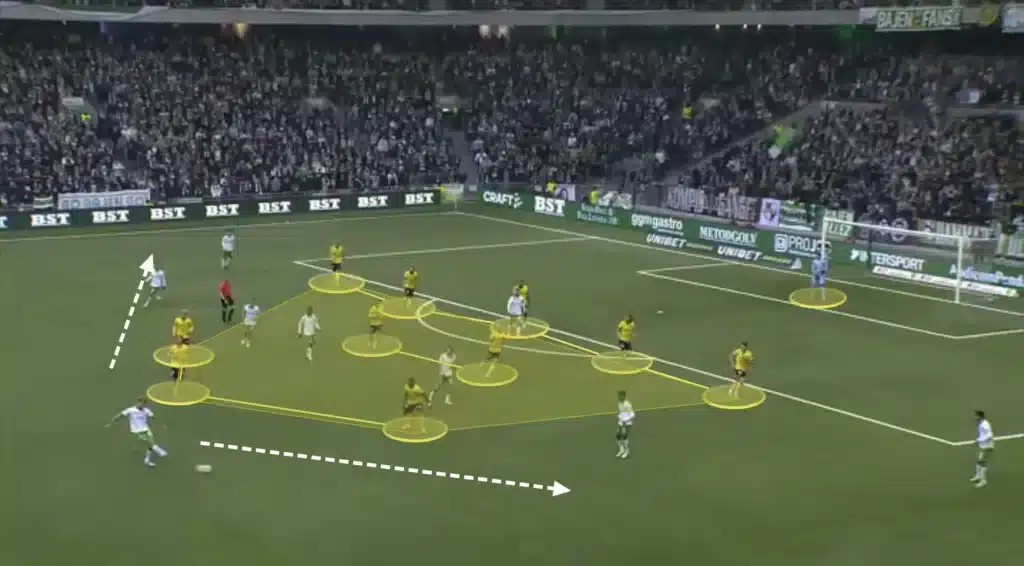
1. Protect the Center
Almost all elite defensive systems prioritize covering the central corridors first. Even pressing-oriented teams anchor their structure in central protection before chasing the ball outward.
2. Force Predictability
Good defensive units try to guide the opponent into specific areas — often the touchline, a fullback, or a pre-planned pressing trap. The aim is not only to win the ball but to shape where and how the opponent plays.

3. Control Depth
The height of the defensive line should reflect the team’s ability to press the ball. If the pressure is late or uncoordinated, the line must drop. If the press is clean, the line can step aggressively to compress space.
4. Collective Movement
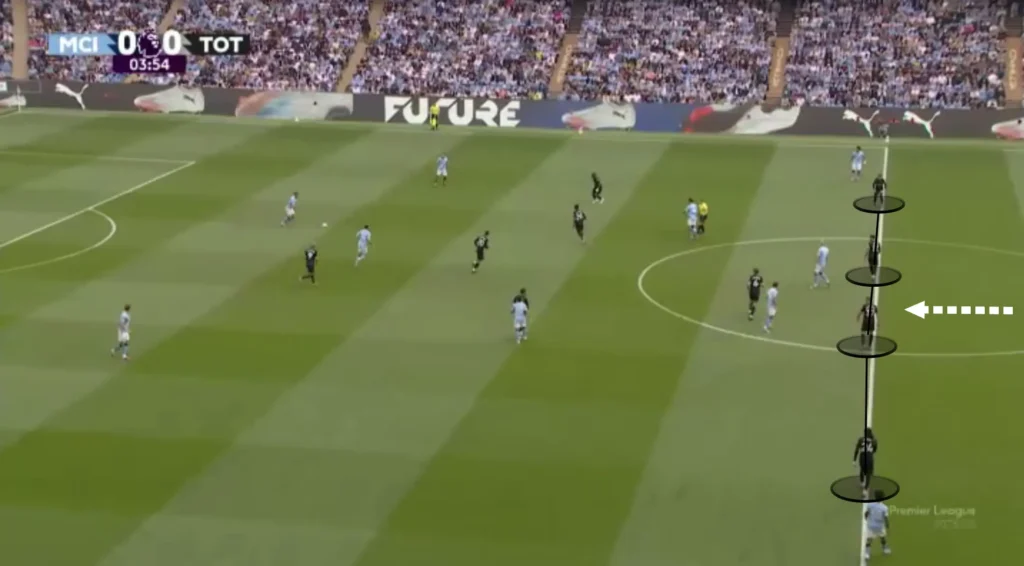
One player pressing without support breaks the structure.
Principles ensure synchronized movement:
- When the winger presses, the midfielder shifts
- When the center-back steps up, the fullback narrows
- When the pivot jumps, the backline adjusts
Defending is a chain reaction — principles make that chain predictable and reliable.

Principles in Transitions
Transitions are where principles are most visible.
Attacking Transitions
Teams may value:
- Immediate verticality
- Attacking with the nearest players
- Securing the ball first, then accelerating
- Pinning defenders with early runs
A clear principle helps players avoid confusion in chaotic moments.
Defensive Transitions
The most common principles include:
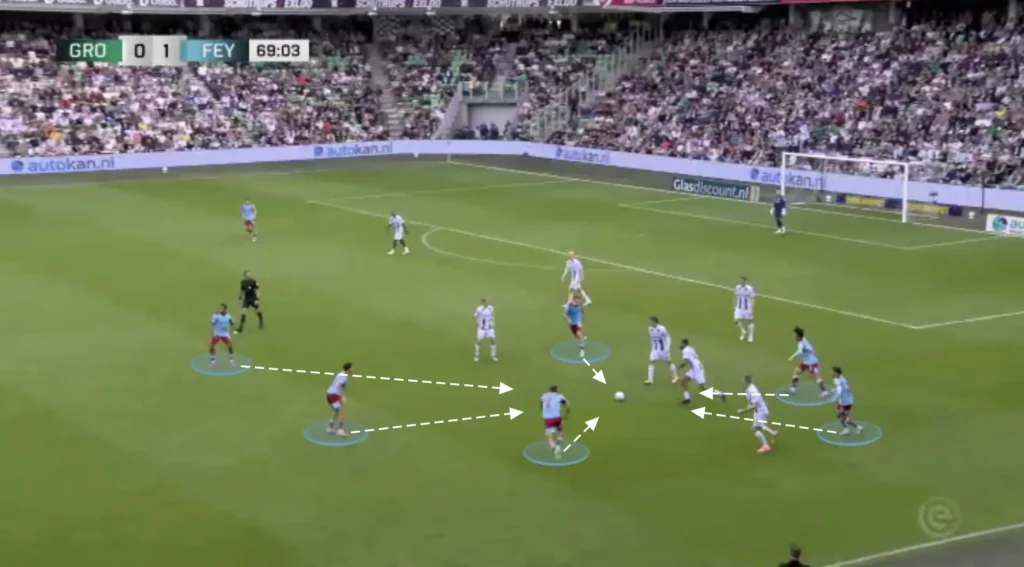
- Immediate counterpressure for 3–5 seconds
- Closing central routes before chasing the ball
- Sprinting to reorganize into the team’s base block
- Delaying the opponent rather than committing recklessly
Without strong principles, teams become vulnerable during the game’s most decisive moments.
Conclusion
Principles of play act as the tactical DNA of a football team. They guide decisions, shape behaviors, and create stability in a game defined by chaos and constant change. By providing a framework rather than rigid instructions, principles allow teams to combine structure with creativity — and to express a clear identity regardless of formation, personnel, or opponent.
The best teams don’t simply know their principles; they live them. And once principles become instinct, the team plays with both clarity and fluidity — a combination that usually defines high-level performance.