
Expected Goals Added — often written as xGA or xG Added — is one of the most valuable modern metrics for analysing how individual actions influence the probability of a team scoring. While traditional xG focuses on the scoring probability of a shot, xGA examines every action that comes before the shot. It measures how much a player increases or decreases the likelihood of scoring with passes, carries, dribbles, or possessions they take part in. In short, it shifts the lens from outcome to process, answering the crucial question:
“How much closer to scoring did this player move the team with this action?”
Why Expected Goals Added Matters
Football is shaped by long stretches of possession that never end in a shot, yet these moments often reveal more about a player’s quality than the final chance. Many midfielders, fullbacks, and wide playmakers create value far earlier in the sequence; they break lines, move the block, shift the opponent out of balance, or find teammates in advantageous spaces. xGA captures these hidden contributions by valuing the actions that build the attack rather than only the action that finishes it.
This allows analysts to distinguish between players who simply keep the ball and players who meaningfully advance the attack, often revealing how decision-making, awareness, and positional understanding contribute to team performance.
How xG Added Works
Every position on the pitch has an associated expected value (EV) — the probability that a team will score from possession in that location and context.
For example:
- Having the ball near the halfway line has almost no scoring value.
- Having the ball in the half-space just outside the penalty area has significant value.
- Having the ball with a free runner inside the box has extremely high value.
xGA measures the difference between the value before an action and the value after it.
Example
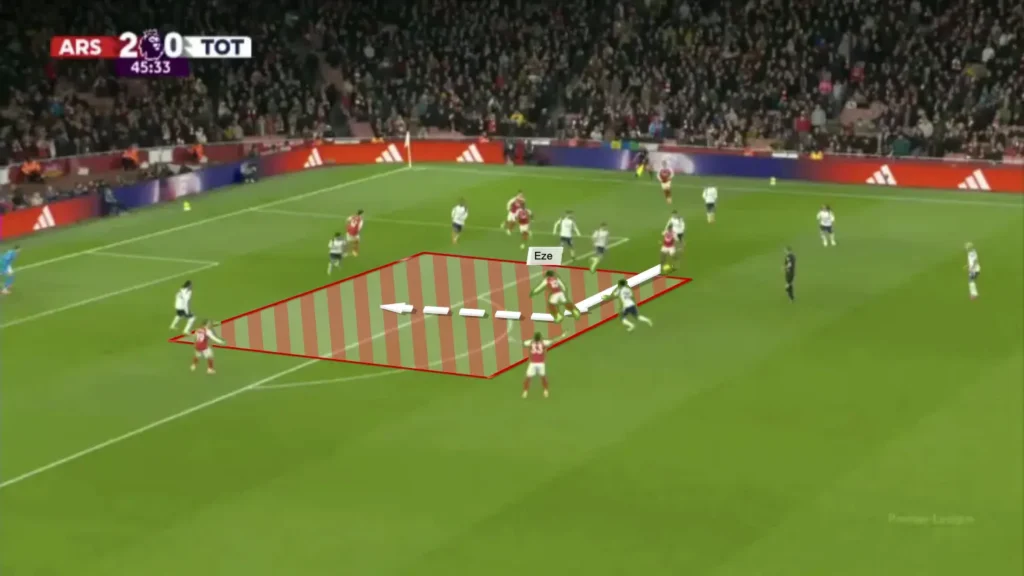
- Before the pass: probability of scoring = 0.03 (3%)
- After the pass is completed into Zone 14: probability of scoring = 0.11 (11%)
The Expected Goals Added for that pass = 0.08.
Over the course of 90 minutes, players accumulate positive and negative values based on how their actions affect their team’s scoring potential.
The Types of Value xGA Captures
Although different providers calculate it slightly differently, xGA usually evaluates three main categories: passing, carrying, and dribbling.
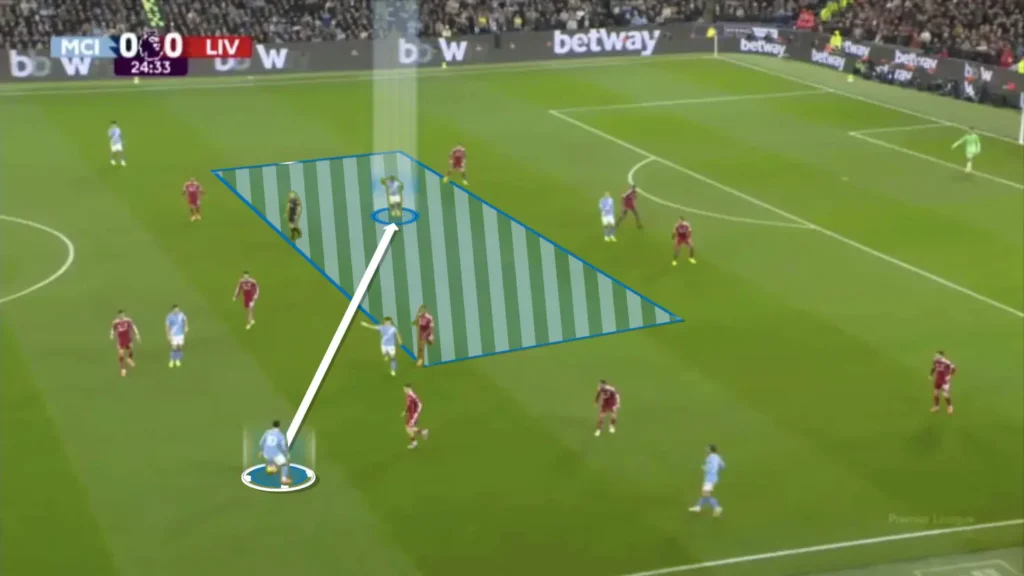
Passing Value
Line-breaking passes, switches into open wide areas, disguised through-balls, and vertical passes into well-positioned attackers tend to add the most value. These actions break structure and open new angles of attack.
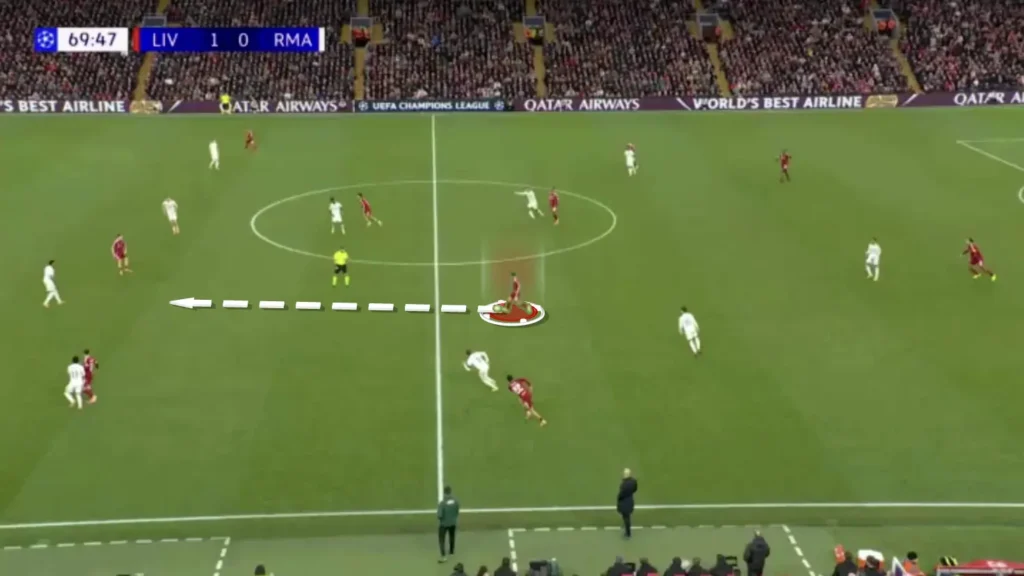
Carrying Value
Progressive carries — especially those into the half-spaces or toward the box — often force defenders to collapse, which raises the possession value even if the final pass doesn’t lead to a shot.
Dribbling Value
When a player beats an opponent, the team often gains immediate dynamic superiority. A single dribble can change the defensive shape dramatically, increasing the probability of creating a chance.

Importantly, xGA also captures negative value when a player loses the ball unnecessarily, plays into pressure, or moves the ball into a low-value zone. This balance between adding and losing value is what makes xGA so useful for judging decision-making quality.
Why Coaches and Scouts Use xGA
When used properly, xGA can reveal what traditional statistics miss. Midfielders who constantly add small increments through intelligent positioning and progressive play often become vital to the team even if they rarely appear in goals or assists. Fullbacks who repeatedly break lines with carries or passes suddenly emerge as key contributors.
Scouts also use xGA to identify young players who make high-value decisions consistently — a trait that tends to translate well across leagues and systems.
xGA also offers insight into a player’s role within a structure. A pivot with neutral or slightly negative xGA may still be performing perfectly if his task is stability and circulation. A winger with high xGA might be driving attacks through dribbles and aggressive actions. Context remains essential, but xGA helps guide which players deserve deeper video evaluation.
Limitations and Context
xGA doesn’t capture everything. It cannot quantify off-ball movement, pressing intelligence, defensive contribution outside possession, or strategic decoy runs that open space for teammates. Because it depends on possession value models, different analytics companies may produce slightly different results.
And crucially, players accumulate xGA differently depending on system. A fullback in a positional-play team will naturally operate in higher-value zones than a fullback in a deep defensive team, so the data must always be interpreted with role and structure in mind.
Conclusion
Expected Goals Added offers a deeper, more nuanced way of understanding how players contribute to chance creation beyond the final pass or shot. It reflects the decisions that move possession into dangerous spaces, the actions that destabilise defensive structures, and the moments that tilt the game toward the opponent’s goal.
When combined with tactical insight and video analysis, xGA becomes an essential tool for understanding why teams create chances — and which players are driving that process.
All images and visuals in this article are made with Once Sport — a powerful and easy-to-use tactical analysis platform. It helps you annotate clips, visualize movements, and create professional analysis videos. Readers of The Football Analyst get 10% off plus one month free with the code TFA10 at checkout.
Great article as always, but the stat providers must consider the writing of the stat itself, because now it’s a misleading. Someone would think about expected goal allowed rathen then added. I guess “xGAd” suit better and more clear.