
The 5-3-2 has become one of the most dependable defensive structures in modern football. Far from being a purely reactive or low-block-only system, it is a formation built around compactness, central control, and numerical superiority in key defensive zones. When executed well, the 5-3-2 allows teams to close the most dangerous spaces, force opponents into predictable areas, and manage pressure over long periods without losing stability.
Its real strength lies not in sitting deep, but in how clearly responsibilities are defined across the pitch. The back five provide security and flexibility, the midfield trio controls space and shifting, and the two strikers shape the opponent’s build-up. Together, they form a structure that prioritises space over opponents and organisation over constant pressing.
The Core Defensive Idea of the 5-3-2
Defending in a 5-3-2 is centred around maintaining compactness and leveraging numerical strength in central areas. The three center-backs form a solid base, while the wing-backs drop back alongside them under pressure to create a five-man defensive line. In front of this, three central midfielders screen the defence, protect the centre, and provide support toward the flanks. Ahead of them, the two strikers block central passing lanes and guide the opponent’s build-up away from the middle.
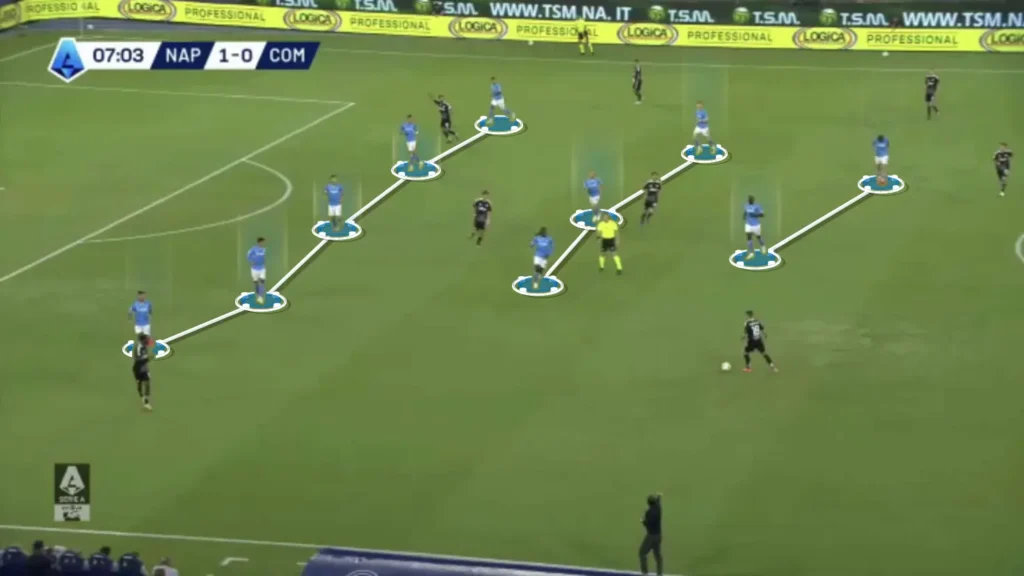
Crucially, the 5-3-2 is flexible. It can defend deep for long periods, but it can also step higher and press when conditions allow, without losing its underlying structure.
Closing the Center: The Formation’s Biggest Advantage
One of the main reasons teams choose a 5-3-2 is its ability to shut down central spaces.
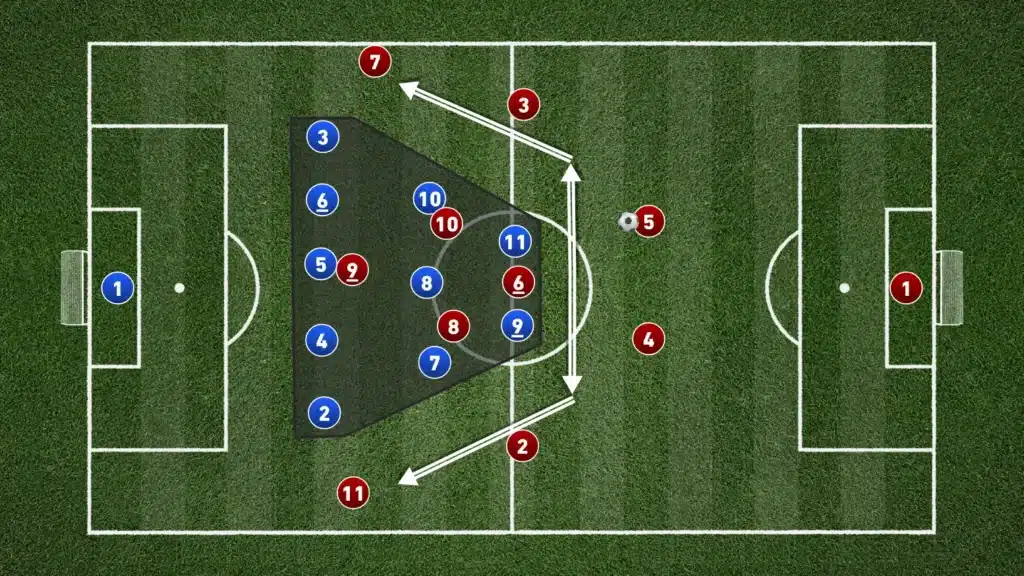
When the block stays compact, it becomes extremely difficult for opponents to find players between the lines or progress through the middle. The two strikers block central passing lanes and position themselves to prevent access into midfield. The midfield trio screens passes into the striker and attacking midfielders, while the three center-backs provide security behind them if someone does receive.
This central compactness does not rely on aggressive pressing. Instead, it is based on positioning, distances, and collective movement. The defenders prioritise space rather than following individual opponents too far, which limits the opponent’s ability to create numerical or positional advantages centrally.
As a result, most opponents are forced toward the flanks, where progression is easier to predict and easier to defend.
Roles Within the Back Five
The back five is the structural foundation of the 5-3-2, but its effectiveness depends on how each role is executed.
The Three Center-Backs
The central center-back acts as the organiser and primary box defender. He protects the penalty area, deals with direct play into the striker, and often provides cover when teammates step out.
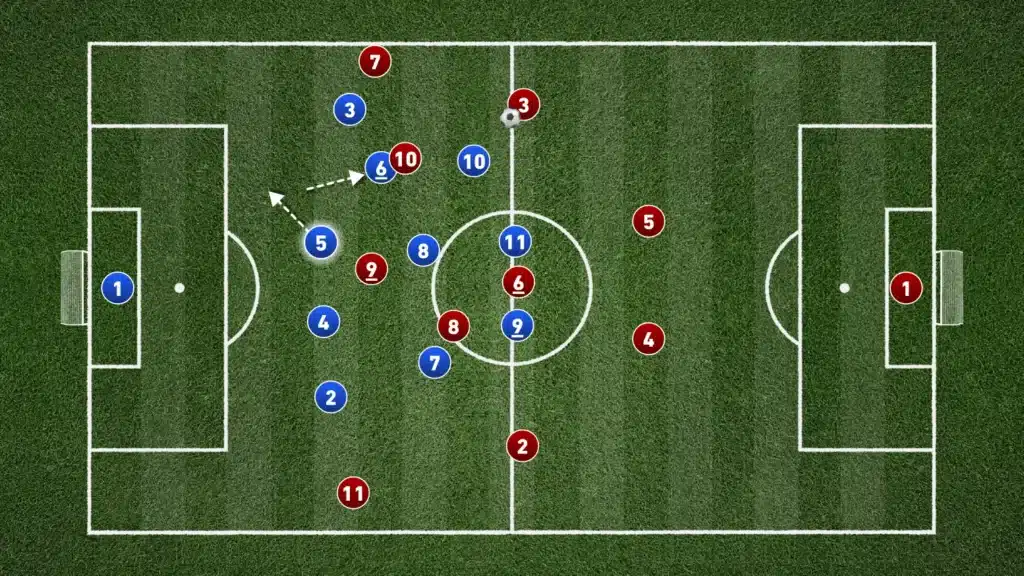
The two outside center-backs play a more aggressive role. They are responsible for stepping into midfield or wide areas to engage attackers who receive in the half-spaces or between the lines.
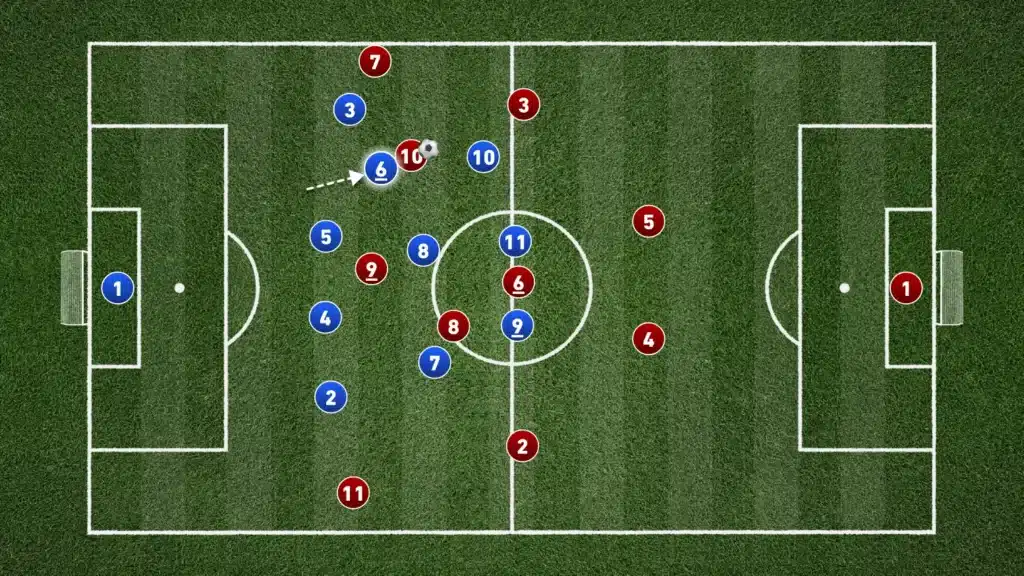
When one steps out, the rest of the backline shifts across to close the space he leaves, maintaining balance.
This ability to step out without immediately breaking the defensive structure is a key strength of defending with three center-backs.
The Wing-Backs
Defensively, the wing-backs control wide areas. They are responsible for engaging opposition fullbacks or wingers early, preventing free progression and uncontested crosses.
Because they have three center-backs behind them, wing-backs can defend more aggressively than fullbacks in a back four. If they are beaten, the outside center-back can slide across to cover, while the midfield shifts to protect the inside channel.
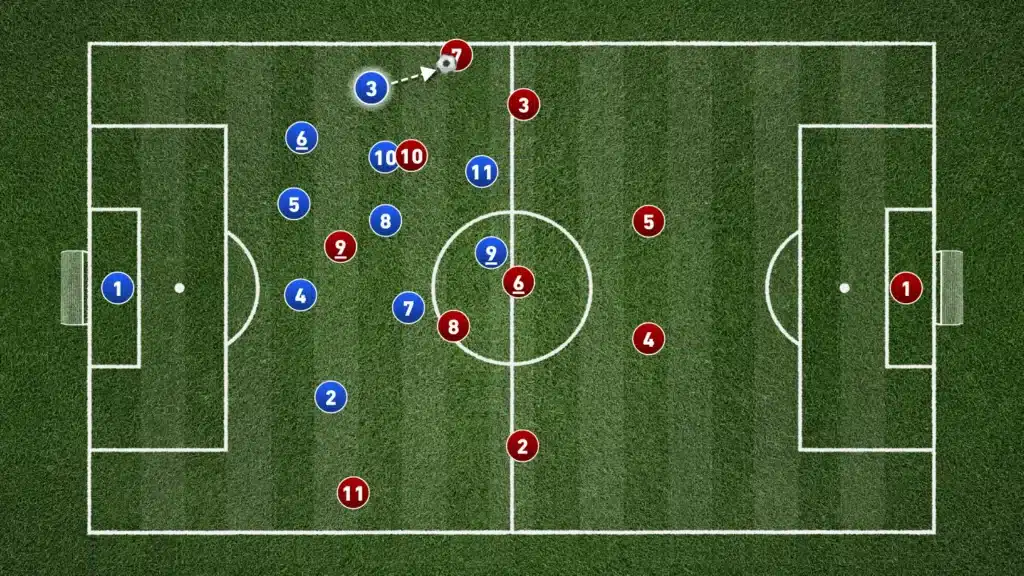
The Midfield Three: Screening, Shifting, and Support
The midfield trio is the engine of the defensive block.
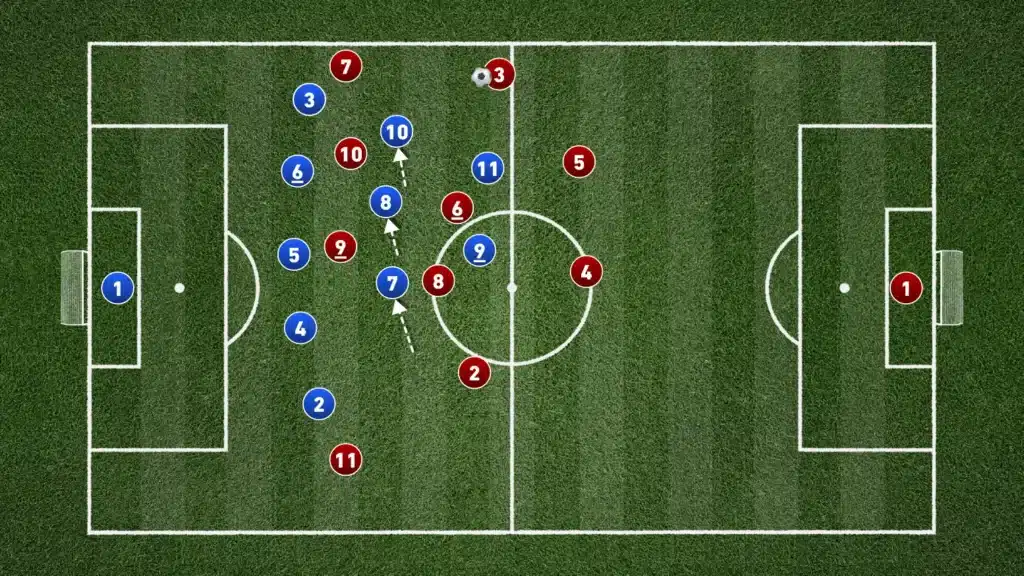
Typically, one midfielder operates as the central anchor in front of the back three, protecting zone 14 and breaking up play. The other two midfielders operate slightly higher and wider, responsible for blocking passing lanes into the half-spaces and supporting wide defending.
When the ball moves to one side, the ball-side midfielder shifts across to help create numerical superiority, while the remaining midfielders slide across to maintain central compactness. This constant shifting is demanding, but it is essential to keeping the block intact.
The Role of the Front Two
The two strikers are crucial to the defensive functioning of the 5-3-2.
Rather than pressing relentlessly, their main task is to screen central passing lanes and guide the opponent’s build-up toward the flanks. When pressing does occur, it is usually coordinated: one striker engages the ball-carrier, while the other blocks the nearest central option and then is ready to press if the ball is played to the other center-back.
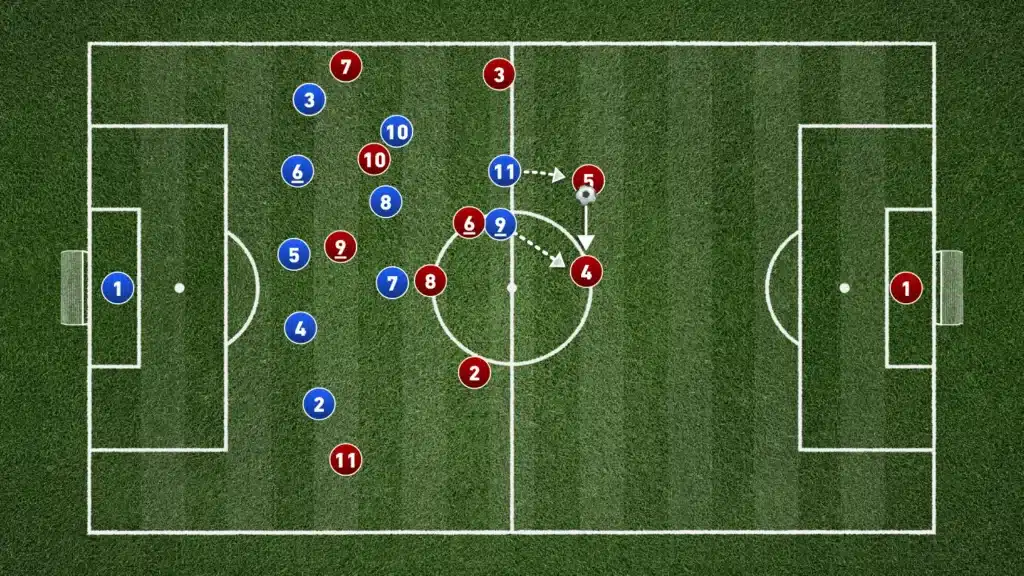
This helps protect the midfield trio behind them and reinforces the formation’s central compactness.
Defending Wide Progression: Two Main Solutions
Because the centre is so well protected, opponents usually try to progress down the flanks. When the ball is advanced wide — for example through a fullback — the defending team must decide who steps out to engage.
In a 5-3-2, there are two main solutions.
1. Midfielder Steps Out
The first option is for the ball-side central midfielder to push out toward the wide player. When this happens, the other two midfielders shift across to close the centre and protect the space in front of the defence.
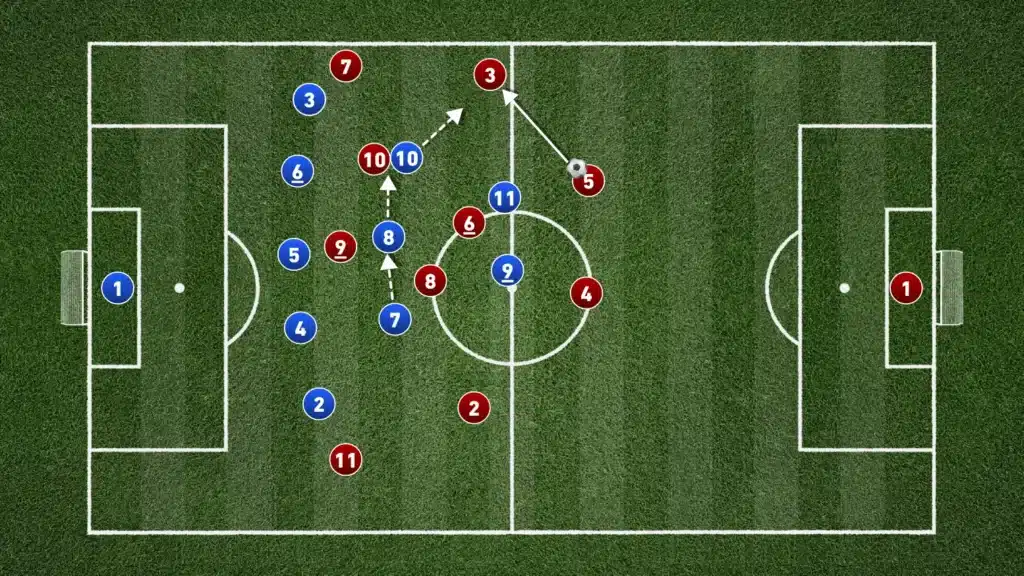
This approach keeps the back five intact and avoids stretching the defensive line horizontally. However, it often leaves space on the far side of the pitch.
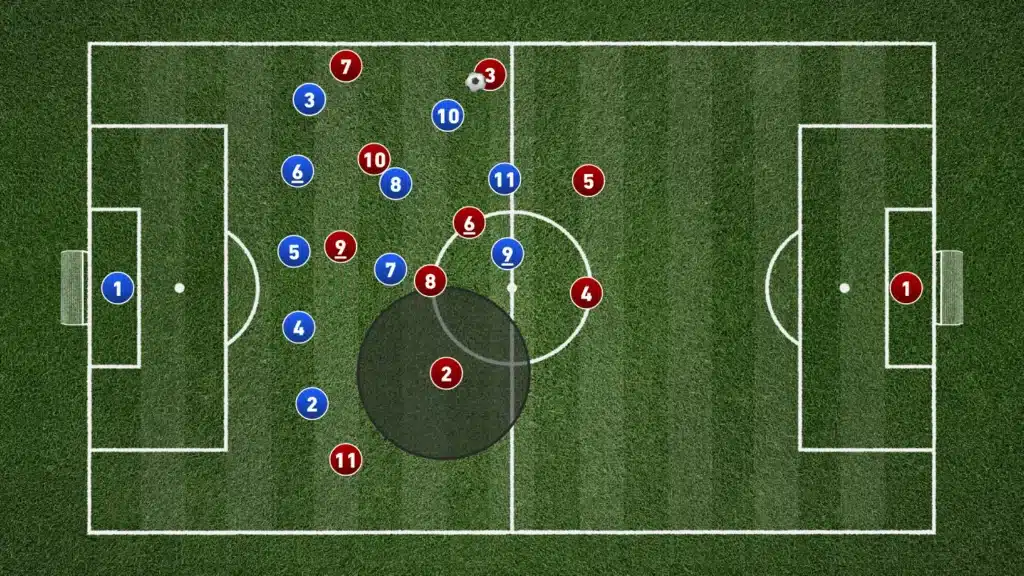
While this can look dangerous, switching play across the entire width with control is difficult, especially under pressure. If the switch is delayed or inaccurate, the defending team usually has enough time to shift across and recover.
2. Wing-Back Steps Out
The second option is for the wing-back to step up and engage the wide player directly. In this case, the outside center-back shifts across to cover the channel behind him, while the rest of the backline slides toward the ball.
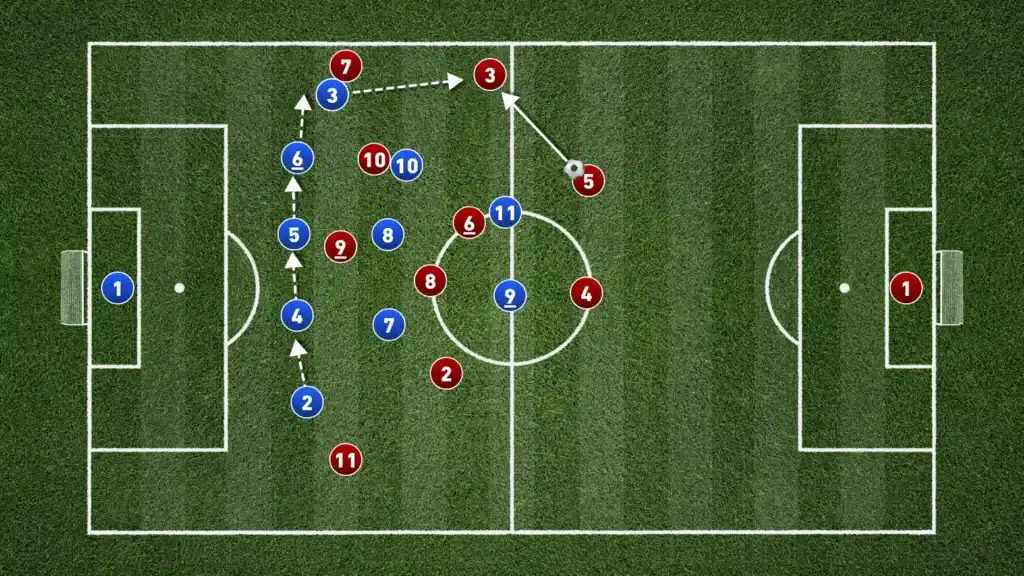
This keeps the midfield more compact and reduces central exposure, but it can stretch the defensive line if movements are not synchronised. Timing and communication between the wing-back, center-back, and midfield are therefore crucial.
The Problem of Shifting Across the Block
One of the main challenges of defending in a 5-3-2 is dealing with rapid switches of play.
The midfield trio must constantly shift to close central spaces and support wide defending. Over long defensive phases, this becomes physically demanding. As fatigue sets in, midfielders may arrive later, distances grow slightly, and small gaps begin to appear — especially on the far side after switches.
This is often when the block becomes vulnerable, not because the structure is flawed, but because the physical demands of maintaining compactness are high.
Stopping the Switch of Play
To manage this issue, many teams focus on limiting the opponent’s ability to switch play through central areas.
One effective method is to create a diagonal defensive structure on the ball side. The ball-side wing-back, the nearest central midfielder, and the two strikers position themselves in a diagonal line that blocks access into midfield.
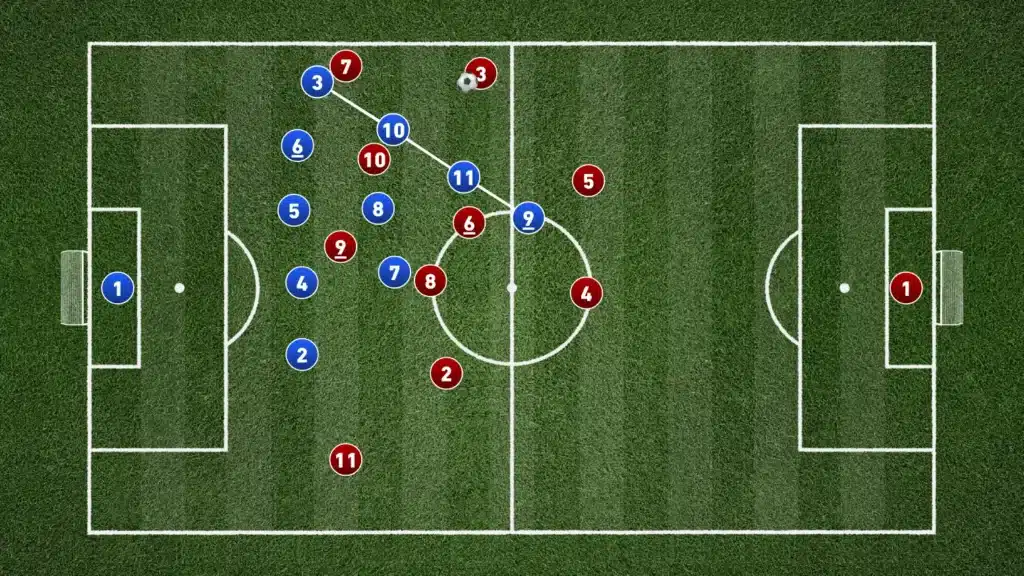
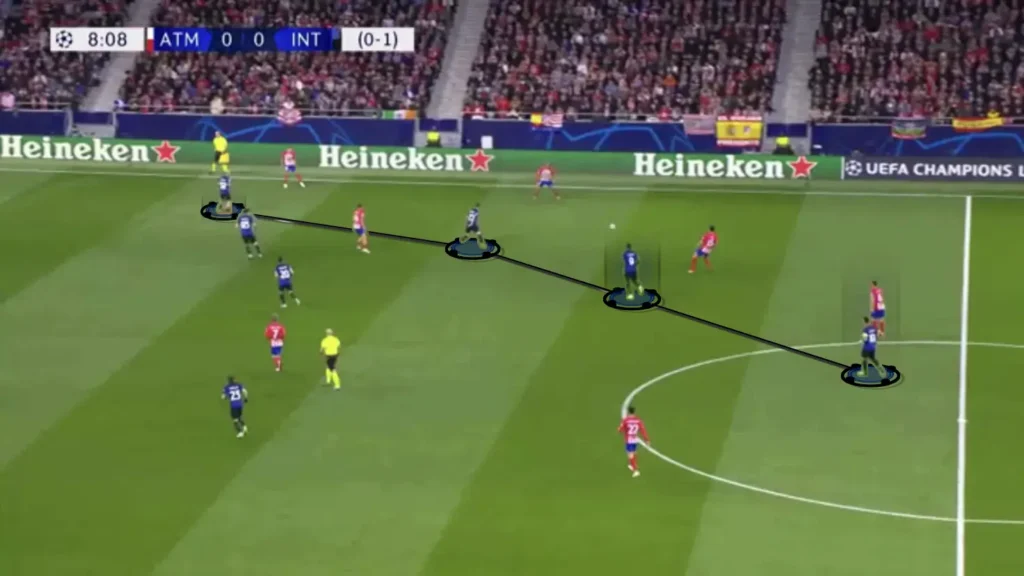
This prevents clean switches through the centre and forces the opponent to recycle possession backward toward their center-backs. By forcing the switch to travel through deeper areas, the defending team gains time to shift across collectively.
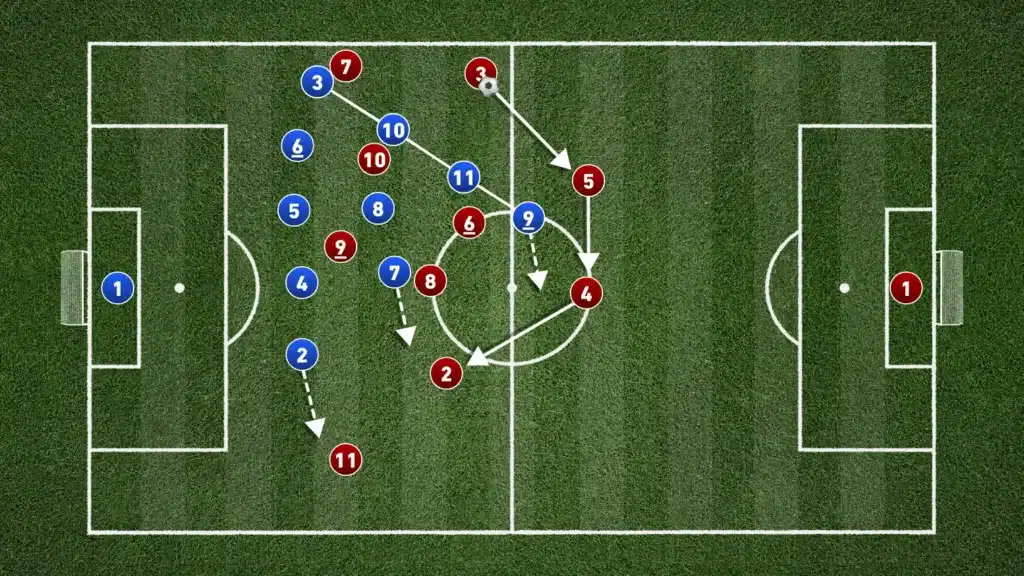
This allows the 5-3-2 to maintain compactness and reduces the physical strain on the midfield. Rather than chasing the ball, the structure controls how the opponent can move it.
Defending the Penalty Area
The 5-3-2 excels at box defending. With three center-backs and midfield support, teams can deal with crosses, cut-backs, and second balls more effectively than with a back four.
One center-back typically attacks the first ball, while the others cover space around him. Midfielders track late runs and protect the edge of the box, reducing the danger of rebounds and loose balls.
This makes the formation particularly effective against teams that rely heavily on crossing or box overloads.
Conclusion
Defending in a 5-3-2 is about much more than forming a back five. It is a system built on central compactness, intelligent shifting, clear decision-making in wide areas, and collective discipline.
When coached and executed properly, the 5-3-2 allows teams to dictate where and how the opponent can attack. It forces play into predictable zones, limits central penetration, and provides strong protection of the penalty area.
In a game increasingly defined by positional play and aggressive attacking structures, the 5-3-2 remains one of the most effective defensive systems for restoring balance, control, and clarity without sacrificing flexibility.
All images and visuals in this article are made with Once Sport — a powerful and easy-to-use tactical analysis platform. It helps you annotate clips, visualize movements, and create professional analysis videos. Readers of The Football Analyst get 10% off plus one month free with the code TFA10 at checkout.