
The 2-2-5-1 formation is not a conventional starting shape but an in-possession attacking structure that appears once a team establishes control in the opponent’s half. It is most commonly used by dominant sides looking to pin deep defensive blocks, sustain pressure in the final third, and create repeated attacking waves rather than relying on fast transitions. With two players securing the rest-defence, two stabilising circulation behind the attack, five players occupying advanced lanes, and one striker anchoring the center, the 2-2-5-1 represents a deliberate commitment to territory and presence.
When executed correctly, the shape allows teams to control both space and rhythm in advanced areas. When executed poorly, it can leave the build-up exposed and place heavy demands on a small group of players. Understanding both sides of that balance is essential to using the system effectively.
Understanding the Structure
The 2-2-5-1 rarely appears instantly; it usually emerges organically from more conventional base formations. One common route into the structure is through a 4-2-3-1.
From this base, the wingers invert into central positions between the opposition’s midfield and defensive line, while the fullbacks push higher up the flanks to occupy the vacated wide areas.
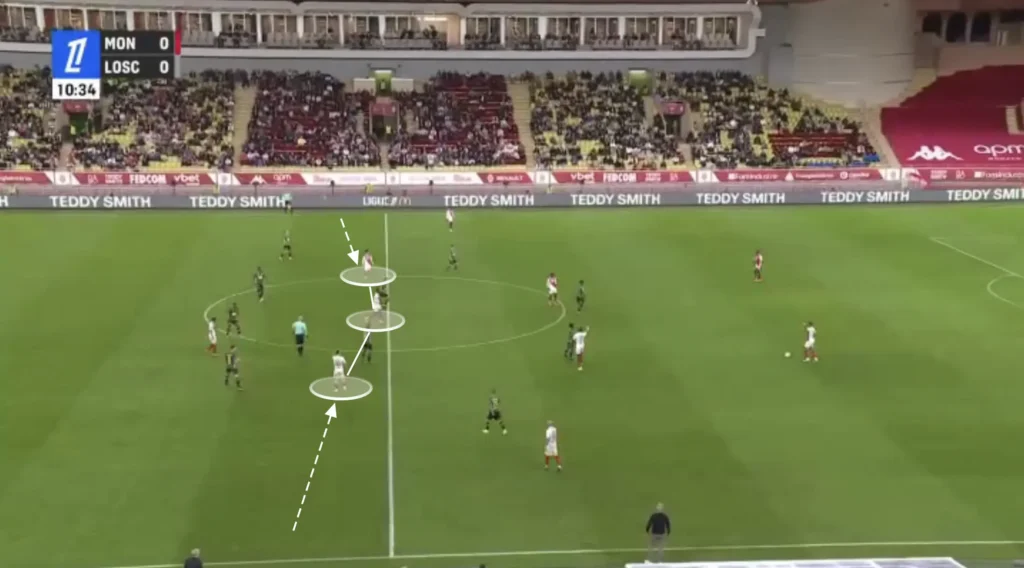
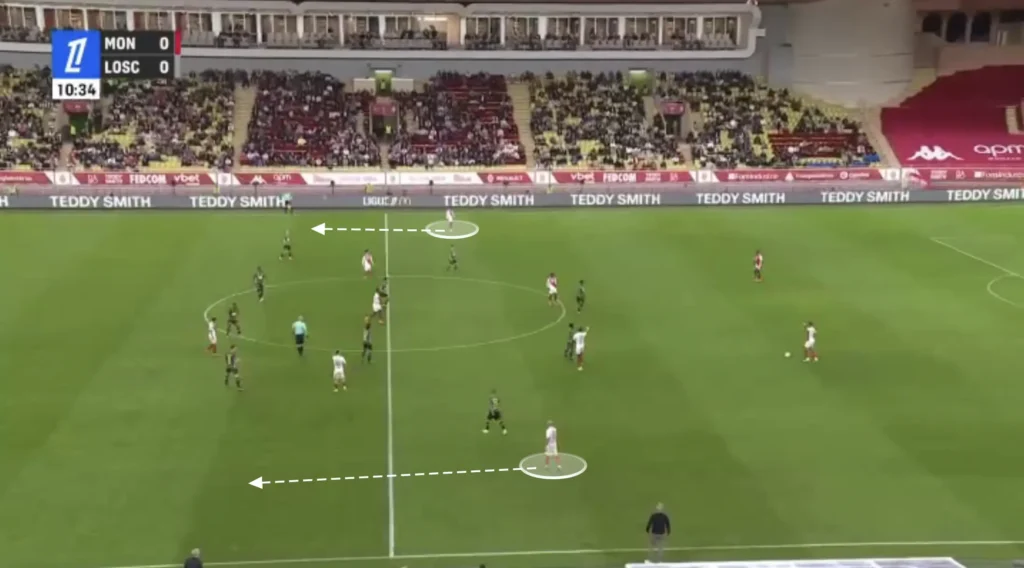
This movement transforms the shape into a 2-2-5-1 in possession, with the two center-backs at the back, the double pivot stabilising circulation, five players occupying advanced lanes, and the striker remaining central.
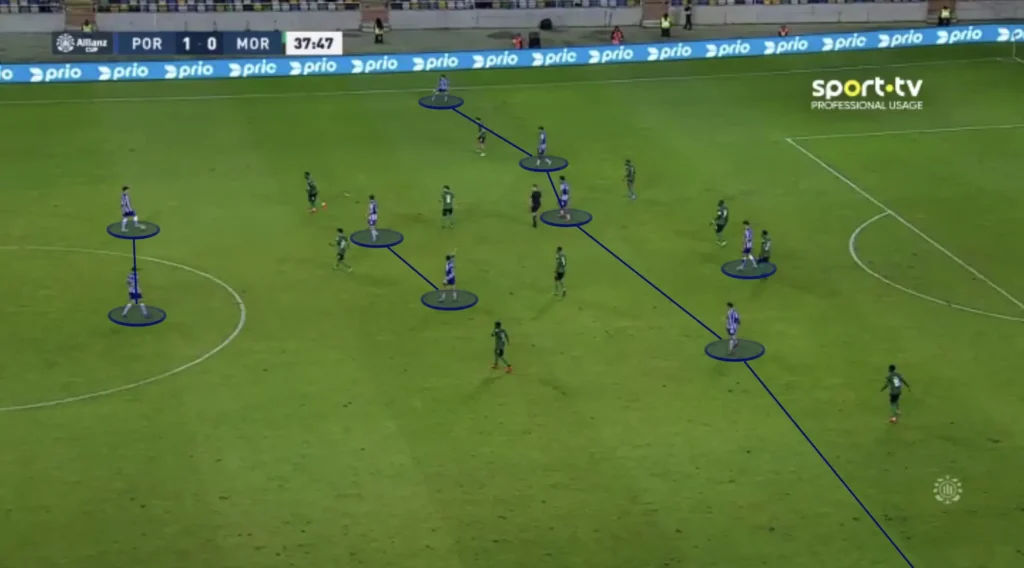
This positioning serves several purposes. By moving higher, the fullbacks can either support the midfield with additional passing outlets or exploit open channels for overlapping runs. As they advance, they often draw defenders out of position, which opens space centrally for the inverted wingers, attacking midfielders, or late runners to attack.
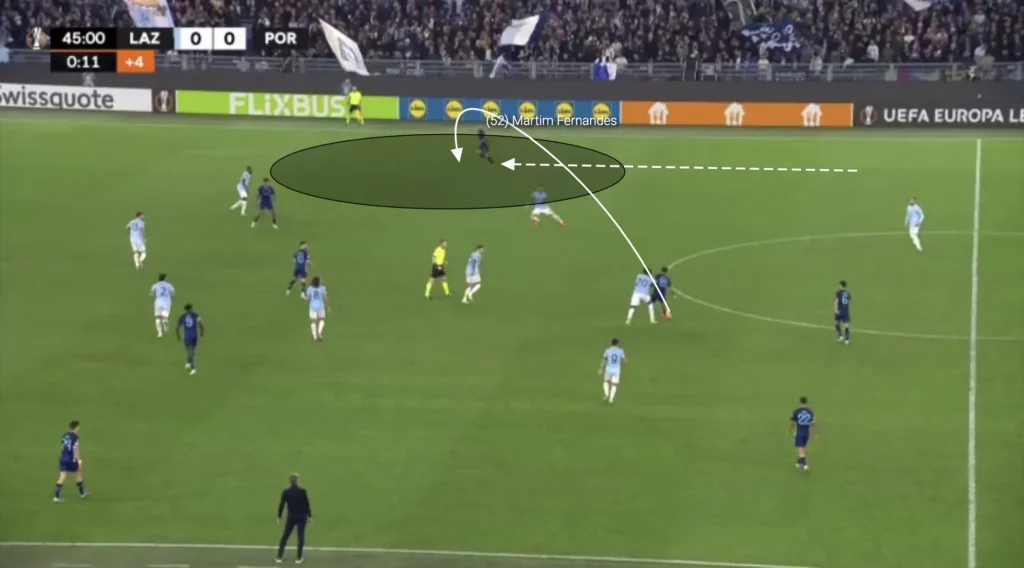
When progressing the ball from deeper areas, the pivots and center-backs can also find these advanced fullbacks with diagonal passes into space outside the opposition defence. Because the defending block is usually compact centrally at this stage, fullbacks often receive with time and space to take the ball forward, cross, or combine.
How the 2-2-5-1 Creates Attacking Advantages
Attacking in the 2-2-5-1 focuses on sustaining pressure, occupying key zones high up the pitch, and actively creating overloads near the opponent’s backline. Because so many players operate close to the final third, attacks do not depend on one perfect action; instead, the structure encourages repeated entries, recycled possession, and cumulative stress on the defensive block.
Occupying the Space Between the Lines
A key strength of the 2-2-5-1 is the presence of three interior attackers positioned between the opposition’s midfield and defensive line. By placing this many players in the pockets, the attacking team consistently creates forward-facing reception options in the most dangerous area of the pitch, where defenders struggle to apply pressure without exposing space behind them.
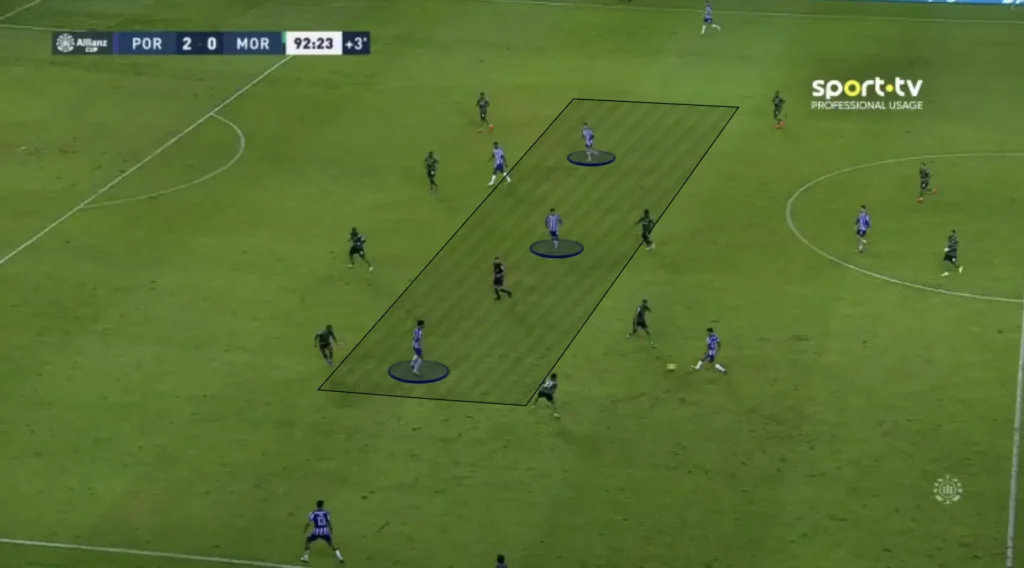
When one of these interior players receives between the lines, he can turn and drive at the backline, combine quickly with nearby attackers, or release runners beyond the defence.
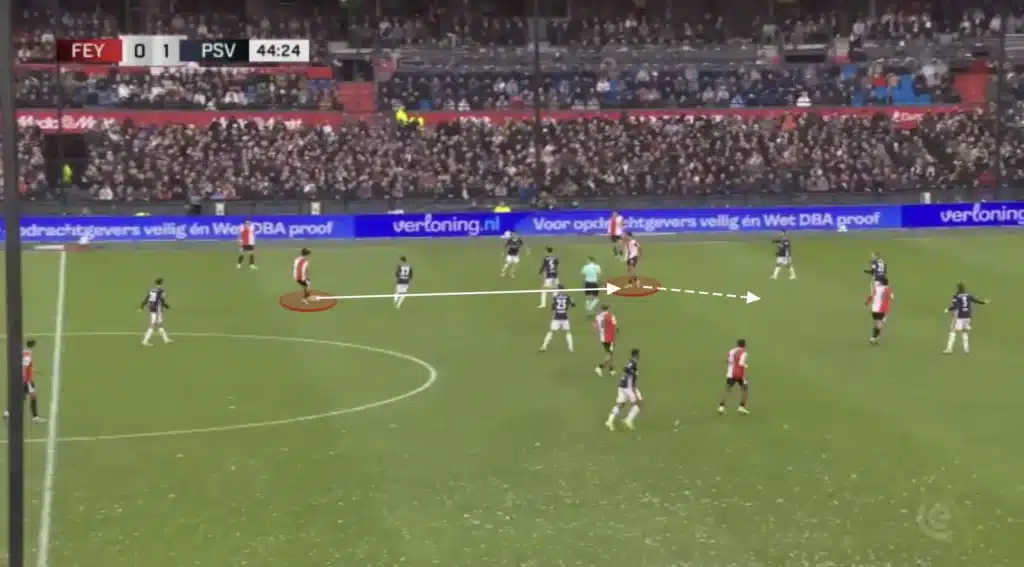
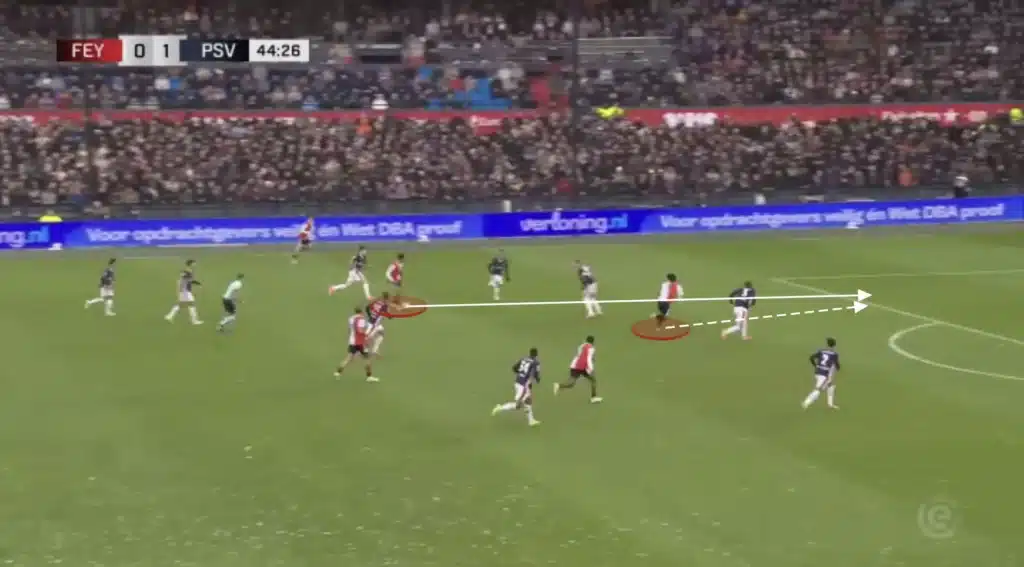
The striker pins the center-backs, preventing them from stepping out freely, while the wide players stretch the backline horizontally. As a result, the receiving interior attacker often operates with time, or at least draws a defender out of position, which opens space for a teammate to exploit.
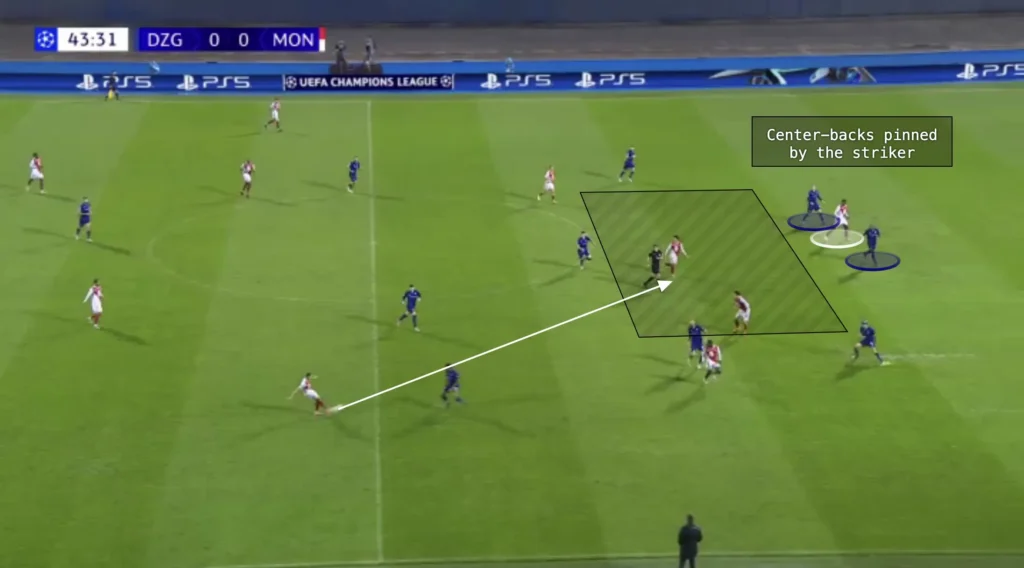
This dynamic allows the attacking team to progress play through the most valuable central zones and quickly shift the defensive block into a reactive, unstable state.
Overloading and Stretching the Backline
By occupying all five vertical lanes across the pitch, the 2-2-5-1 stretches the defensive line both horizontally and vertically. The wide players pin the fullbacks, the striker pins the center-backs, and the interior attackers position themselves between defenders, which constantly forces the backline to make difficult spacing decisions.
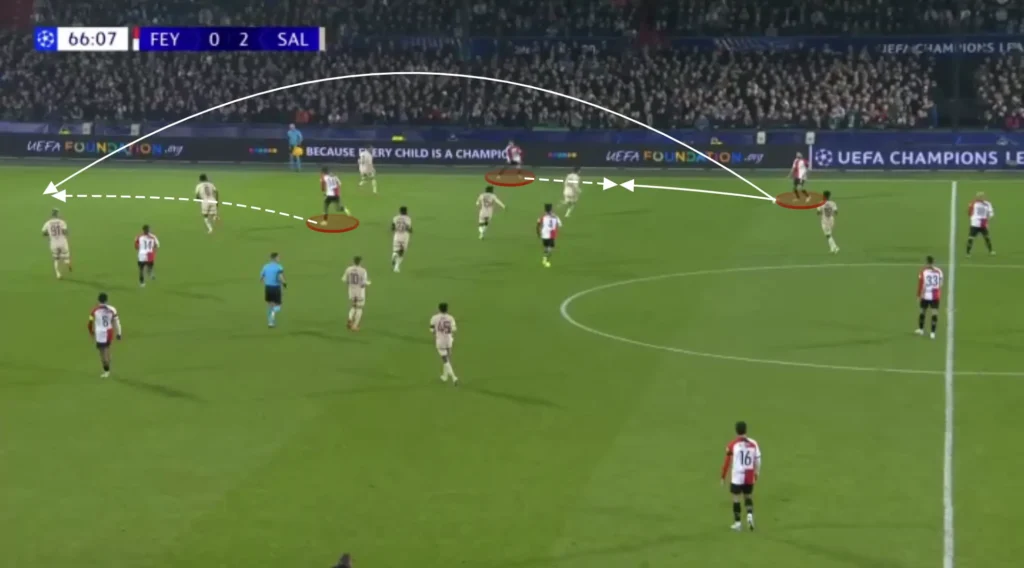
A common example of how this creates advantages occurs when an interior attacker drifts wider into the half-space or touchline corridor. As he moves across, he forms a 2v1 together with the wide player against the opposition fullback.
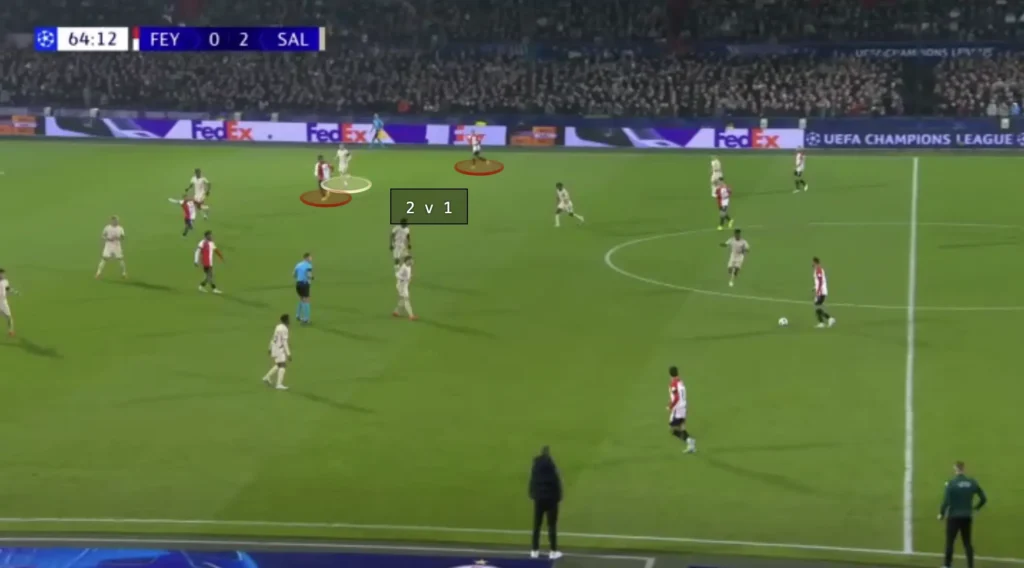
The fullback is then forced to choose between stepping out to press or holding the line. If he steps out, space opens up behind him for runs in behind; if he stays, the wide player can get the ball and progress it up the pitch.
Attacking the Box With Numbers
Another core strength of the structure is how many players are already positioned to attack the penalty area. With the striker, wingers, and interior attackers arriving in the box, the attacking team can consistently attack crosses and cut-backs, with high numbers.
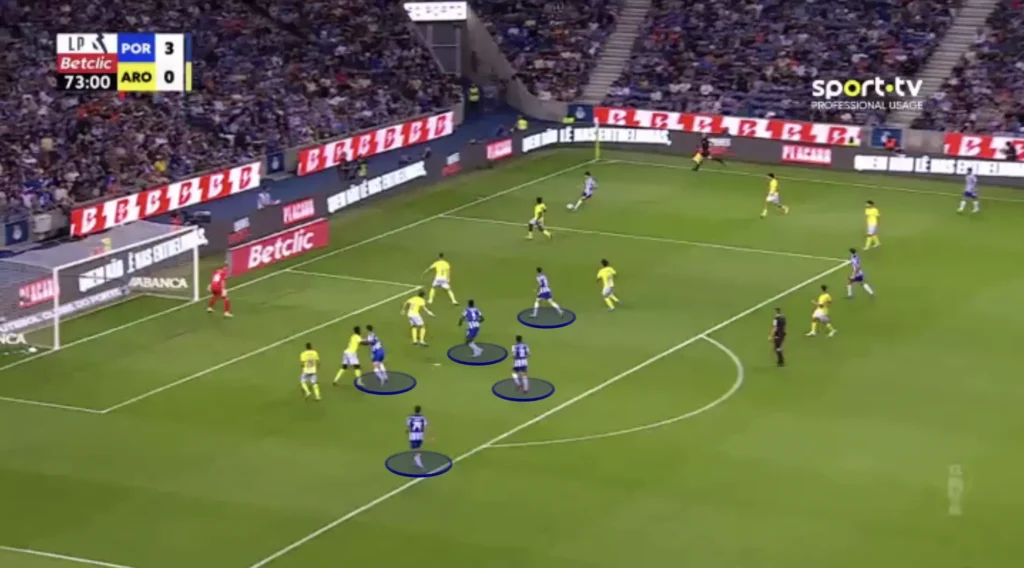
This does not only increase the probability of scoring from the first delivery, but also improves access to rebounds and second balls. Defensive clearances often fall to attackers positioned just outside the box, allowing the team to recycle possession immediately and continue the attack without losing territorial control.
Direct Play and Second-Ball Dominance
Although the 2-2-5-1 strongly supports controlled possession, it also gives teams a reliable option to play more directly when pressure demands it. Because so many attackers operate close to the striker, long passes no longer function as hopeful clearances but as intentional plays into well-supported areas, where the attacking team arrives with numbers and structure.
When the team plays the ball into the striker or targets an advanced zone, several players immediately collapse around the duel to compete for the second ball. Winning these moments often leads to instant attacking situations, as the opposition backline remains pinned deep and cannot step forward to engage.
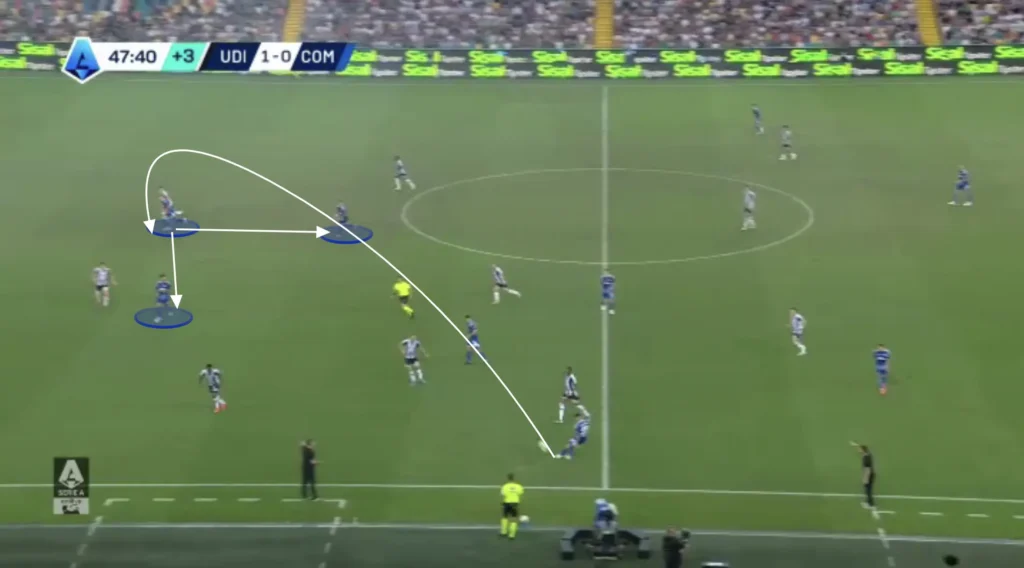
When attackers manage to bring the ball down or secure a clean second ball in these areas, they can attack the backline directly and quickly, turning physical duels into immediate goal-threatening actions.
Sustained Pressure, Counterpressing, and Territorial Control
A core strength of the 2-2-5-1 is how compact attacking spacing allows teams to sustain pressure in the opposition half. By keeping the attacking line high and positioning the double pivot close behind, the team compresses the pitch and stays permanently connected around the ball. This allows the team to counterpress immediately after losing possession, making it difficult for the opponent to clear the ball cleanly or play out of their block.
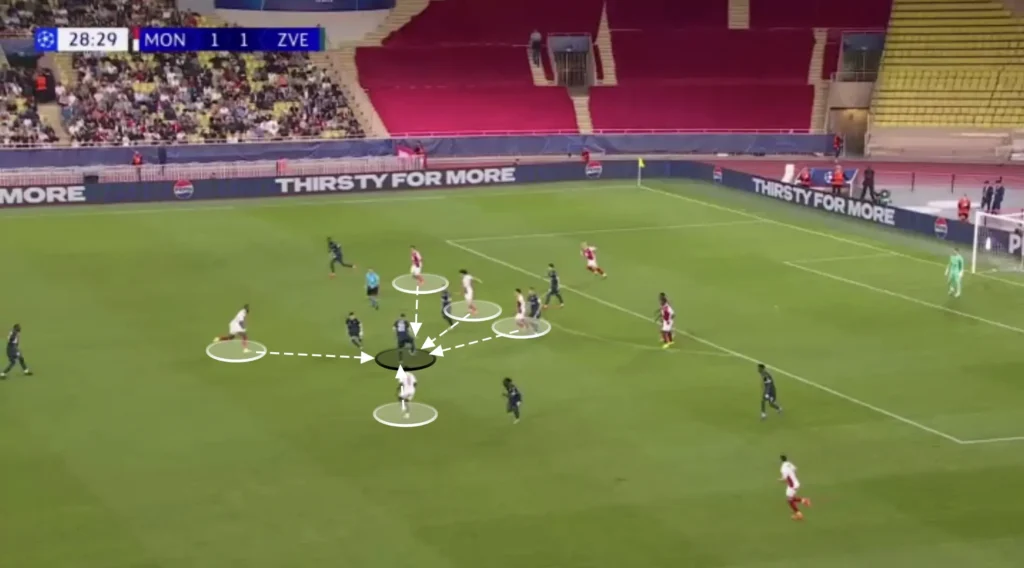
When the opposition does clear the ball, the attacking team can immediately contest those moments because players are already positioned close to the action. Clearances and loose balls often fall to attackers or pivots in advanced areas, allowing the team to recycle possession quickly and re-enter the final third without resetting the structure.
When spacing is correct, the 2-2-5-1 allows teams to suffocate the opposition, recycle possession repeatedly, and wear down even well-organised defensive blocks through constant territorial dominance. However, when the distances stretch, the structure loses its ability to control the pitch. Opponents then find time to lift their heads, escape pressure, and attack the spaces left behind.
Common Weaknesses and Risks
A potential disadvantage of the 2-2-5-1 is the limited number of players involved in the early phases of build-up. Compared to structures that use a back three or position more players deeper in build-up, teams often lack short connections when facing aggressive pressing. This sometimes makes it harder to progress past the opponent’s first and second pressing lines, especially when they block central lanes and remove clear passing angles.
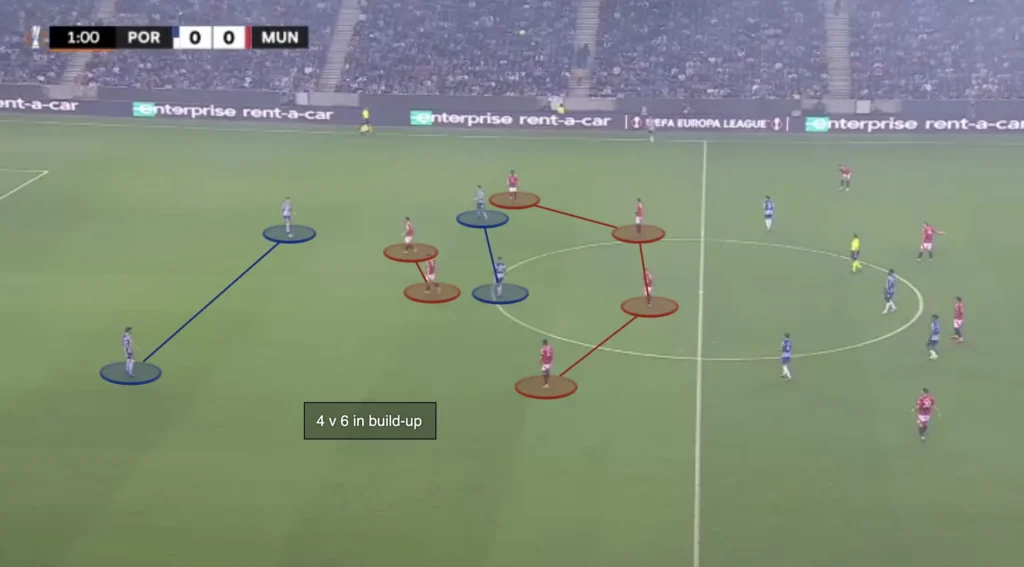
Because of this, the system places heavy demands on the center-backs and double pivot. These players must receive comfortably under pressure, protect the ball with minimal support, and progress play through vertical or diagonal passes even when the opposition presses intensely. When that quality drops, attacks lose rhythm. Teams then rely on rushed long balls or slow circulation, allowing the opponent to regain compactness and defend the final third more easily.
Another major risk emerges when the team loses possession, and the opponent immediately targets wide areas in transition. With many players committed high and centrally, opponents can attack quickly into the spaces outside the back two. If the pivots fail to shift across immediately or a forward pass bypasses them, wide defenders can become exposed.
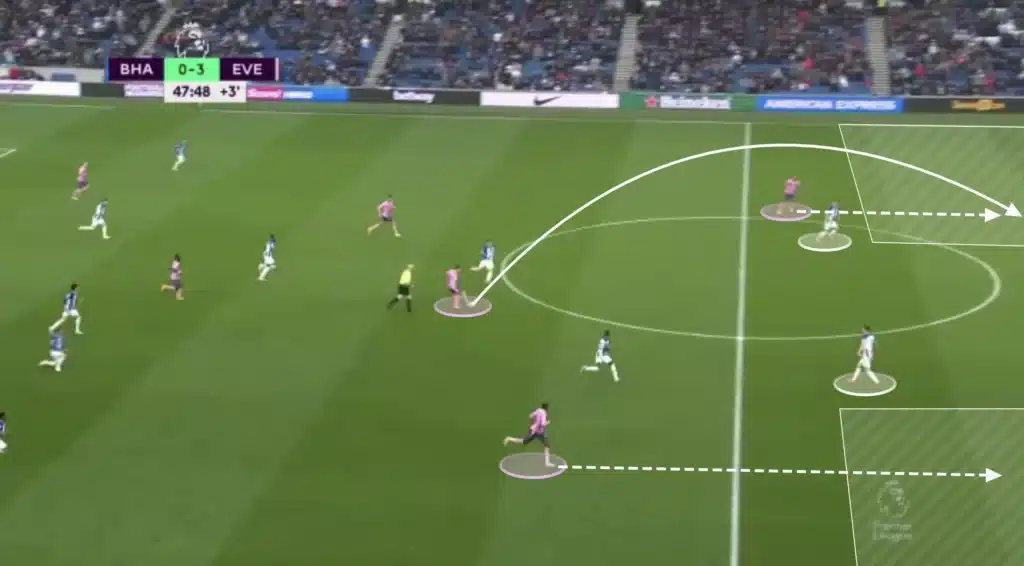
This forces the midfield to cover large horizontal distances repeatedly, increasing both physical load and defensive risk.
Finally, the structure leaves little margin for error in transition moments. If possession is lost when the attacking line is stretched or disconnected from the double pivot, counterpressing becomes harder, and the opponent can escape pressure quickly. With fewer players behind the ball, delayed reactions and poor spacing tend to lead directly to dangerous situations.
Conclusion
The 2-2-5-1 is one of the most aggressive and territorially dominant attacking structures in modern football. It allows teams to pin down defensive blocks, attack with numbers, and create sustained pressure through proximity and repetition rather than speed alone. Its strengths lie in occupying advanced lanes, overloading the backline, attacking second balls, and consistently getting players into goal-scoring positions.
However, these strengths come with clear trade-offs. The system demands technical quality in early build-up, disciplined spacing behind the attack, and strong counterpressing awareness. When those conditions meet, the 2-2-5-1 becomes a powerful tool for breaking down deep defences. When they are not, it can quickly expose the team structurally.
Used with clarity and precision, it represents one of the clearest expressions of modern attacking dominance and territorial control.
Thank you coach.