
In elite football, the smallest margins decide everything. While open-play tactics dominate most analysis, some of the most decisive phases occur when the ball is still. Corners, free kicks, and throw-ins — once treated as pauses in the game — have become some of the most rehearsed and structured situations in modern football. Behind this growing emphasis stands a new specialist: the set-piece coach or set-piece analyst. Their role is to transform dead-ball situations into consistent sources of advantage — not through luck or chance, but through precision, planning, and repetition.
Why Set Pieces Matter
As defenses become more compact and organized, breaking them down in open play is increasingly difficult. In contrast, set pieces allow total control: every player’s position, every run, every pass can be pre-planned and repeated until it becomes automatic.
Across Europe’s top leagues, around 25–35% of all goals come from set plays. But for teams that truly invest in this phase, the number can climb dramatically higher. Arsenal under Nicolas Jover, for instance, have scored half of their goals from set pieces so far this season — a remarkable figure that highlights how deliberate strategy can translate directly into results.
That level of success doesn’t happen by chance. It’s the result of structure, detail, and the growing influence of specialists whose focus is entirely on maximizing these moments.
What the Set-Piece Coach Actually Does
A set-piece coach combines tactical design, analytical insight, and behavioral understanding. Their work covers all restarts — attacking and defensive corners, wide and central free kicks, throw-ins, and even kick-offs. The process can be divided into a few key stages:
1. Opponent Analysis
Before each match, the analyst studies the opposition’s tendencies. They examine delivery types, marking structures, and defensive reactions:
- Do they defend zonally, man-to-man, or with a hybrid system?
- Who are their primary aerial threats?
- How quickly do they recover after the first contact or second ball?
Understanding these details helps identify the spaces and matchups that can be exploited — and which need to be protected.
2. Routine Design
Once the opposition’s habits are clear, the coach builds tailored routines to attack their weaknesses. Each pattern is designed with specific player profiles in mind — who screens effectively, who can block, who times their run best, who delivers with precision, and who is the best aerial finisher.
For attacking corners, for example, a team might have 15–20 pre-designed routines. Each is selected based on opposition setup, match context, and field conditions. Defensive schemes are equally detailed, ensuring every player knows their reference points and zone responsibilities.
For example, Arsenal often deploy a corner routine where most players start near the back post, then sprint toward goal as the delivery comes in. This movement forces defenders to track runners while also keeping their eyes on the ball, creating confusion and mismatched timings. Gabriel typically begins around the penalty spot and makes a curved run toward the back post. The ball is usually delivered as an inswinging cross aimed at him, while attackers screen key defenders and the goalkeeper. Gabriel often heads the ball back across the six-yard box, where teammates arriving from the back post can attempt to finish and score.
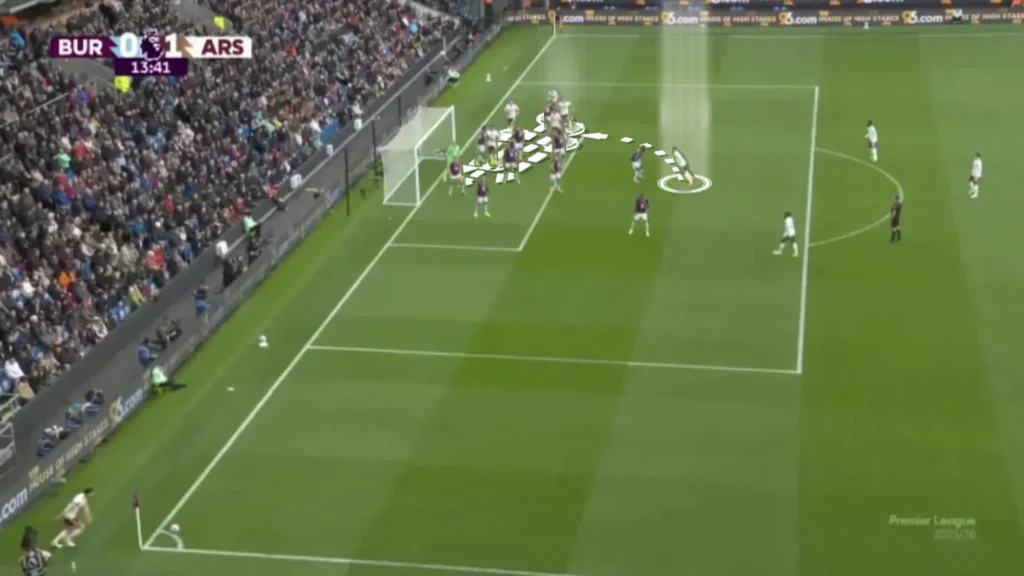
Arsenal have also used variations where players start further from the goal and make runs toward the front post, aiming to win the initial header there and direct the ball toward goal, adding unpredictability to their set-piece threat.
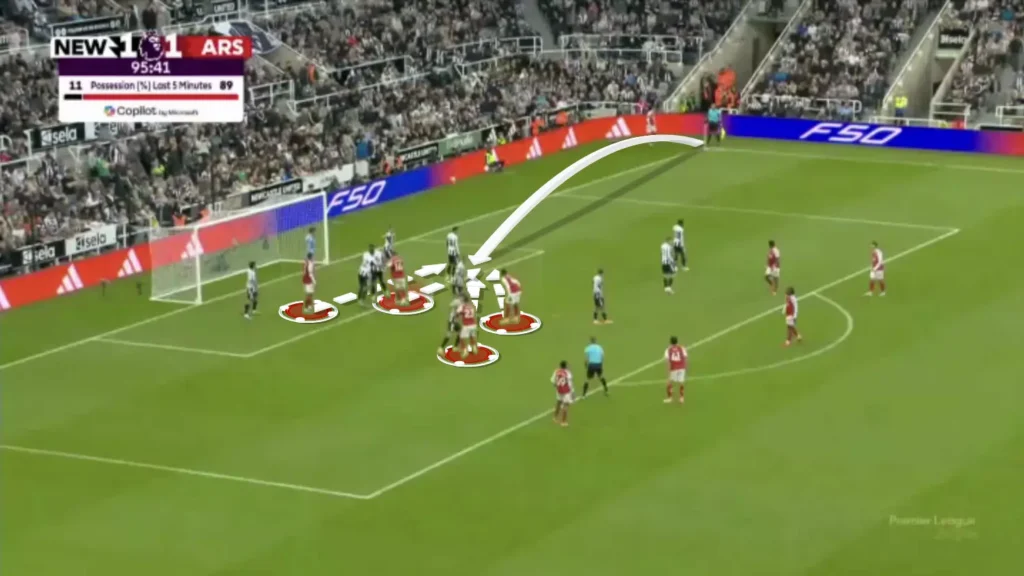
Even long throw-ins have become a weapon. Many modern teams use them not only as direct threats but as disguised possession restarts — controlling the chaos to win the second ball and sustain attacking pressure.
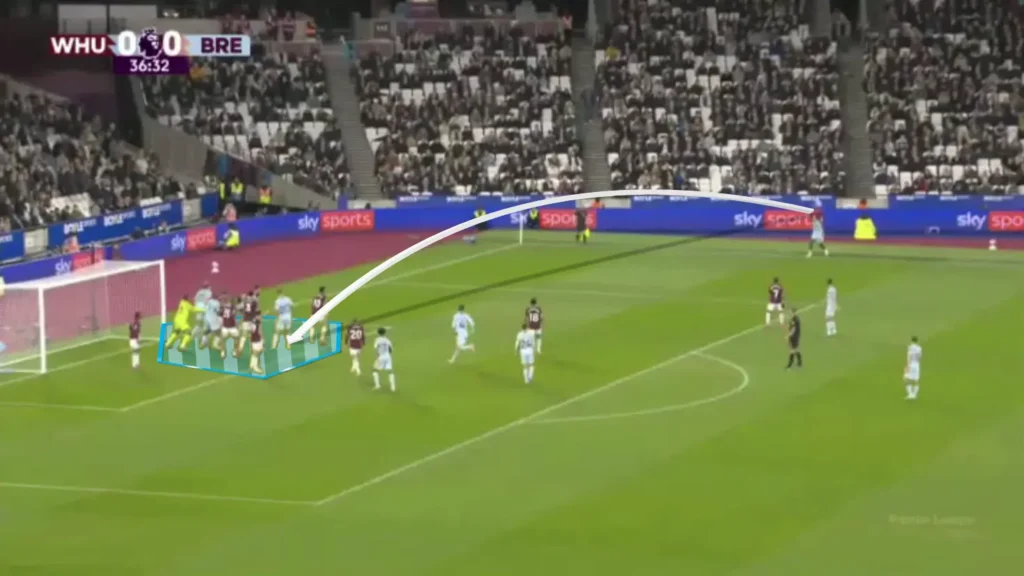
3. Training and Execution
Routines only work when they become instinctive. The set-piece coach spends hours on the training pitch refining run timings, delivery trajectories, and communication cues. These actions are repeated until they become automatic — a synchronized sequence where each player’s movement triggers the next.
Training sessions are often filmed and reviewed in detail. Coaches and analysts assess:
- Whether the blocking patterns worked
- If the timing between the runs and the delivery matched
- How opponents reacted or adjusted
- What can be disguised or improved next time
Over time, this refinement builds confidence and predictability for the executing team — and unpredictability for the opponent.
Why Set-Piece Coaches Are So Important
The best set-piece analysts bring far more than just clever routines. They create clarity, efficiency, and collective belief in one of football’s most decisive areas.
- Turning Low-Probability Moments into High-Value Chances
Corners and free kicks typically produce fewer chances than open play. But with a well-structured system, those odds improve dramatically. By coordinating movements, exploiting matchups, and manipulating defensive reactions, a set-piece coach can increase expected goals from dead balls by significant margins across a season. - Designing Chaos with Purpose
The penalty area during a corner, long throw-in, or free kick is organized chaos — blocks, screens, decoys, and late runs collide in a tight space. The set-piece coach choreographs this chaos, ensuring that every movement serves a function. A screen that frees a runner. A dummy that opens a lane. A decoy that pulls a marker out of position. These details turn randomness into repetition. - Defensive Stability and Preparation
The same level of structure applies when defending. The coach ensures the team understands reference points — who marks who, which zones are covered, and how to deal with second balls. Many teams now use hybrid systems where one or two players attack the ball aggressively while others hold zonal lines to prevent gaps. - Psychological and Tactical Momentum
Set pieces can shift the rhythm of a match. Scoring from a rehearsed corner not only breaks an opponent’s shape but boosts belief in the collective process. The repetition builds trust — players know exactly where to run, who to screen, and how to react to rebounds. The team becomes more composed in these chaotic moments, while opponents often panic or switch off.
Defending Set Pieces – Organized Aggression
On the defensive side, structure and discipline are key. Teams must combine aggression in duels with compactness and coordination.
Modern defensive systems usually blend zonal coverage (protecting the six-yard box and near post) with man-marking on the most dangerous runners. Others remain alert for short options or recycled balls at the edge of the area.
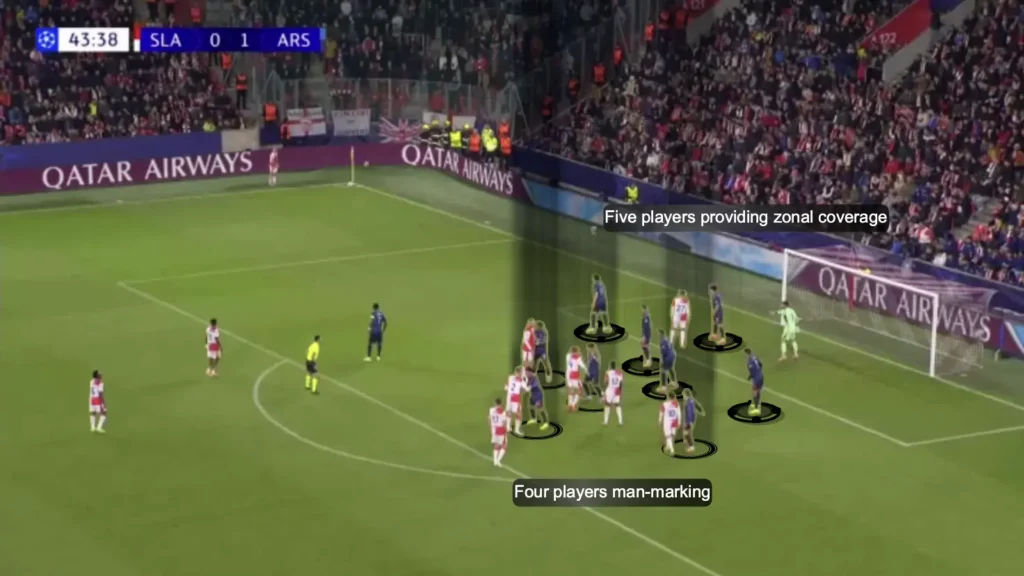
The set-piece coach ensures that transitions are planned too — who steps out first after the clearance, who presses the ball, and who holds position to stop the counterattack. It’s not just about surviving the first ball, but controlling the entire phase.
Beyond Corners and Free Kicks
While corners and free kicks get most attention, modern set-piece analysts also study throw-ins, especially in attacking zones. Liverpool famously hired Thomas Grønnemark, a throw-in specialist, to improve their ability to retain possession and build attacks from these moments. The logic is simple: any restart can be optimized.
Some analysts also focus on kick-offs, designing structured movements to maintain possession, quickly exploit spaces, or catch opponents off-guard.
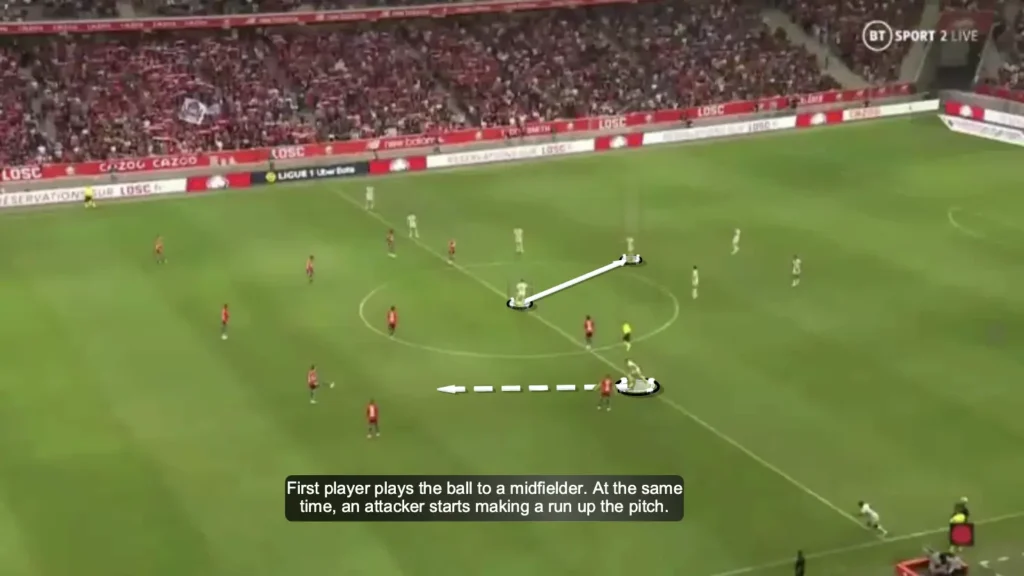
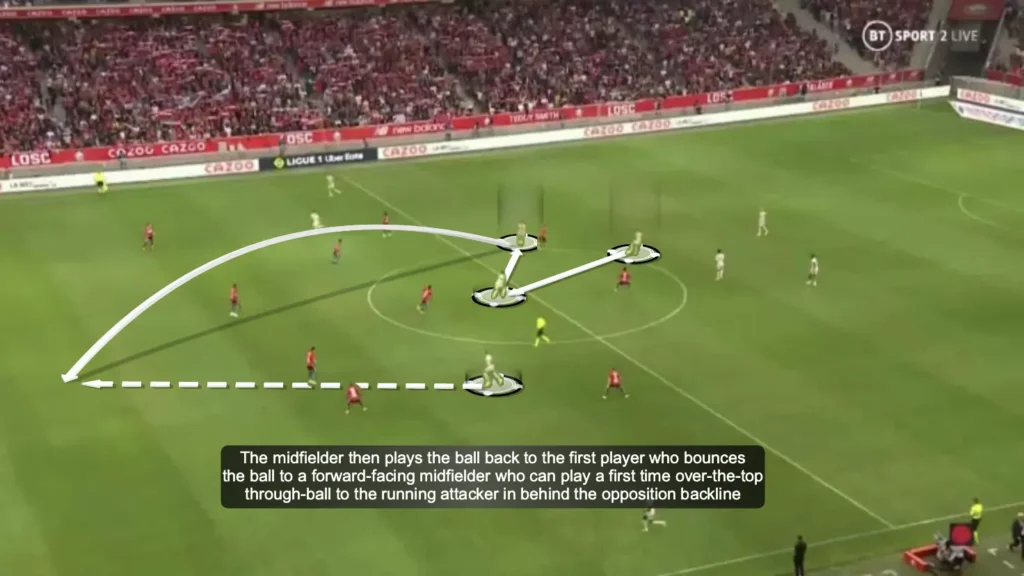
Similarly, others extend their work into penalty or direct free kick preparation — studying goalkeeper tendencies, shooter patterns, and pressure behaviors.
From Marginal Gains to Major Advantages
A well-drilled set-piece unit can add 10–15 goals per season — margins that can decide league titles, European spots, or relegation battles. This is why clubs across Europe have followed Arsenal’s lead, appointing dedicated set-piece specialists to squeeze every possible advantage from structured situations.
In a sport increasingly decided by fine details, the set-piece coach has become essential — a bridge between tactical design, data-informed preparation, and match-winning execution.
Conclusion
The rise of the set-piece coach/analyst reflects football’s shift toward specialization and precision.
These coaches merge tactical creativity with analytical insight, transforming static moments into dynamic opportunities.
From Nicolas Jover at Arsenal to innovative setups at Brentford, Liverpool, and beyond, their influence continues to grow.
Set pieces are no longer pauses in play — they are designed moments of superiority, built on structure, timing, and relentless rehearsal.
All images and visuals in this article are made with Once Sport — a powerful and easy-to-use tactical analysis platform. It helps you annotate clips, visualize movements, and create professional analysis videos. Readers of The Football Analyst get 10% off plus one month free with the code TFA10 at checkout.