The 3-2-5 shape in possession has become a cornerstone of modern attacking play. It reflects a deeper shift in tactical thinking: from formation-based coaching to space-oriented, principle-driven football.
In essence, the 3-2-5 isn’t a system you start with — it’s a structure your team builds into. Whether it’s from a 4-3-3, 4-2-3-1, or 3-4-3, teams increasingly use positional rotations and coordinated movements to arrive at this five-lane attacking framework with a two-man midfield and a secure five-player rest-defence.
Why? Because it offers the perfect mix: zone occupation, overload creation, vertical control, and compact transition coverage — all within one adaptable shape.
How Teams Construct the 3-2-5 In Possession
The 3-2-5 is not tied to any starting formation. It’s a structural end-point achieved through specific mechanisms. These vary depending on a team’s profile and opponent strategy, but common construction patterns include:
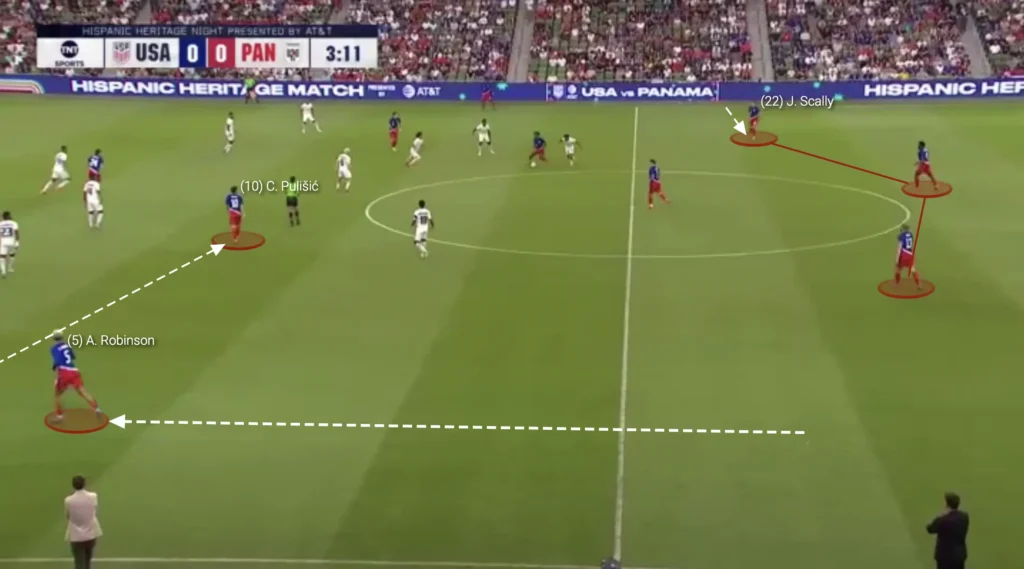
1. Inverting Fullback (Typical in a 4-2-3-1 or 4-3-3)
- One fullback inverts to form a double pivot (the “2”), while the other tucks into the back three.
- The front five consists of two wide players, two attacking midfielders in the half-spaces, and a central striker.
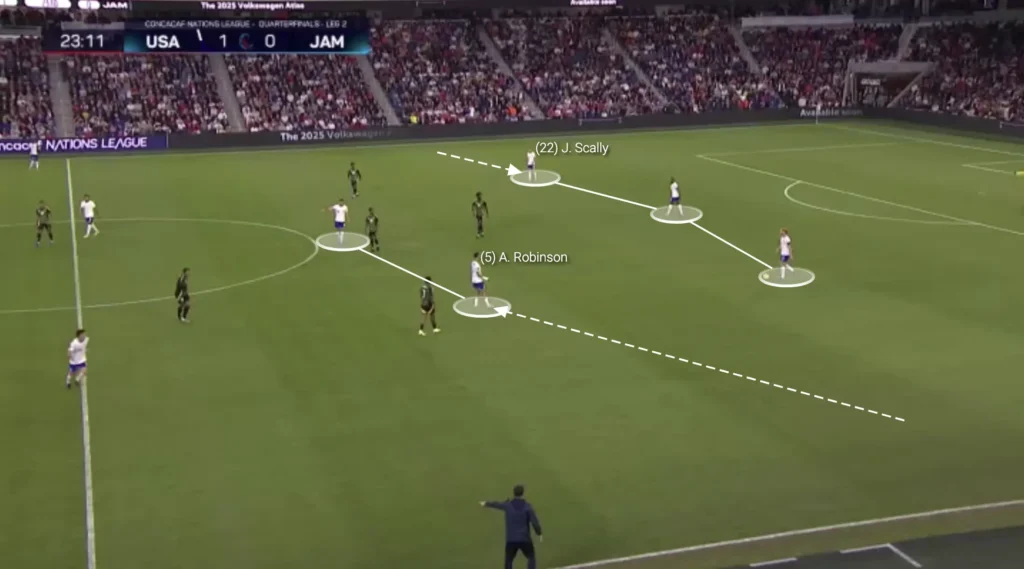
2. Attacking Fullback + Inverting Winger
- A fullback pushes high and wide, becoming part of the front five, while the other tucks into the back three.
- The winger on that side inverts into the half-space to become an attacking midfielder.
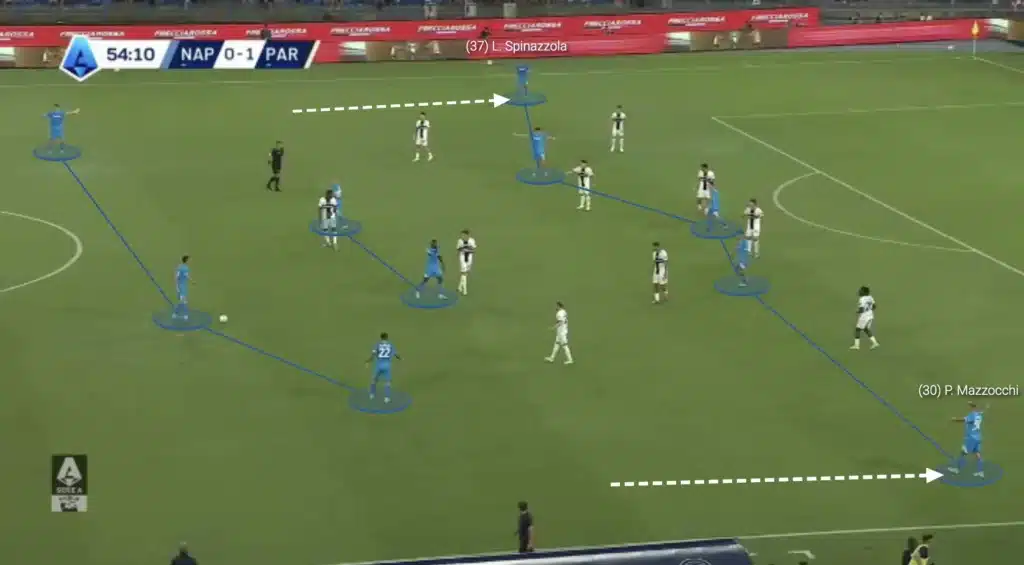
3. Natural 3-at-the-Back Systems (e.g. 3-4-2-1)
- Wingbacks push high to join the front five.
- Two central midfielders sit as the “2”.
- Inside forwards occupy the half-spaces; the striker stays central.
Regardless of how it’s formed, the final shape distributes five attackers across all lanes, two connectors behind them, and three players in rest defense. That structure unlocks the system’s strengths.
Tactical Advantages: Why the 3-2-5 Works
1. Numerical Advantages in Key Zones
The 3-2-5 often generates overloads where it matters most:
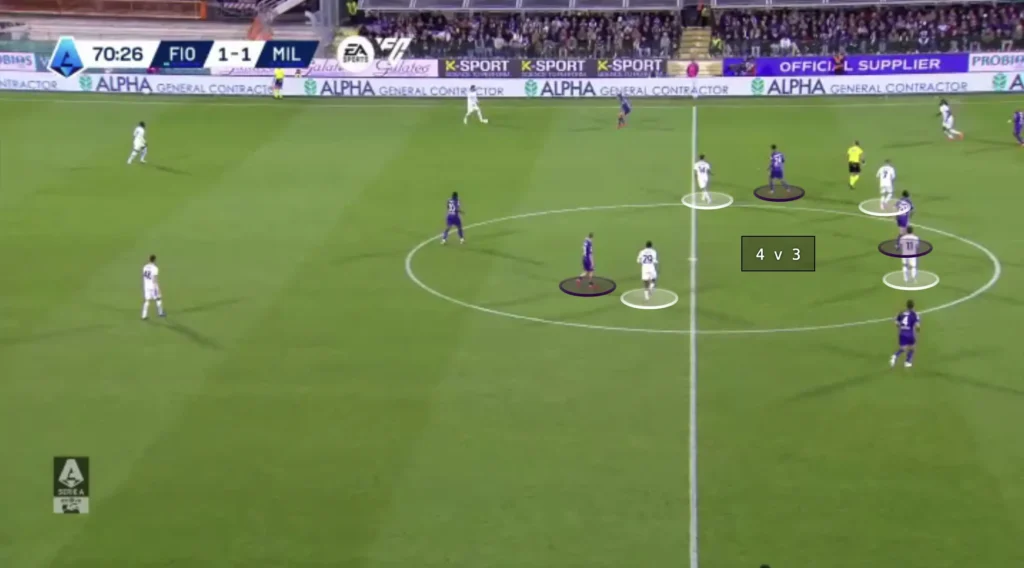
- In central midfield: The double pivot and interior attackers can create 4v3s or 5v4s against mid-blocks with a single pivot or flat midfield four.
- Against a back four: The front five can pin all four defenders and still have one or two players free between the lines — especially in the half-spaces. This forces fullbacks into uncomfortable decisions: stay wide and isolate their center-backs, or tuck in and leave space outside.
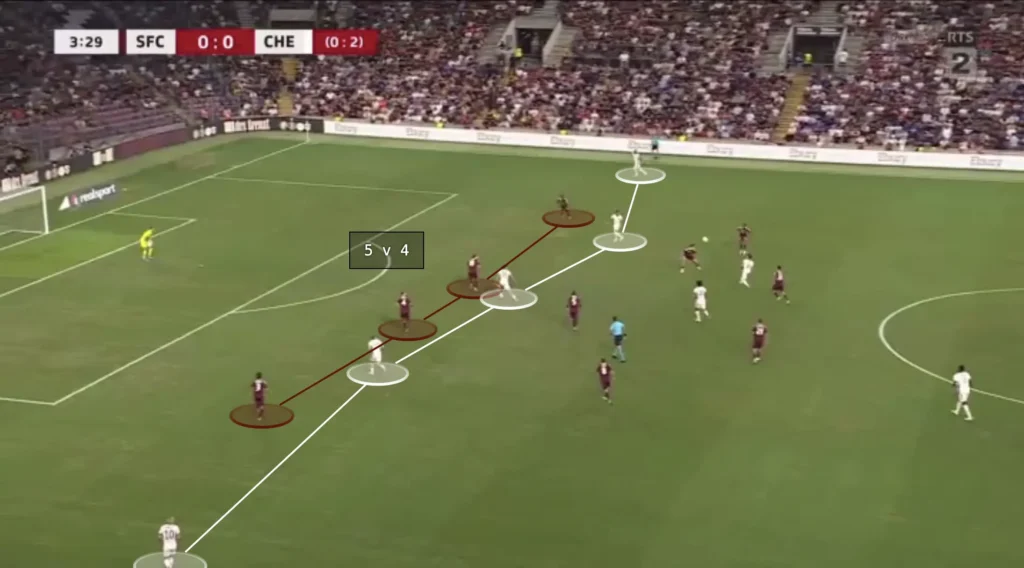
These numerical advantages can break defensive lines without requiring complex rotations — simply by positioning players in structurally superior areas.
2. Horizontal Pinning & Maximum Lane Occupation
With five players across the top line, the team can fully occupy:
- Both wide corridors (pins opposition fullbacks)
- Both half-spaces (targets gaps between center-backs and midfield)
- The central zone (forces decisions from the holding midfielder or central defenders)
This structure stretches compact defenses laterally and reduces the ability of opponents to double-mark key threats. When timed correctly, it forces the back line to either compress dangerously narrow or risk exposure in the wide zones.
3. Stable Central Access with Diagonal Dynamics
The two midfielders behind the front five provide:
- Clean vertical progression options through the middle
- Diagonal access to half-space attackers and underlapping fullbacks
- A circulation platform if central progression is blocked
The 3-2-5 allows teams to attack diagonally into advanced zones, combining wide width with strong central presence. The structure makes third-man runs, bounce passes, and lay-offs in the final third more connected and less isolated.
4. Ideal Rest-Defence Structure
Behind the ball, the three defenders + double pivot create a strong rest-defence foundation:
- It protects central spaces against direct counters
- It gives depth behind the counterpress
- It controls the opponent’s first pass after regaining possession

This means teams can push high without becoming vulnerable. The structure naturally discourages the opposition from launching immediate transitions through the center — they often have to play wide or long.
5. Dynamic Interplay Between Fixed and Rotating Roles
In a good 3-2-5, not everyone is fixed in place. There’s a blend of:
- Wide players who fix defenders
- Interior players who rotate or drop to overload
- Pivots who support and reset
- A back three that expands or squeezes depending on pressing cues
This makes pressing the shape difficult: if you overcommit to a trigger, the team can rotate out and escape. If you stay passive, they pin you deep and patiently probe.
Disadvantages and Structural Risks
No system is without weaknesses. The 3-2-5 poses several challenges, especially if executed poorly or against certain opposition setups:
1. Vulnerability to Wide Counters
If the ball is lost in the half-space or central zones, and the fullbacks/wing-backs have advanced too high without adequate rest-defence positioning, the opponent can exploit the open wide channels in transition — especially if your wing coverage was sacrificed for interior overloads.
2. Overreliance on Decision-Making in Build-Up
The success of the 3-2-5 hinges on intelligent movement. Poor timing, unclear roles, or hesitancy under pressure can lead to:
- Isolation in build-up (e.g., CBs too wide, pivots not showing)
- Exposed turnovers with too many players ahead of the ball
- Midfield disconnection from the forward line
Teams without midfielders comfortable receiving under pressure or defenders who can play line-breaking passes will struggle to progress cleanly.
3. Harder to Implement Without Tactical Cohesion
Because the 3-2-5 requires dynamic space occupation and synchronized movements, it requires high levels of understanding and training time. If players don’t recognize pressing triggers or spacing cues, the structure collapses.
It is not a plug-and-play solution — and often backfires when used as a reactive setup without strong positional principles.
Conclusion: More Than Just a Shape
The 3-2-5 is not simply an attacking formation — it’s a flexible, space-oriented possession structure that reflects the principles of modern positional play.
When executed well, it enables:
- Wide and central control
- Strong rest-defence
- Verticality with structure
- Multi-layered overloads in every third
But it’s not for every team. The 3-2-5 demands clarity, coordination, and high technical execution. Without that, the same flexibility that makes it powerful can make it fragile.
For coaches, analysts, and tactical thinkers, the real question is not whether the 3-2-5 is good — but whether your team can build it, sustain it, and adapt within it.