Anes Mravac stepped into the role of interim head coach at Malmö FF during a demanding period for the club, taking responsibility under heavy pressure at the highest level of Swedish football. Having previously worked as a coach at IF Sylvia, IFK Norrköping, and IFK Värnamo, he brought a clear methodological foundation rather than a short-term, results-only mindset. He has since taken on a role as assistant coach at Middlesbrough, where the team currently sit second in the Championship.
To better understand how he thinks about the game, we sat down with Anes Mravac and spoke in detail about how he wants his teams to play in possession, how he structures build-up and progression, and how individual player behaviour fits into a broader collective framework. Rather than fixed patterns, he describes a layered model built on main principles, sub-principles, and individual tools, which together guide players’ decisions in real time.
What follows is not a chronological retelling of the interview, but a structured explanation of the playing style Anes Mravac outlined, organised to make the underlying logic of his football clear.
1. Main Principles: The Direction of the Entire System
At the highest level of Anes’ model sit the main principles — non-negotiable reference points that define where the team want to attack. Before discussing structure, rotations, or specific movements, he emphasises that players must first understand which spaces the team values and in what order.
In simple terms, the main principles answer one question:
What space are we trying to reach, and which spaces take priority when multiple options are available?
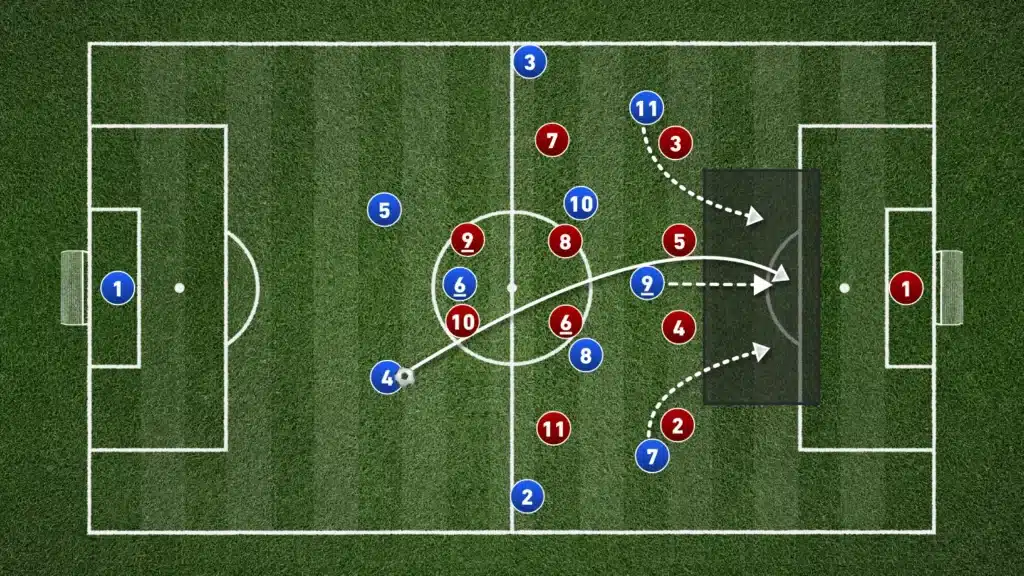
Priority 1 — The space behind the opponent’s backline, centrally
In Anes’ playing style, the most valuable space on the pitch is the space behind the opponent’s backline, centrally. If that space is available, the intention is always to attack it as quickly as possible. This priority shapes everything from the profiles of attacking players to the timing of runs and the positioning of midfielders during circulation.
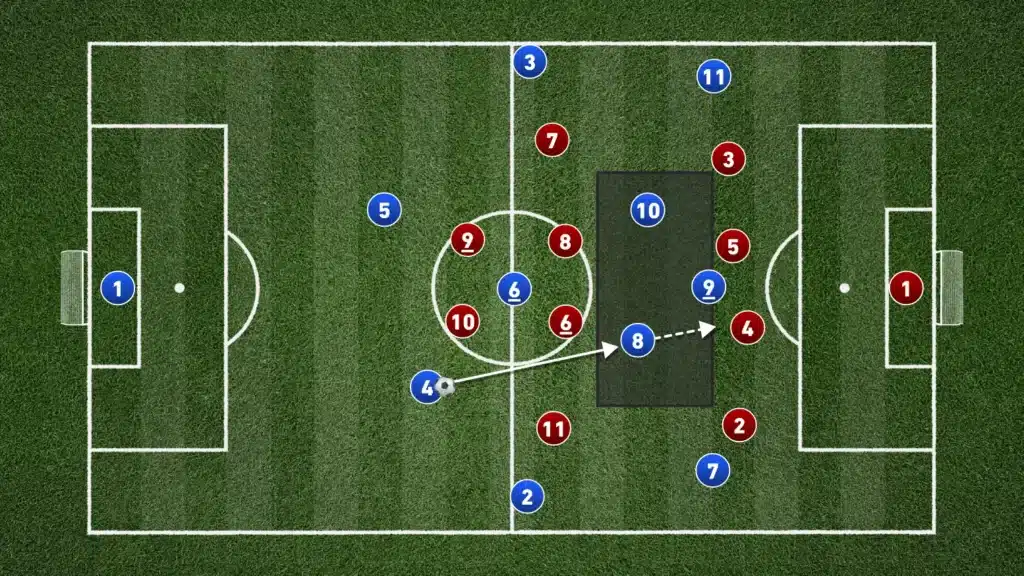
Priority 2 — The space in front of the opponent’s backline, centrally
If the opponent protects the space behind the backline aggressively, they must concede space elsewhere. Most commonly, that space appears in front of the backline, centrally, between the midfield and defensive lines. Creating a player who can receive facing forward in this zone becomes the next priority, as it allows the team to drive at the defence, combine, and re-attack depth once defenders are forced to step out.
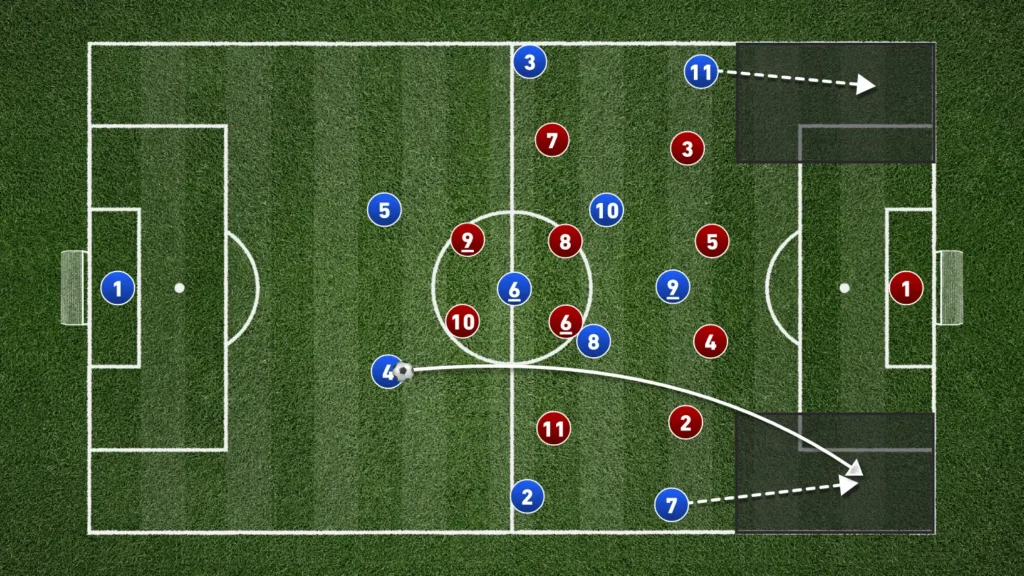
Priority 3 — The space behind the opponent in the wide zones
If central routes are closed, the next priority becomes attacking behind the opponent in the wide zones. These spaces are used to progress play, destabilise the defensive structure, and prepare a return to central areas once the opponent has shifted.
Anes explains that this simplified hierarchy removes ambiguity for players. Instead of guessing, they operate within a shared understanding of what the team is always trying to achieve.
Crucially, these main principles determine which sub-principles and individual tools become relevant in each situation.
2. Sub-Principles: How Groups Cooperate to Achieve the Main Principles
If the main principles define what the team want to achieve, the sub-principles explain how players cooperate locally to reach those goals. Anes describes these as coordinated behaviours between small groups of players, designed to create the conditions required to access the priority spaces.
He is clear that the examples discussed are not exhaustive. They represent some of the most commonly recurring cooperative ideas in his teams, but not the full catalogue.
2.1 Adapting the base structure
A key sub-principle Anes discusses is adapting the base structure in build-up. Rather than insisting on a fixed shape, the team adjusts depending on how many players the opponent commits to the first line of pressure.
If the opponent presses with one player, a two-centre-back first line can provide sufficient superiority. If they press with two, a midfielder may drop, or a full-back may tuck inside to create a three-at-the-back structure.
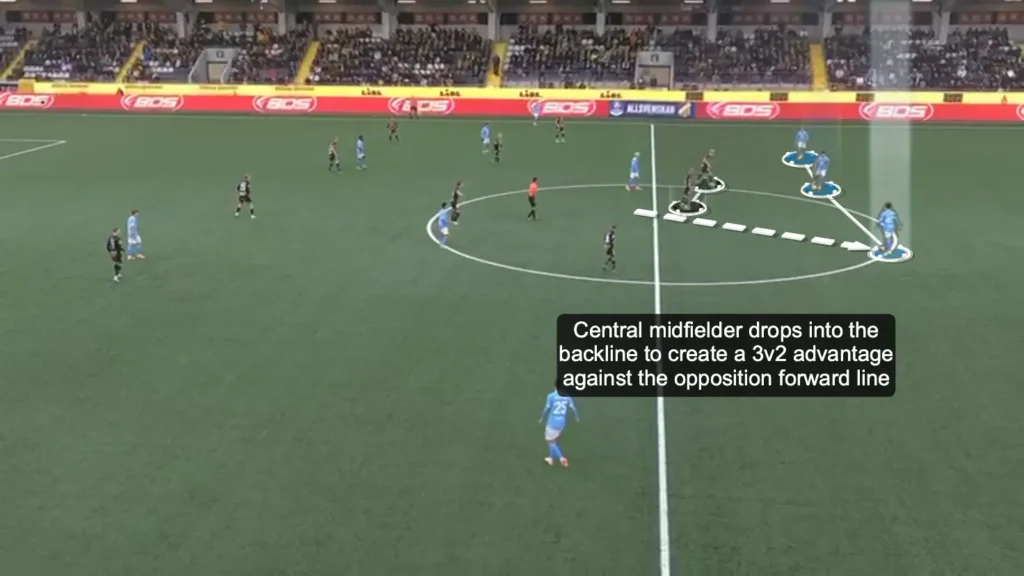
The objective is not the shape itself, but its function: ensuring a free player in the first line while maintaining good access to the next lines.
2.2 Splitting players
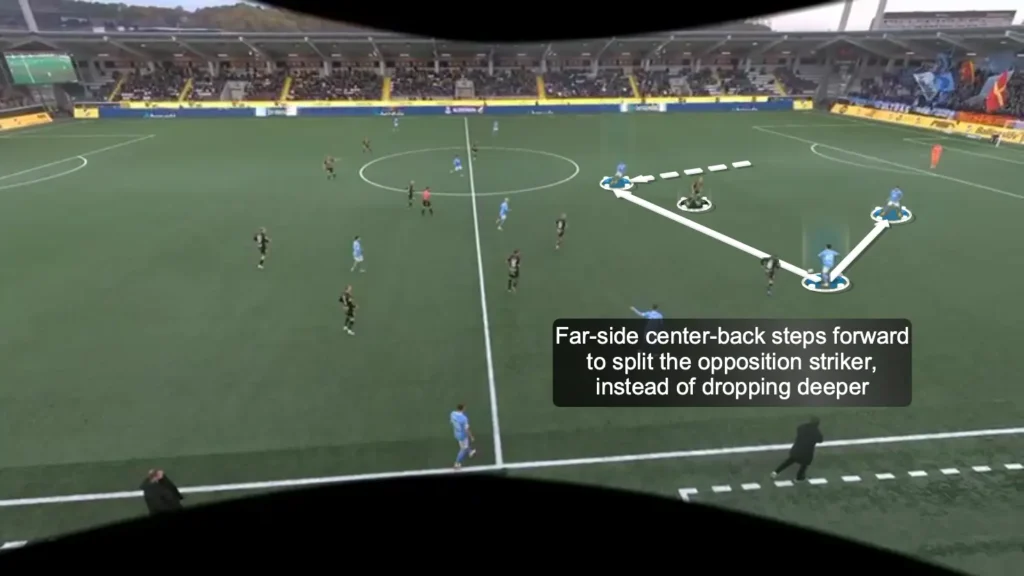
Anes also refers to splitting players as a recurring cooperative idea. This involves positioning two teammates on either side of a pressing opponent so that he cannot block both passing lanes at once.
While this is often visible in the first line against the opponent’s forwards, Anes stresses that the same principle applies throughout the pitch. Splitting the opponent helps maintain access to central areas and prevents the defence from controlling the game with a single reference point.
2.3 Maintaining short distances and clean angles
Alongside more visible behaviours, Anes highlights maintaining short distances and clean passing angles as a crucial sub-principle. This is not an individual action, but a collective condition that underpins everything else.
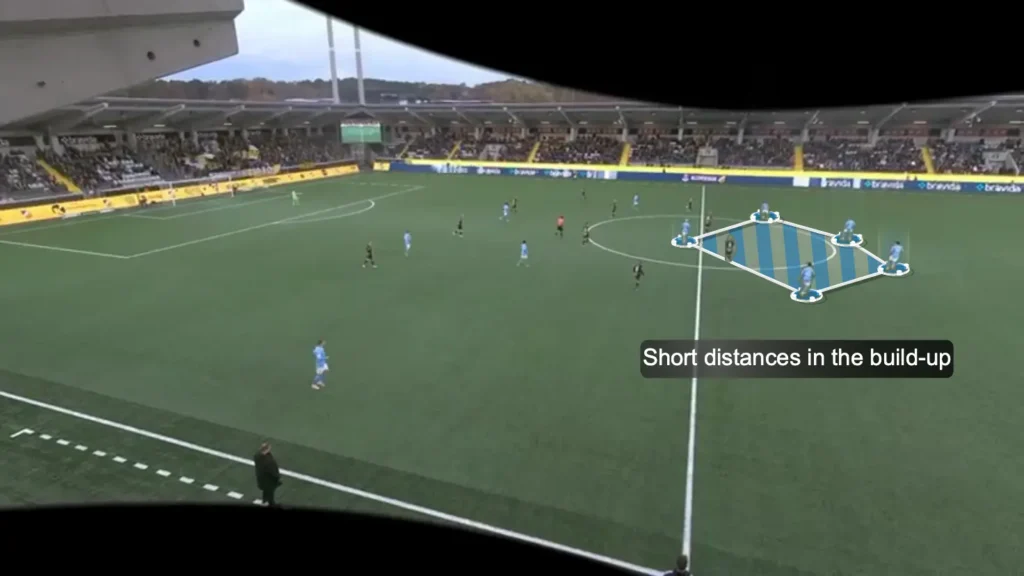
Shorter distances make passes safer, reduce the time the ball spends travelling, and improve the angles between players. They also make it easier for teammates to support each other, both with and without the ball, and allow the team to react immediately if possession is lost.
Compact spacing, then, is not a goal in itself, but a sub-principle that enables others — it creates the geometry required for following the press, splitting opponents, and helping teammates become forward-facing to function consistently.
3. Individual Principles: The Behavioural Tools That Complete the System
At the most detailed level of Anes’ playing style are the individual principles, or tools, that players use to solve situations in real time within the collective structure. These tools describe what a player can actively do, with or without the ball, to turn the team’s intentions and cooperative structure into effective action.
Anes emphasises that these are examples of individual tools (sub-sub principles) rather than a complete list.
3.1 Become forward-facing yourself
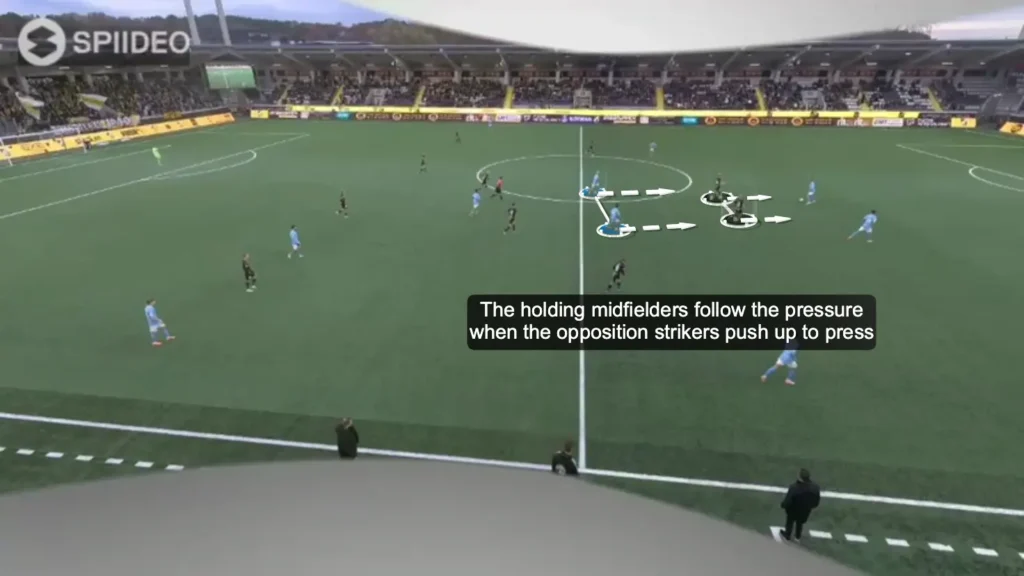
A core individual objective is becoming forward-facing. For Anes, this is key because a forward-facing player can immediately threaten the next line, force defenders to step out, and turn possession into progression rather than simple circulation.
Tools:
- Follow pressure
- Step above opponent
When an opponent steps out to press, space opens behind them. By following the pressure or stepping above an opponent, a player can receive the ball with an open body orientation in more space and take the ball forward to attack the next line.
3.2 Help your teammate become forward-facing (with the ball)
Tools:
- Adjust your position in depth
- Adjust your position sideways
Players can help teammates become forward-facing by adjusting their own position to offer a clean angle. By changing depth or moving sideways before receiving, a player can bounce the ball or set it into a teammate who is facing forward on the next action.
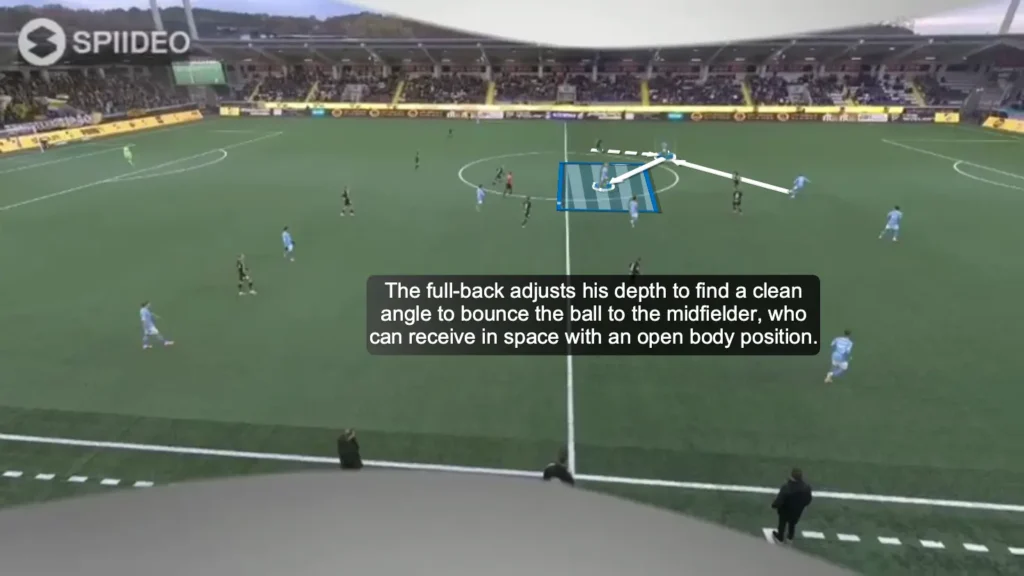
These adjustments are subtle but essential for maintaining progression without forcing play.
3.3 Help your teammate become forward-facing (without touching the ball)
Tools:
- Pin opponents to create space below you
- Move sideways to pull players out of position
Anes places significant value on off-ball behaviour. By pinning defenders with runs in behind or moving laterally to pull opponents out of position, players can create space for teammates to receive facing forward without touching the ball themselves.
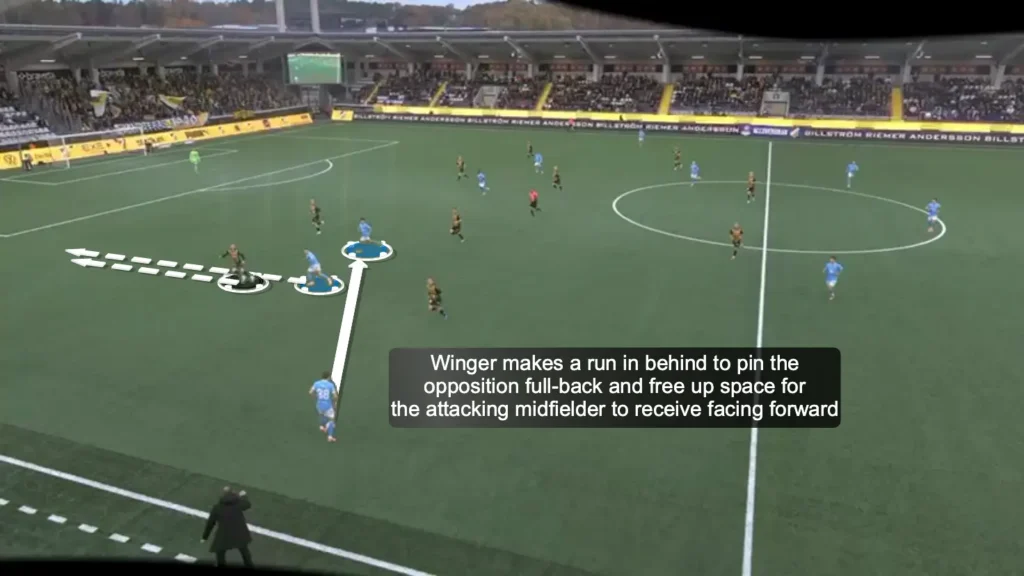
These actions may not appear in statistics, but they are central to how the system creates advantages.
4. How the Layers Fit Together — The System in Motion
What becomes clear through Anes’ explanations is that none of these layers operate independently.
The main principles define the destination.
The sub-principles organise cooperation.
The individual tools execute the solution.
If the space behind the backline is unavailable, the team naturally shifts toward creating a forward-facing player between the lines. To do so, they rely on sub-principles such as splitting players or adapting the base structure. Those sub-principles, in turn, only function if individual players execute precise actions: following the pressure, adjusting position, pinning defenders, and timing movements correctly.
The result is a system that is responsive rather than scripted. Players are not memorising patterns; they are interpreting situations through a shared framework.
An Example in Practice: Helping Each Other Become Forward-Facing
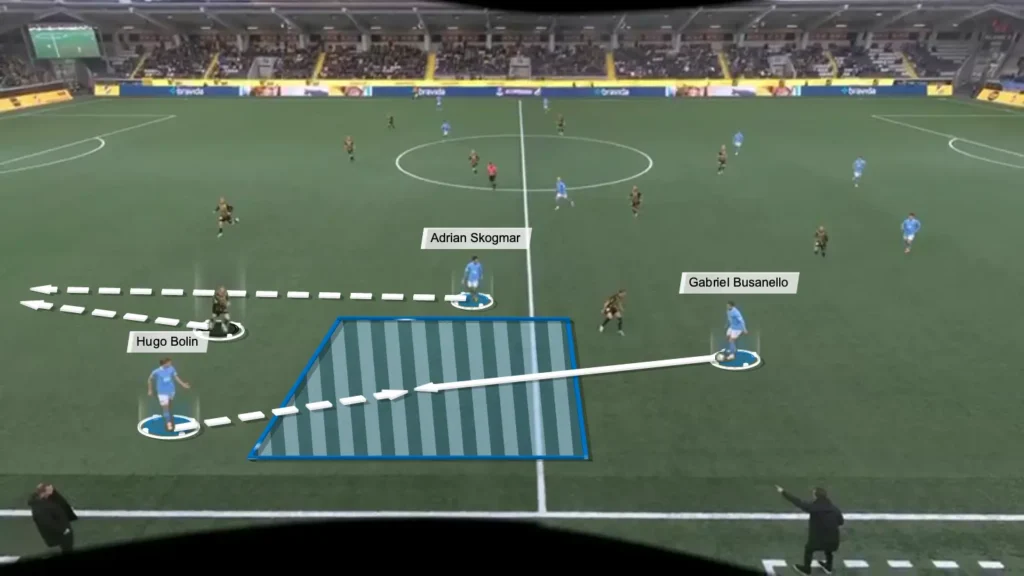
One situation Anes pointed to illustrates well how the different layers of the system connect in practice. With the ball on the left side and depth initially protected by the opponent, Malmö naturally shift toward the next priority: creating a forward-facing player between the lines. In this moment, the attacking midfielder, Adrian Skogmar, positions himself in the half-space, while the winger, Hugo Bolin, occupies a wide and high position.
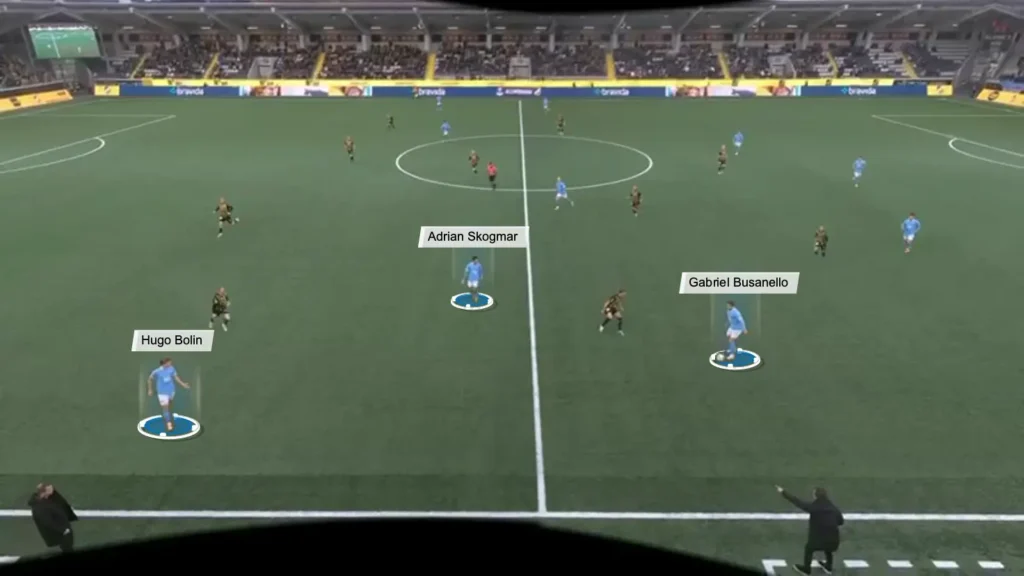
One possible solution is for Bolin to run in behind to pin the opposing full-back. The purpose of the run is not to receive, but to hold the defender in the backline and prevent him from stepping forward into Skogmar’s space. That off-ball action enlarges the pocket in front of the defence and allows Skogmar to receive facing forward with time to drive or combine.
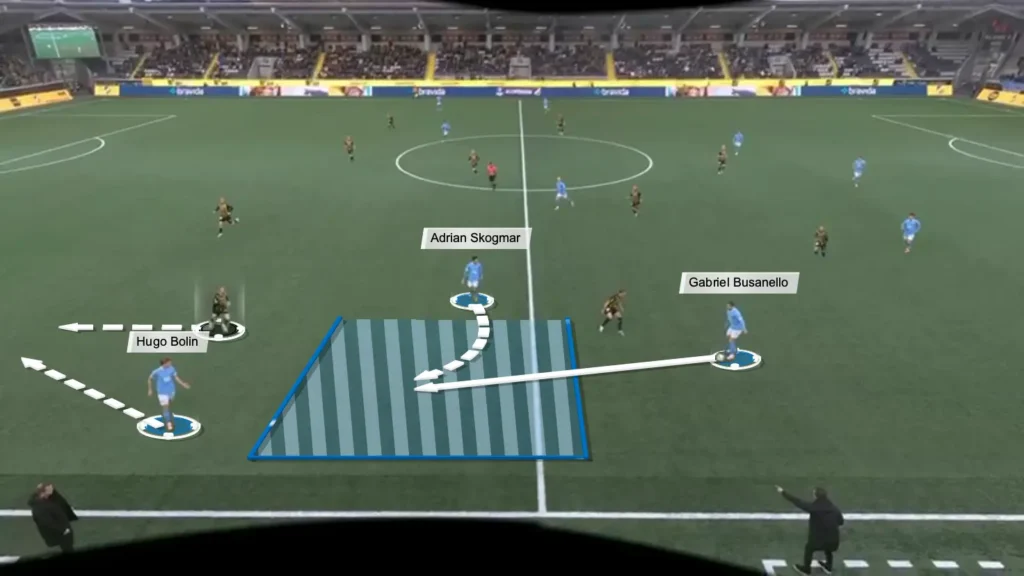
Anes also stresses that the relationship is not one-directional. Skogmar can equally make the run in behind to pin the full-back himself, enabling Bolin to adjust his depth, drop toward the ball, and receive facing-forward on the wing.
A third solution exists within the same framework. If Bolin adjusts his depth and drops toward the ball instead of running in behind, he can adjust his position to offer a clean angle and bounce the ball into Skogmar, allowing him to receive facing-forward on the next action.
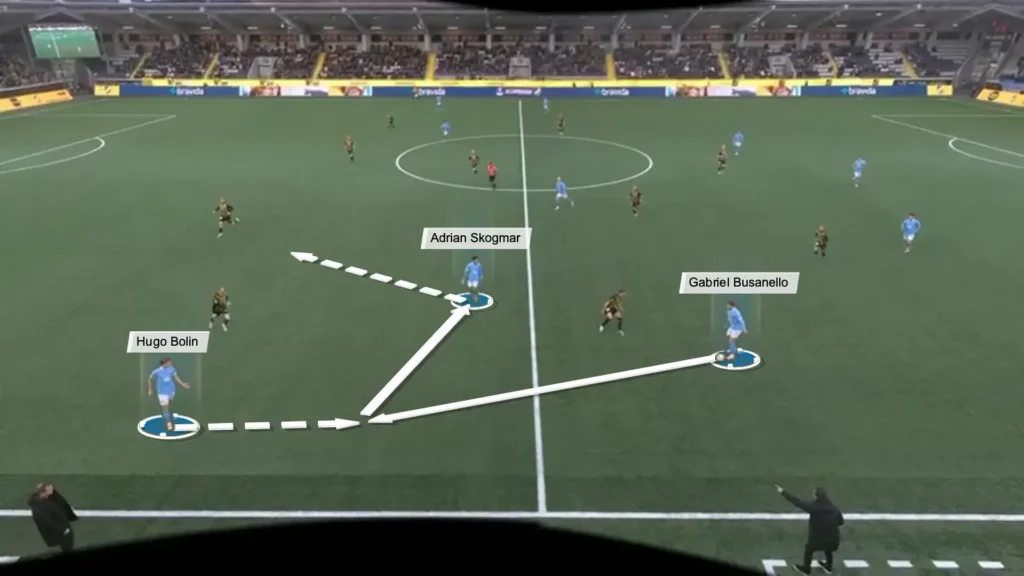
The example captures the essence of Anes’ model: a clear collective objective, flexible cooperation between nearby players, and individual tools — pinning, adjusting depth, offering angles, and timing movements — that allow players to help each other access valuable spaces without relying on scripted patterns.
5. Training: How These Behaviours Become Automatic
With so many interacting layers, it would be impossible for players to consciously think through each principle during a match.
They don’t.
That is the point of the training process.
Mravac relies on a continuous cycle:
- Video analysis of specific principles
- On-pitch training designed to recreate those decision moments
- Feedback sessions where players explain their intention and the staff guide corrections
This repetition turns concepts into automatic behaviours, allowing players to make intelligent decisions without conscious calculation.
It also creates a shared language. Instead of vague feedback, players can speak in precise, actionable terms:
- “I should have followed the press instead.”
- “I could have split their midfielder.”
- “I needed to pin the full-back earlier.”
This clarity accelerates learning and deepens tactical understanding.
Conclusion — A Coherent, Layered, Player-Empowering Playing Style
Anes Mravac’s playing style is best understood as a layered system built on clarity rather than control. The main principles give direction, the sub-principles structure cooperation, and the individual principles empower players to solve situations intelligently.
The situations discussed during our conversation are not templates to copy, but examples of how the model reveals itself in practice. What they show is a team that seeks to manipulate pressure rather than avoid it, values forward-facing reception in high-value central spaces, and relies on trained behaviour instead of rigid choreography.
It is a playing style that balances organisation with freedom, offering players a clear framework while trusting them to interpret the game within it.
All images and visuals in this article are made with Once Sport — a powerful and easy-to-use tactical analysis platform. It helps you annotate clips, visualize movements, and create professional analysis videos. Readers of The Football Analyst get 10% off plus one month free with the code TFA10 at checkout.