
Arsenal extended their lead at the top of the Premier League table with a dominant victory in the north London derby, beating Tottenham 4–1 in a match defined by control, fluidity, and tactical precision. Eberechi Eze produced a memorable hat-trick, Leandro Trossard added the opener, and Arsenal’s attacking structure caused persistent problems for a Spurs side that never established defensive stability nor offensive rhythm. Although Tottenham briefly created hope through Richarlison’s long-range strike, Arsenal’s superiority in every major tactical phase ensured a comfortable and deserved win. This analysis breaks down the structural ideas, the pressing dynamics, and the positional mechanisms that shaped such a one-sided match.
Arsenal’s Structure and the Foundations of Control
Arsenal started in a 4-2-3-1 shape with Raya behind a back four of Timber, Saliba, Hincapié, and Calafiori. Rice and Zubimendi formed the double pivot, Eze operated as the No. 10, Saka and Trossard played wide, and Merino acted as the nominal striker. Tottenham countered with a 3-4-2-1: Vicario in goal, Danso, Romero, and Van de Ven at center-back, Spence and Udogie as wing-backs, Palhinha and Bentancur in midfield, Odobert and Kudus as the inside forwards, with Richarlison leading the line.
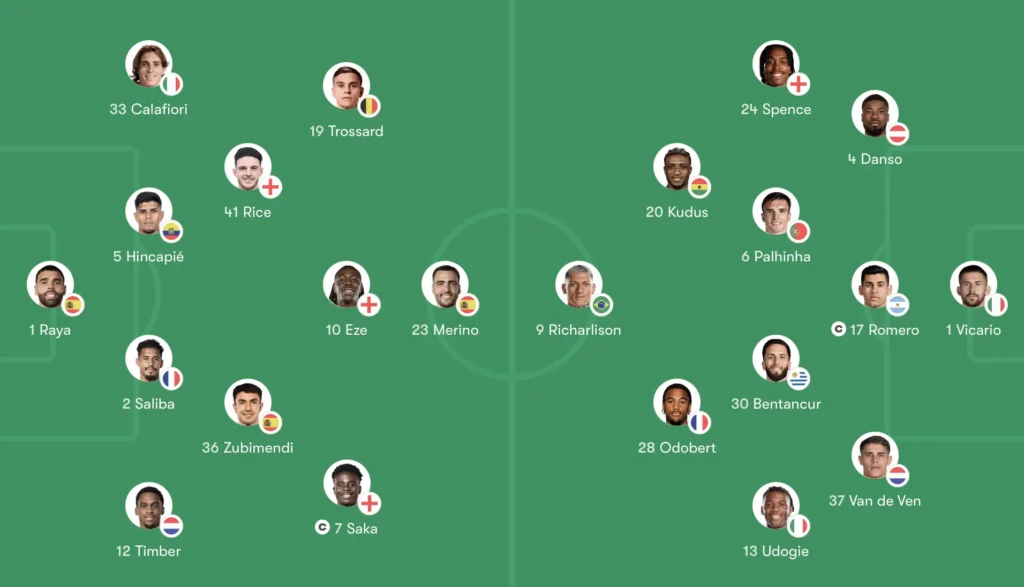
Tottenham defended in a man-oriented 5-2-3 mid-block, with Odobert tracking Timber, the wing-backs following Saka and Trossard, and the three center-backs responsible for Arsenal’s three central attackers.
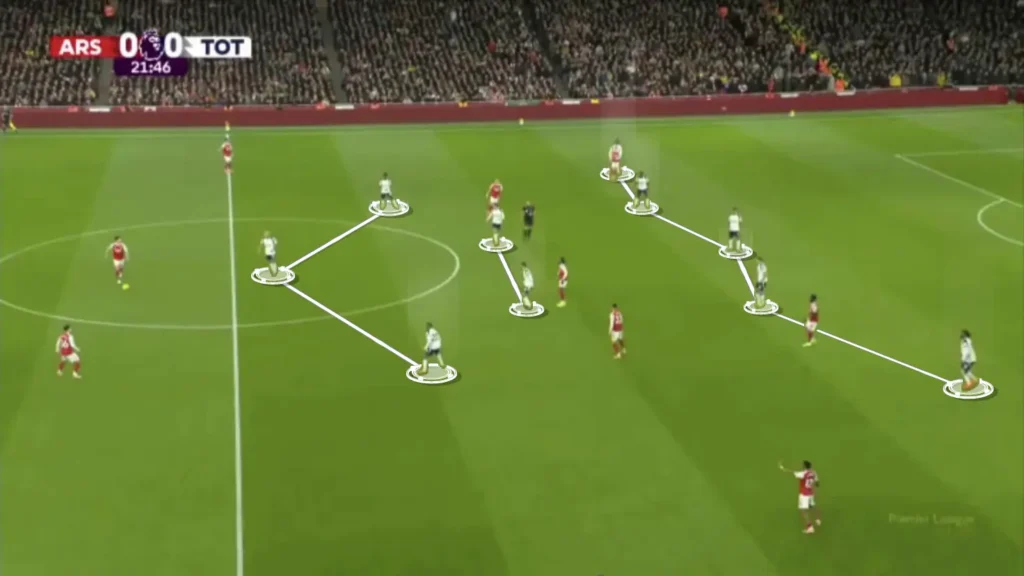
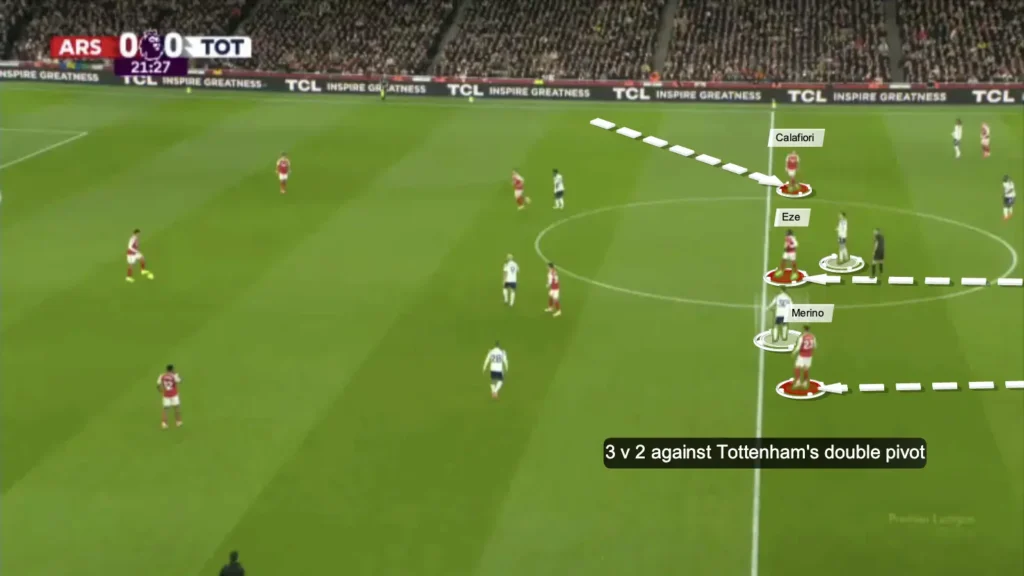
Arsenal’s fluidity in the build-up exploited this structure immediately. Merino and Eze frequently dropped deeper, while Calafiori inverted from left-back into an advanced midfield role, creating a rotating interior line whose height and positioning was constantly changing. These movements caused repeated confusion within Spurs’ man-oriented scheme, as their defenders were forced to choose between following their man into awkward zones or leaving them free. With Calafiori, Eze, and Merino forming a three-man attacking midfield against Palhinha and Bentancur, Arsenal established a stable 3v2 overload that made progression through midfield consistently accessible.
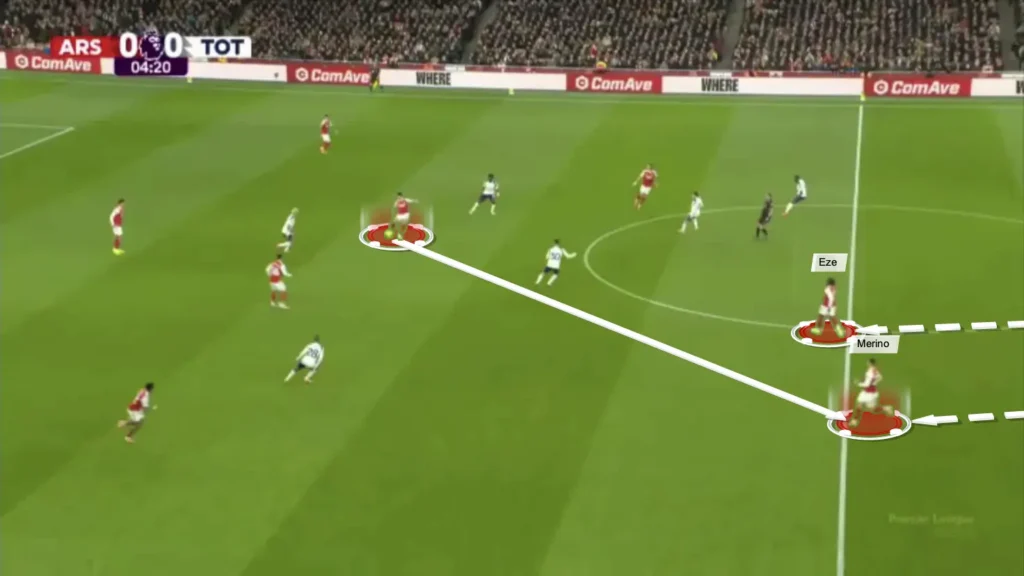
Straight passes from the center-backs or pivots frequently found free players between the lines, giving Arsenal stable progression and allowing them to dictate the game’s tempo.
Tottenham’s Man-Oriented Problems
Tottenham’s man-oriented defensive scheme was their main structural issue. Van de Ven tracked Merino, Romero tracked Eze, and Danso tracked Calafiori, but they did so without full commitment, meaning they followed their assignments without applying enough pressure to prevent turning or forward play. These hesitant movements produced a defensive block that hovered between man-oriented and zonal principles, ultimately doing neither well.
Arsenal exploited this by repeatedly rotating positions. These rotations were continuous and unpredictable, making it extremely difficult for Tottenham’s defenders to maintain their individual matchups without leaving dangerous gaps. Timber and Calafiori made inward runs to drag wing-backs centrally; Saka and Trossard then dropped into the vacated pockets to receive.
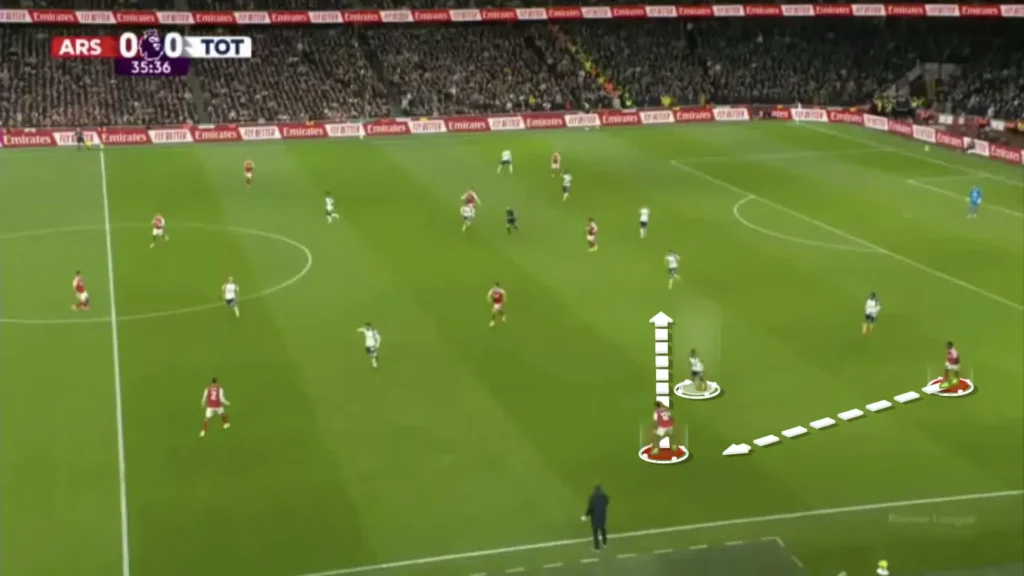
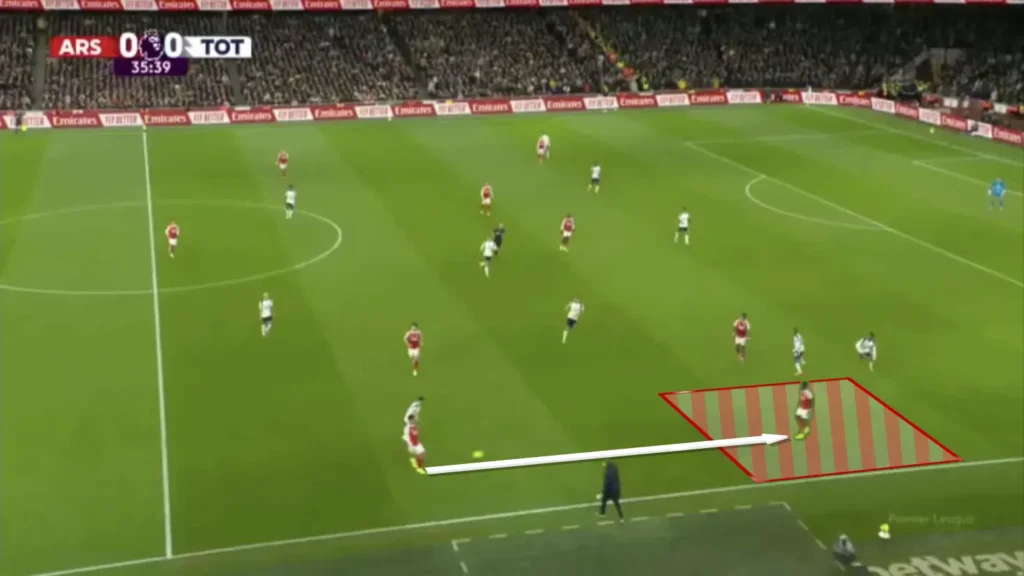
Timber also varied his movement by pushing higher and wider to pull Odobert back, creating inside space for Saka to receive more centrally.

These positional disruptions consistently opened new pathways for progression and ensured Spurs’ man-oriented references collapsed almost immediately.
Exploiting Spurs’ Center-backs: Runs in Behind
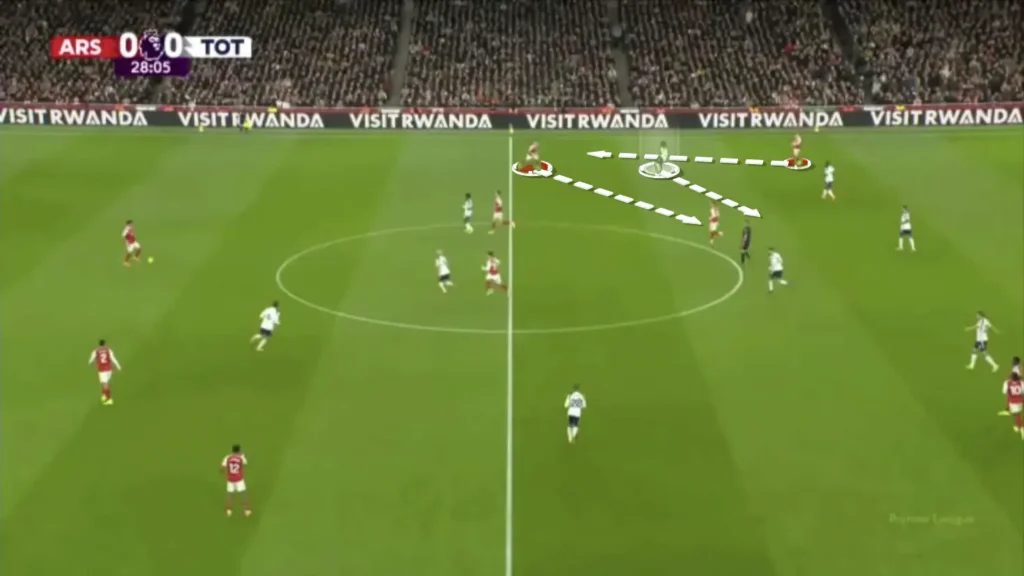
Arteta’s main attacking idea was using three central players—Calafiori, Eze, and Merino—to provoke Tottenham’s center-backs into stepping out, while Saka and Trossard positioned themselves in the inside channels between the wing-back and the wide center-back. The plan was clear: when a Spurs center-back pushed up toward his assigned man, Arsenal’s wingers would immediately attack the exposed space behind.
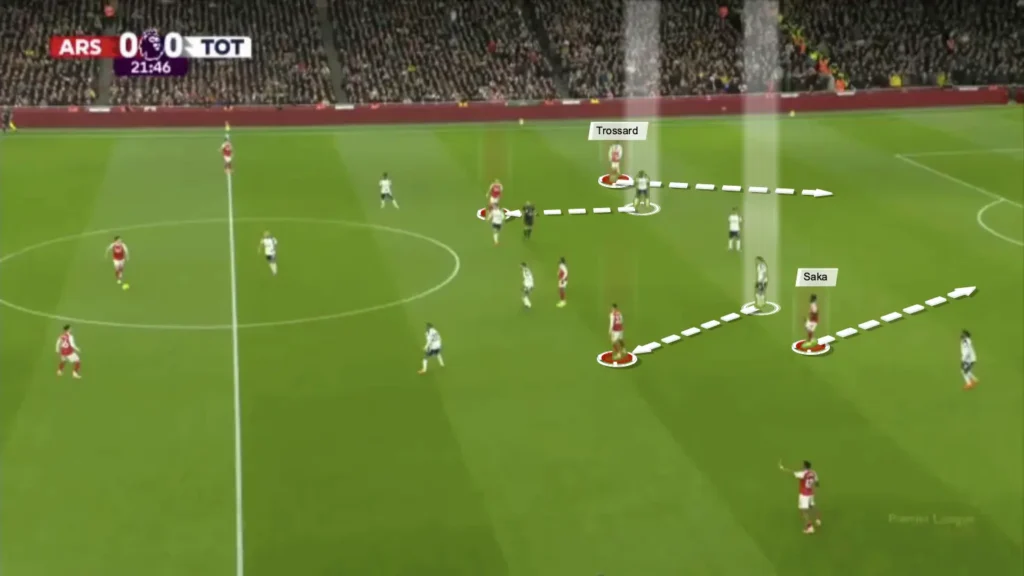
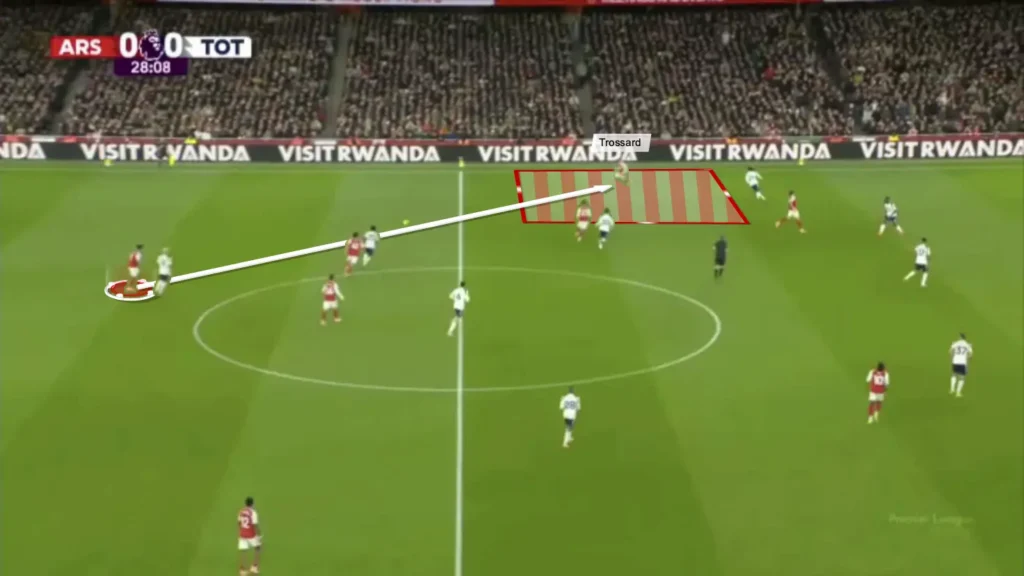
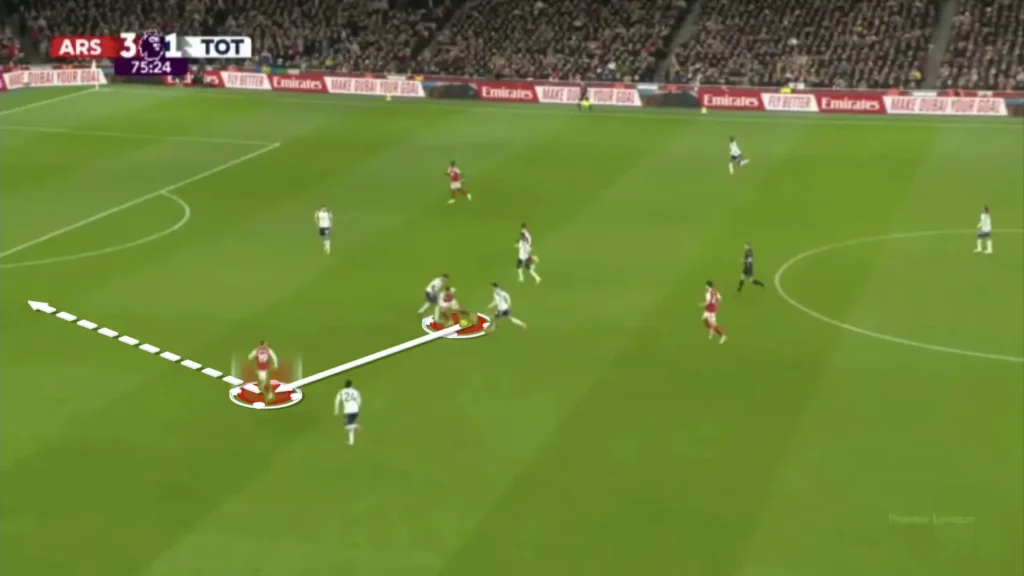
This is exactly how Arsenal scored their first goal. With Merino on the ball, Danso remained overly focused on Calafiori’s movement rather than protecting the space behind. Trossard made a diagonal run from the half-space in behind Danso, and Merino clipped a perfect pass over the top.
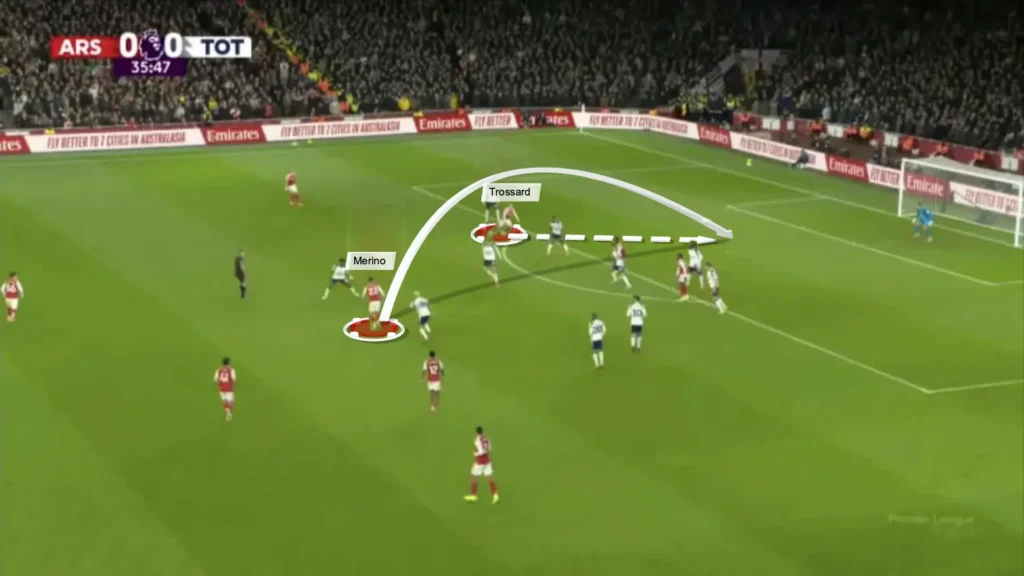
Trossard brought the ball down and finished past Vicario to make it 1–0. This sequence encapsulated Arsenal’s broader attacking strategy: provoke the center-back, exploit the gap, and punish the disorganization created by Spurs’ man-oriented defending.
Arsenal’s Central Dominance and Eze’s Impact
Once Arsenal progressed into higher zones, Tottenham’s structural issues deepened. Frank’s team prefers to defend wide with numerical strength to block crosses.
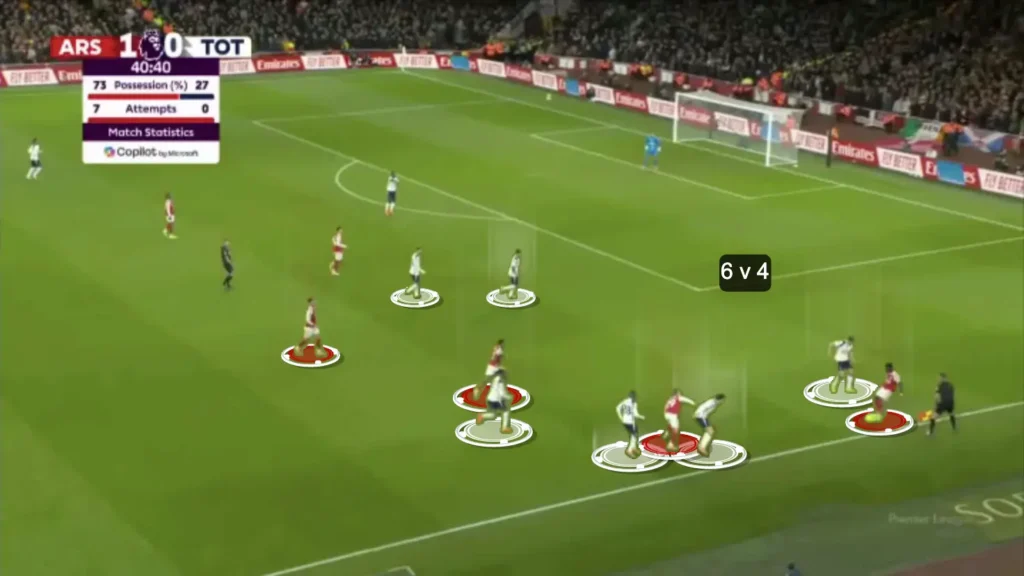
However, this often dragged the pivots, Palhinha and Bentancur, toward the flanks, leaving the center completely unprotected. Eze intelligently occupied Zone 14—the central area just outside the box—remaining patient and available whenever Spurs’ midfield drifted wide. Arsenal could then easily and repeatedly find him in this space.

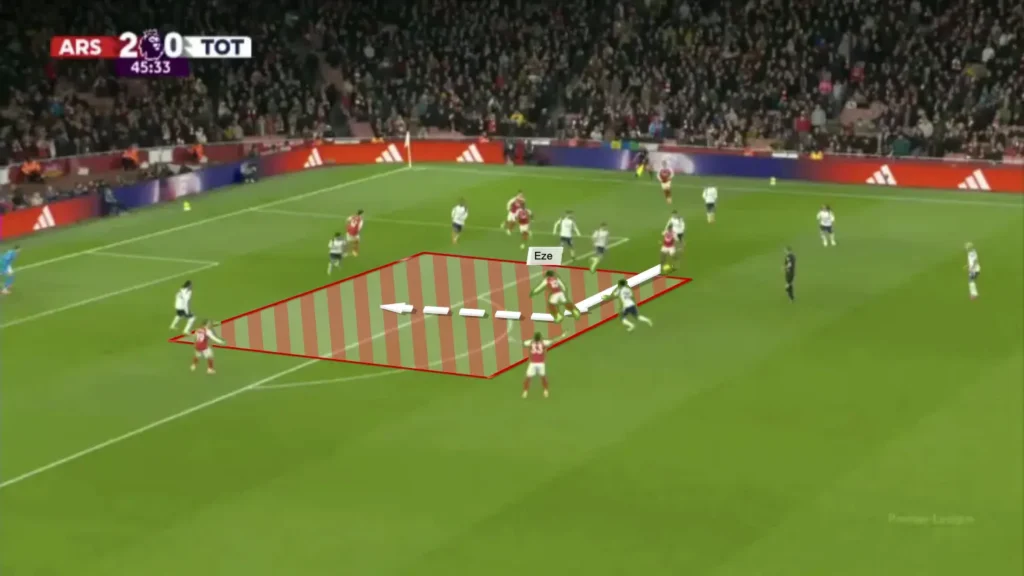
His first and second goals came from receiving unopposed in Zone 14, with time to turn, assess, and finish accurately. Tottenham’s inability to protect the central lane meant Eze was constantly receiving in dangerous positions, and Arsenal’s rotations kept creating new channels for accessing him. His composure and technical level simply punished the structural flaws Tottenham created for themselves.
Tottenham’s Passive Defending and Arsenal’s Freedom to Turn
A major issue, especially in the first half, was Tottenham’s passivity. Because Arsenal dropped so many players into deeper zones, Spurs found it difficult to engage in their high man-to-man press.
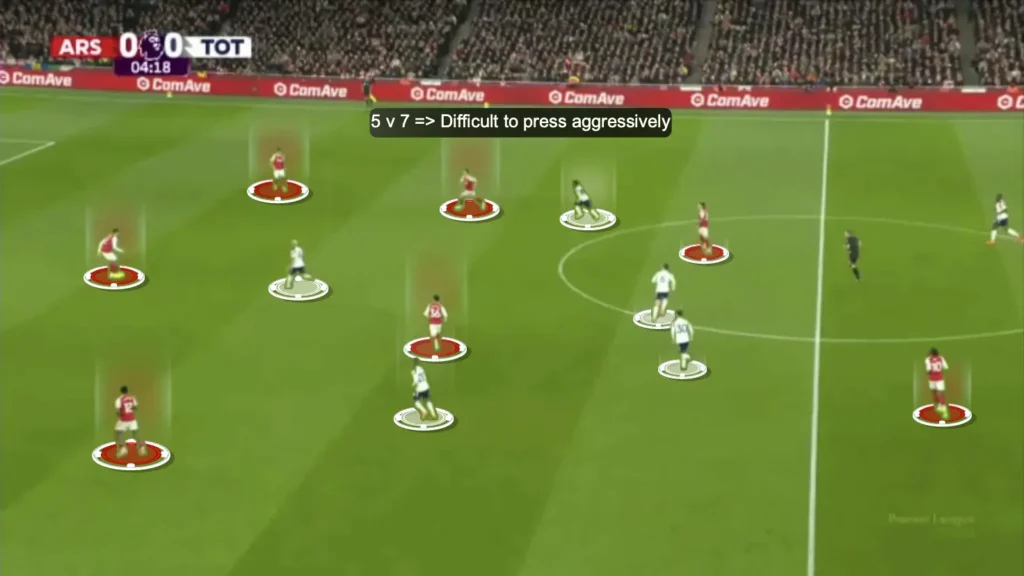
Their defenders repeatedly allowed Arsenal attackers to receive with their back to goal and turn without pressure. These free turns allowed Arsenal to accelerate play at will, circulate possession, and pull Spurs out of shape, all while preventing them from ever controlling the match rhythm.
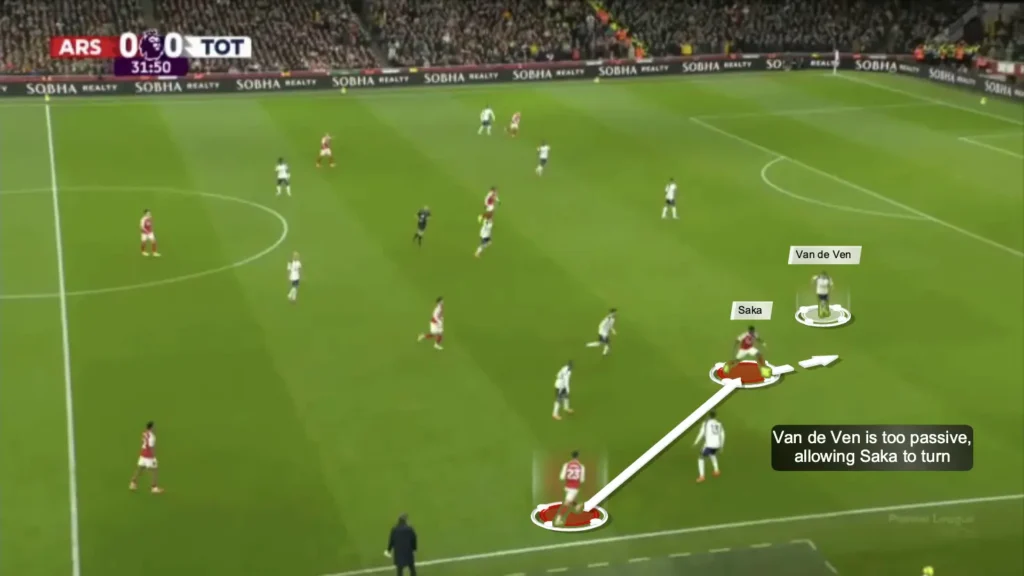
The result was long stretches in which Tottenham barely touched the ball. Arsenal used this dominance to suffocate the game, maintain a consistent attacking presence, and repeatedly force Tottenham backward while exposing the weaknesses in their man-oriented structure.
The Second-Half Adjustment: Tottenham’s 4-4-2
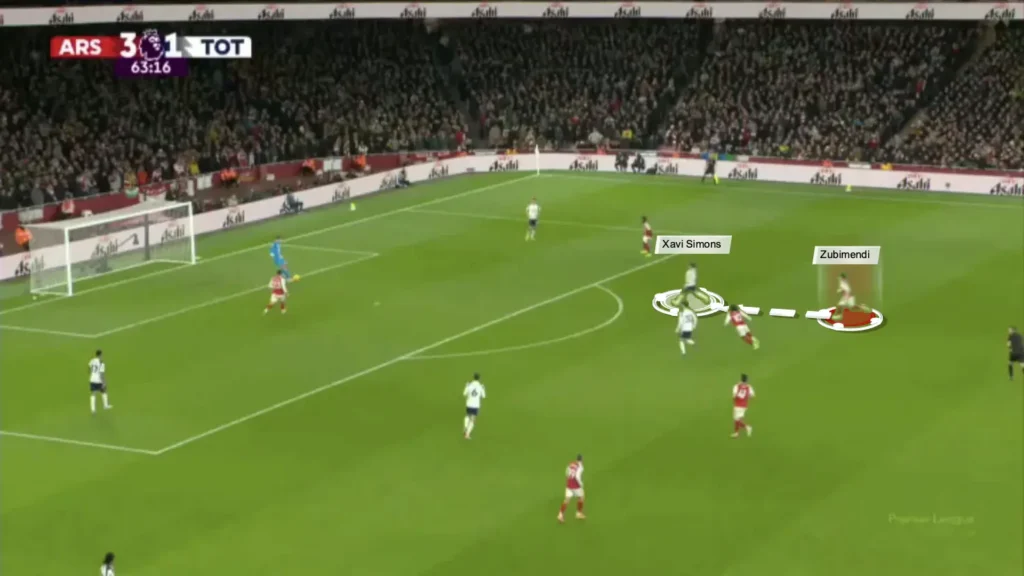
At half-time, Frank replaced Danso with Xavi Simons and changed Tottenham’s defensive structure to a 4-4-2 (4-2-3-1 on paper).
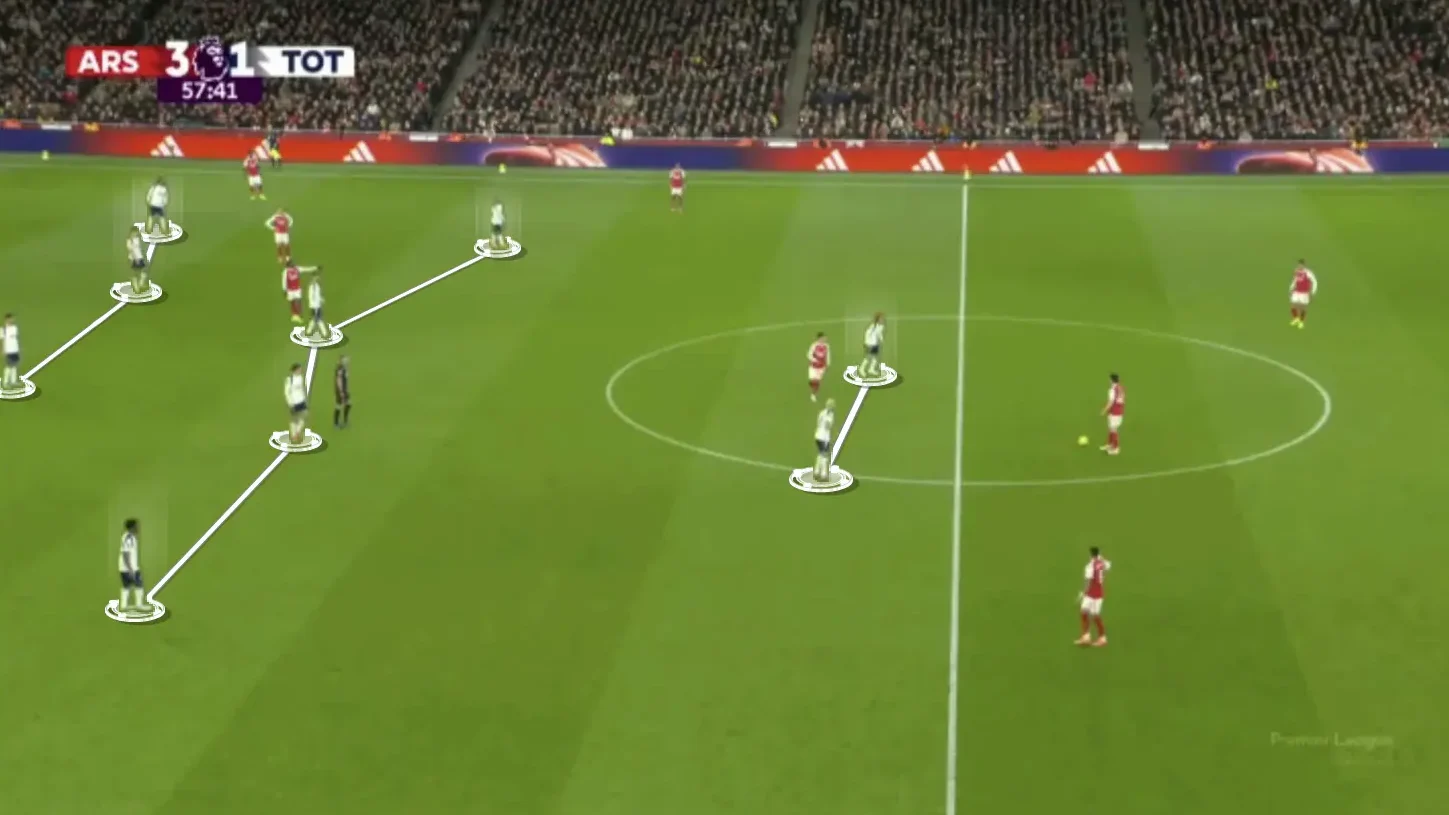
The immediate effect was greater aggression. With only Romero and Van de Ven as the center-backs, Spurs now had defenders pushing up more decisively onto Arsenal’s dropping attackers. This higher intensity enabled them to disrupt Arsenal’s build-up more effectively and prevented the kind of easy turns that had destroyed them in the first half.
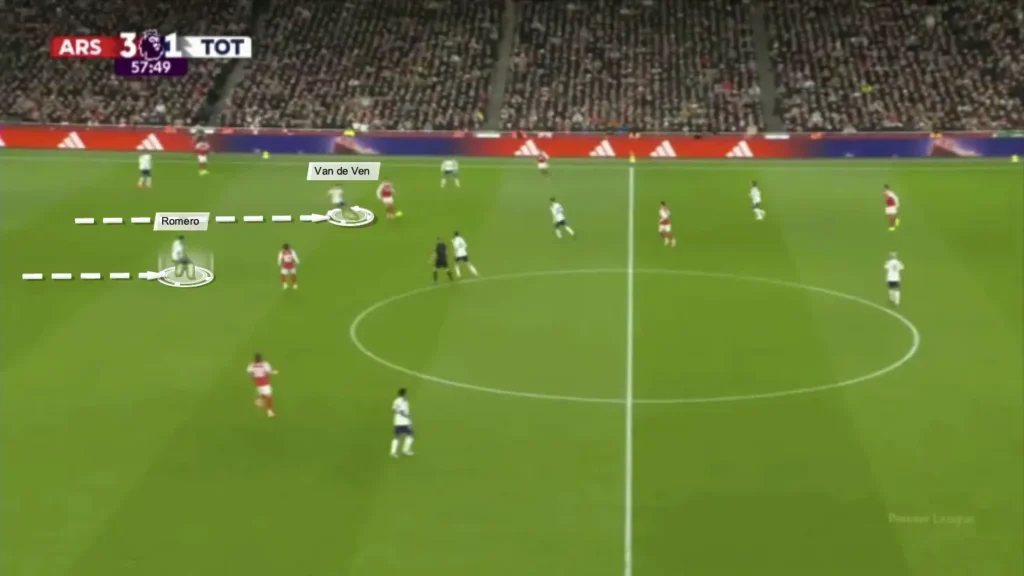
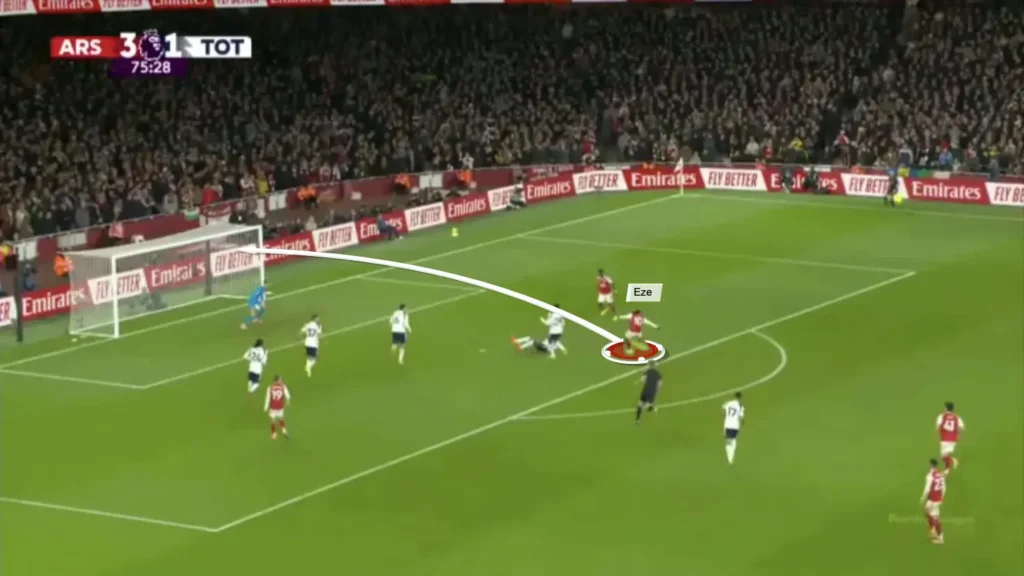
However, this adjustment carried risk. With fewer defenders in the last line, Tottenham’s backline became more vulnerable to direct runs in behind. Arsenal exploited this for the fourth goal: Trossard got in behind the Tottenham right-back, received a through-ball, and carried the ball forward before finding Eze free in the box. With the defensive line stretched and poorly synchronized, Eze finished comfortably to complete his hat-trick.
Arsenal’s Rest-Defence and Counterpressure
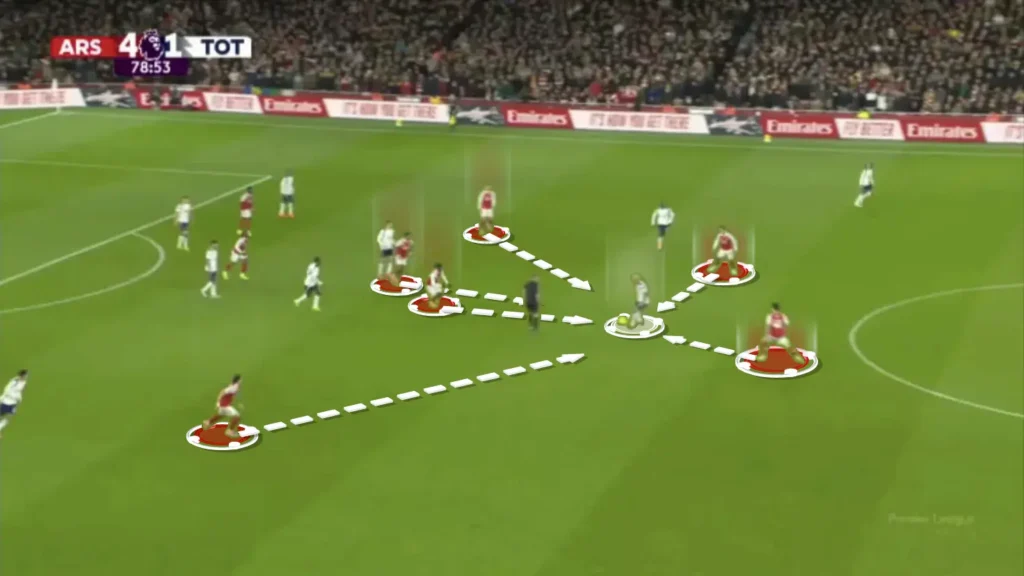
One of the biggest factors behind Arsenal’s dominance was their rest-defence and immediate counterpressure. When they lost the ball, they instantly collapsed around the ball-carrier from multiple angles, winning it back before Tottenham could even initiate a counter. Because Arsenal kept many players in central zones and close to the ball, they created overwhelming numbers in every transition moment.
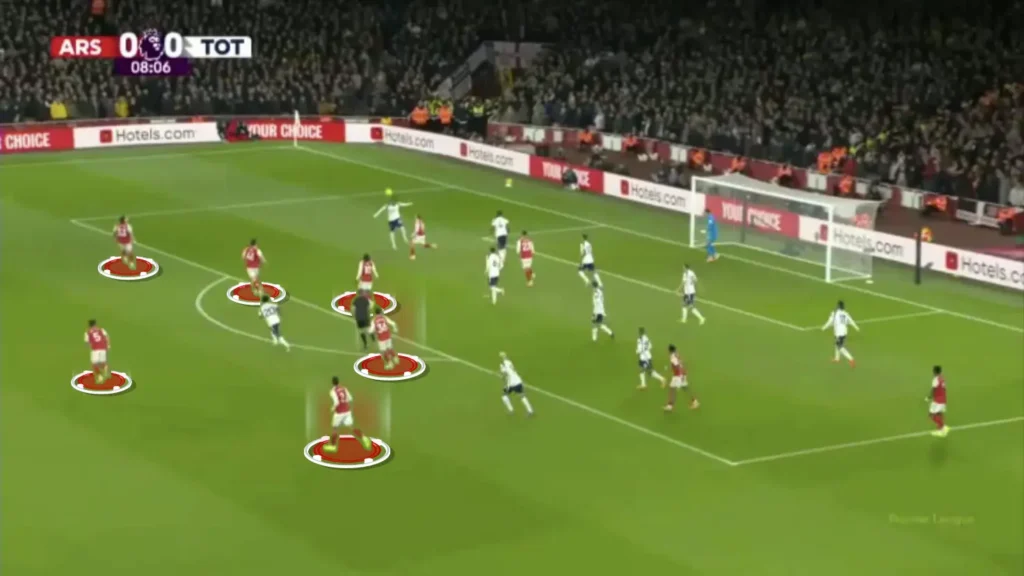
Additionally, in the final third, Arsenal consistently occupied the edges of the box with many players, winning clearances, second balls, and loose balls.
This constant ability to regain possession not only suffocated Tottenham but also ensured Arsenal spent most of the match attacking, recycling pressure, and forcing Spurs to defend wave after wave of advances.
Arsenal’s Pressing and Tottenham’s Build-Up Issues
Tottenham finished with just 0.07 xG, which reflects both their lack of attacking clarity and Arsenal’s elite defending. When Vicario and the defenders tried to build from the back, Spurs alternated between 4-3-3 and 4-2-3-1 shapes.

Arsenal pressed with a 4-4-2 high-block, with Merino curving his pressing runs to force play toward one side. Once Tottenham were directed toward a flank, Arsenal’s block shifted as one unit, locking onto every nearby receiver and cutting off all central options.

When the ball was played wide to the fullback, Tottenham repeatedly became isolated. They provided poor support around the ball, leaving the fullback boxed in and surrounded by Arsenal players from multiple angles.

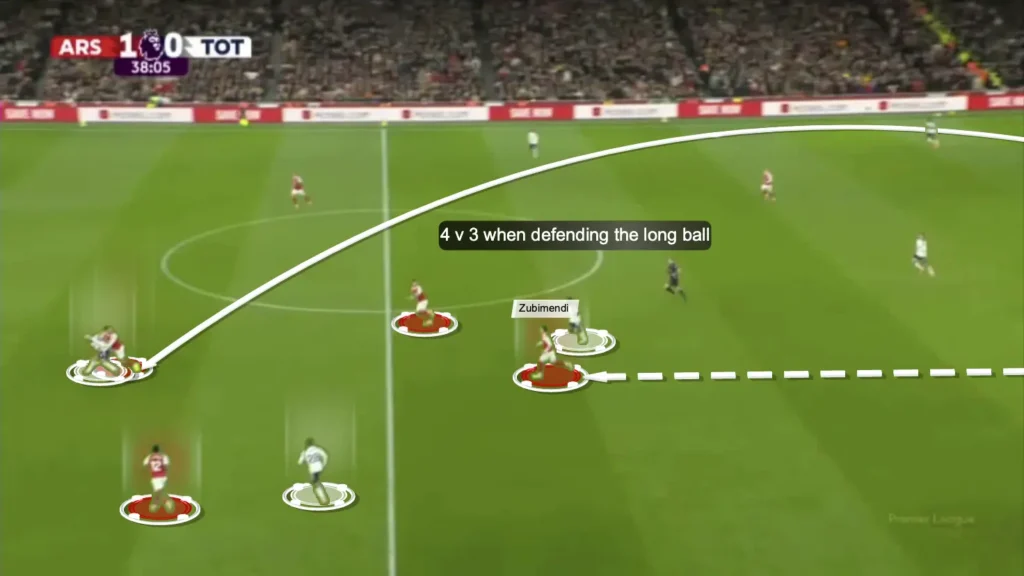
This often forced Tottenham into rushed long balls. However, even when they went long, Arsenal’s defenders dominated the aerial duels and first contacts.
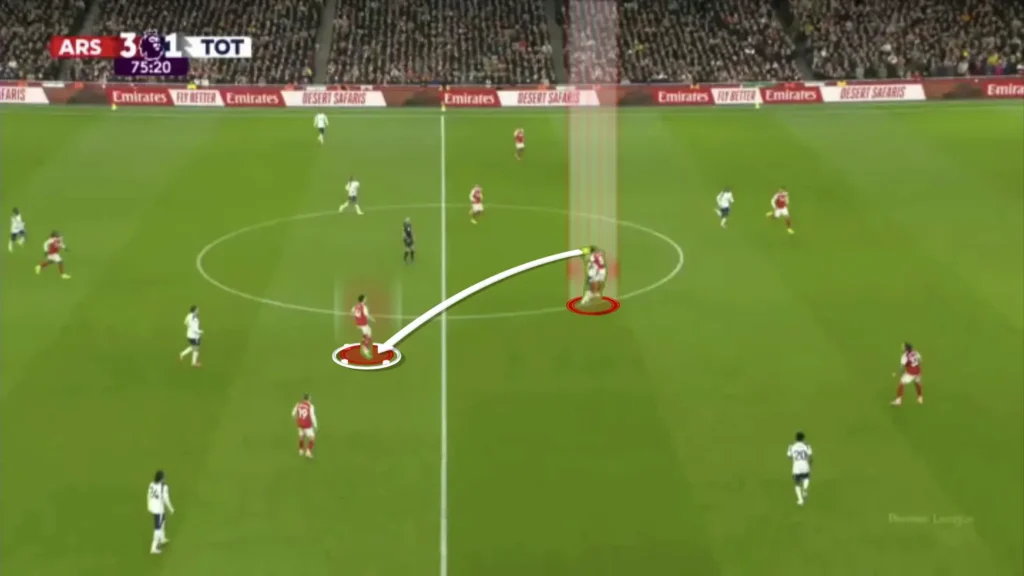
Any second balls that dropped inside midfield zones were almost always recovered by Zubimendi, who positioned himself superbly in intermediate spaces—close enough to press if Spurs played short, but deep enough to drop down and help win long-ball second contacts. His timing in these moments was consistently elite.
Arsenal in a Deeper Block
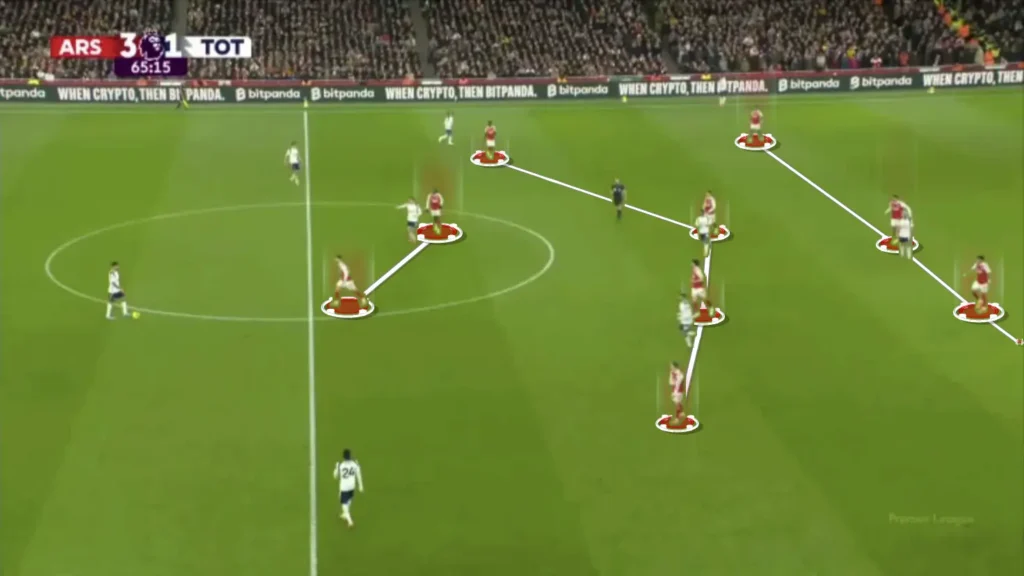
On the few occasions Arsenal were pushed deeper, their 4-4-2 mid-block remained compact, aggressive, and well-timed. They stepped forward immediately on backward passes or heavy touches, ensuring Tottenham never built sustained pressure.
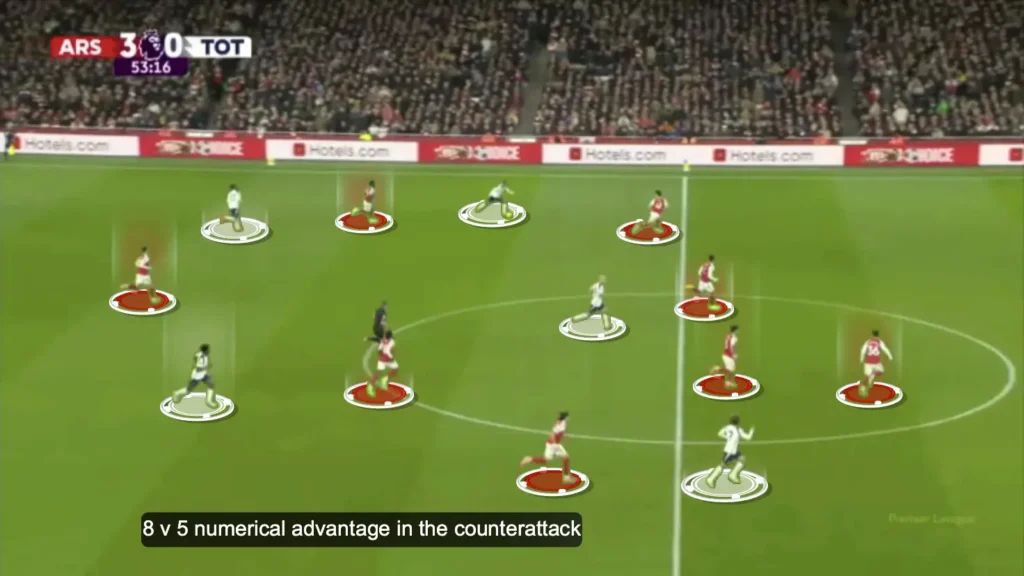
Another big problem for Tottenham was that their counterattacks broke down quickly; they made poor decisions, rushed long shots, or carried the ball into crowded zones instead of switching play. Arsenal also showed great work rate in defensive transitions. When their immediate counter-pressure failed to win the ball back, they recovered with speed and numbers, assembling a defensive superiority that denied Spurs any meaningful chance creation. This rapid reorganization repeatedly killed Tottenham’s counters before they could connect passes forward, ensuring that Arsenal maintained territorial control throughout the match.
Conclusion
This was one of Arsenal’s most complete performances of the season: tactically disciplined, structurally fluid, and defensively dominant. Their build-up rotations consistently dismantled Tottenham’s man-oriented scheme, their rest-defence suffocated transitions, and their pressing neutralized any attempt Spurs made to establish possession.
With Spurs generating just 0.07 xG and barely threatening outside Richarlison’s opportunistic strike, the match highlighted a gulf in tactical clarity and execution. Arsenal’s control, intelligence, and adaptability marked them as genuine title contenders, while Tottenham’s passive marking, poor spacing, and structural instability raised serious questions about their defensive mechanisms under Thomas Frank.
All images and visuals in this article are made with Once Sport — a powerful and easy-to-use tactical analysis platform. It helps you annotate clips, visualize movements, and create professional analysis videos. Readers of The Football Analyst get 10% off plus one month free with the code TFA10 at checkout.
Yes indeed, the way and efficiency of Arsenal’s press is second to none this season. Would be curious to see the analysis of tonight game vs. Bayern. And particularly Kane’s role and position and does he had a chance if he was more advanced? Also in the future I will be curious to read more about the new “jewel” in Bayern Munich squad – Lennart Karl.
Thanks a lot for the proffesional analysis!