
Adam Wharton is an English midfielder who operates primarily as a Deep-Lying Playmaker. At 21 years old, the Crystal Palace player transitioned from the Championship to become a regular starter in the Premier League, recently earning a call-up to the senior national team. Wharton provides his midfield with the ability to increase the speed and verticality of play, serving as the key point for building attacks from deep positions on the field.
Adam Wharton is an English midfielder who primarily operates as a Deep-Lying Playmaker. At 21 years old, the Crystal Palace player has made the transition from the Championship to becoming a regular starter in the Premier League, recently earning a call-up to the senior national team. Wharton provides his midfield with the ability to increase the speed and verticality of play, acting as a key reference point for building attacks from deep positions.
Physical Attributes
Adam Wharton stands at approximately 1.82 m and has a relatively slight frame, which underpins many of his weaknesses. Physically, he struggles in duels, consistently losing both aerial and ground battles as he finds it difficult to use his body to shield the ball. A crucial issue is his tendency to lose balance and stability under shoulder-to-shoulder contact, a significant drawback for a deep midfielder.
That said, Wharton does display good agility and lightness, enabling him to change direction quickly and evade initial pressure. However, he is relatively slow over both short and long distances, which limits his ability to cover large areas of the pitch or make rapid defensive recovery runs. Furthermore, his stamina and work rate over 90 minutes are questionable. This often translates into an “unconcerned” attitude in the later stages of matches, reducing his pressing intensity and recovery efforts.
In possession
Wharton’s main role is to progress the ball efficiently through midfield and into the final third. He combines quick decision-making with excellent passing mechanics, making him a dangerous playmaker when the game flows through him.
A Progressive & Line-Breaking Midfielder
Wharton consistently looks to pass forward, even under pressure. He plays a vital role in the second phase of possession, moving the ball quickly from defense into attack. He prefers to play at high tempo, often using one-touch passes thanks to his vision and awareness of teammates’ positioning.
1. Disguised Passes and Creativity
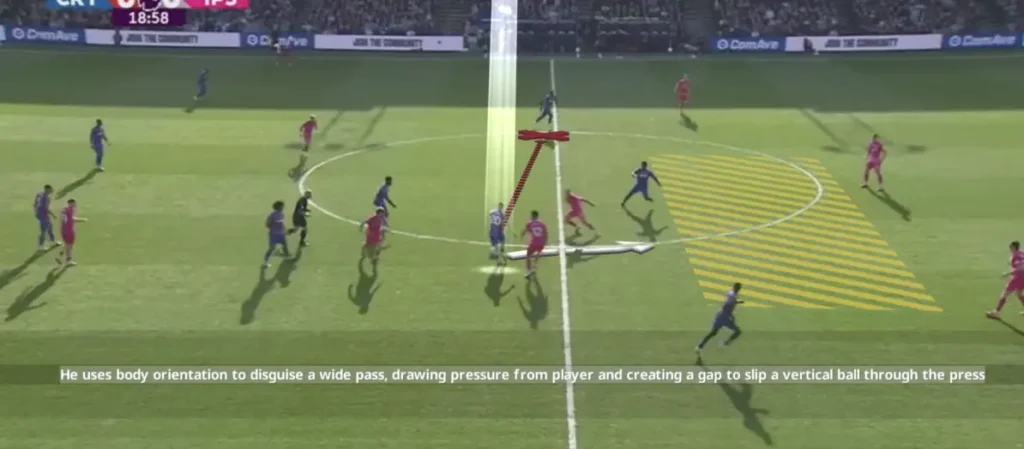
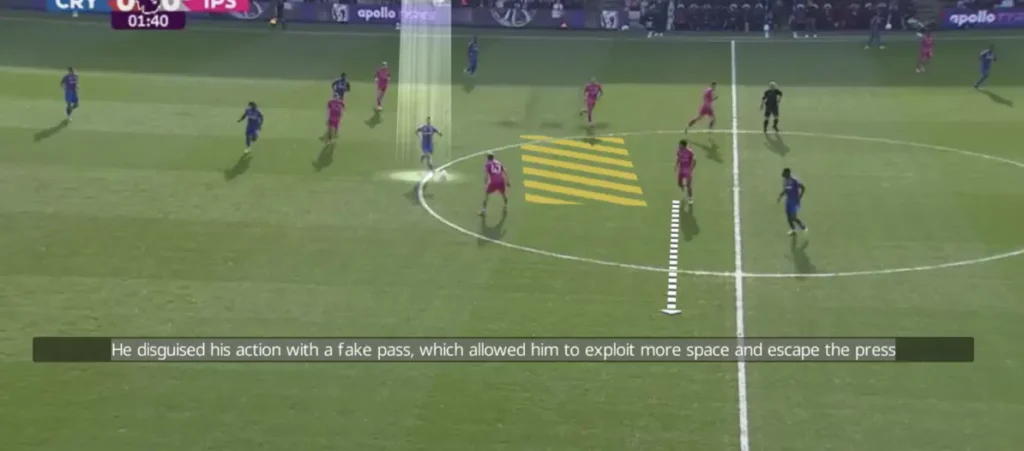
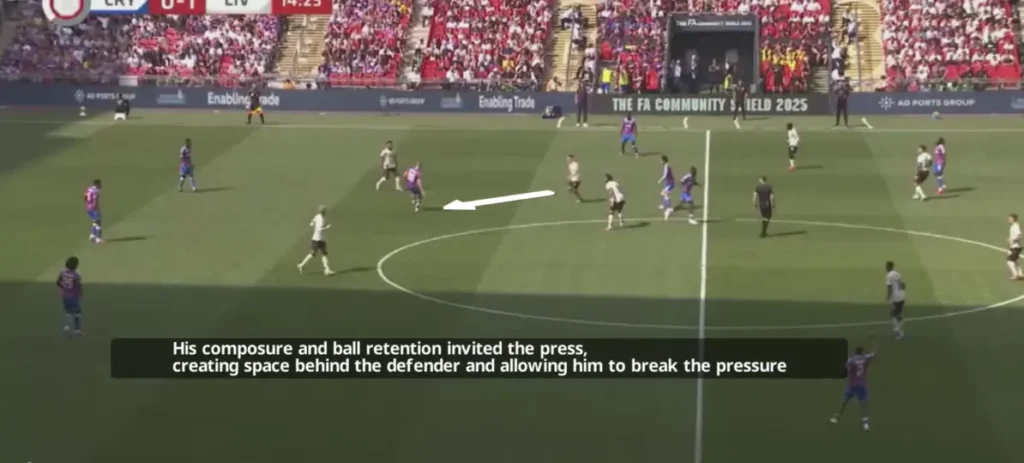
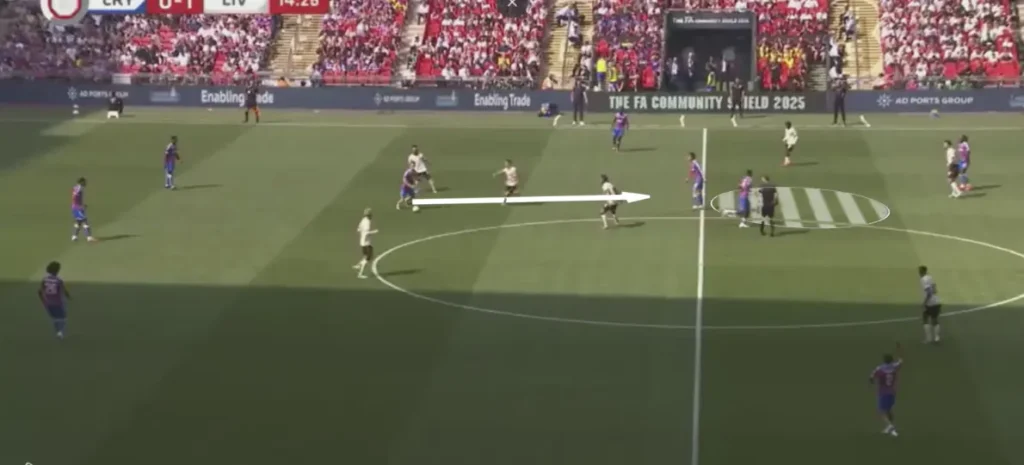
He is highly effective at using disguised passes to disrupt defensive organization and create openings. These passes allow him to break pressing structures by misleading opponents with his body shape and initial movement. In this situation, for example, he manipulates a presser by feigning a sideways pass, inviting him to close that pass, and opening space behind the defender for a pass through the line.
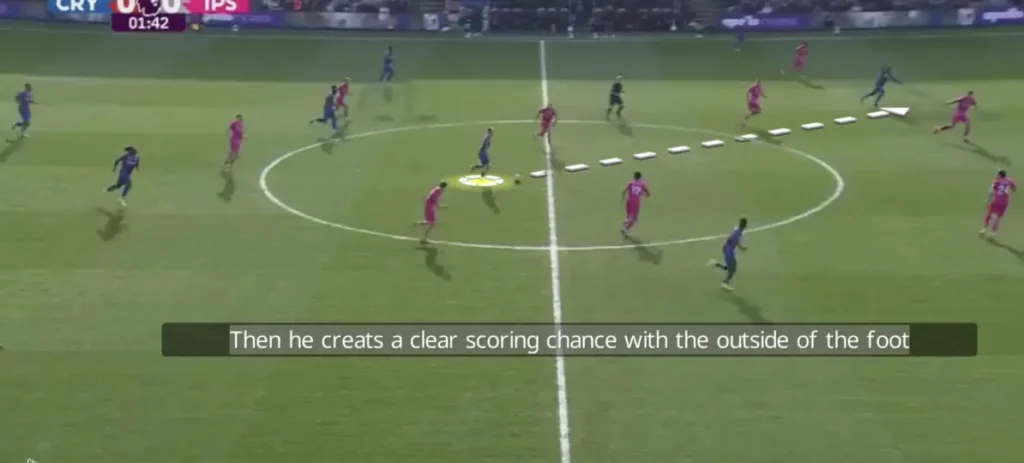
Additionally, he frequently attempts through balls and long passes, occasionally creating clear scoring chances with his technique — for example, using the outside of his foot. This verticality is central to his role in transitions.
2. Press Resistance and Composure
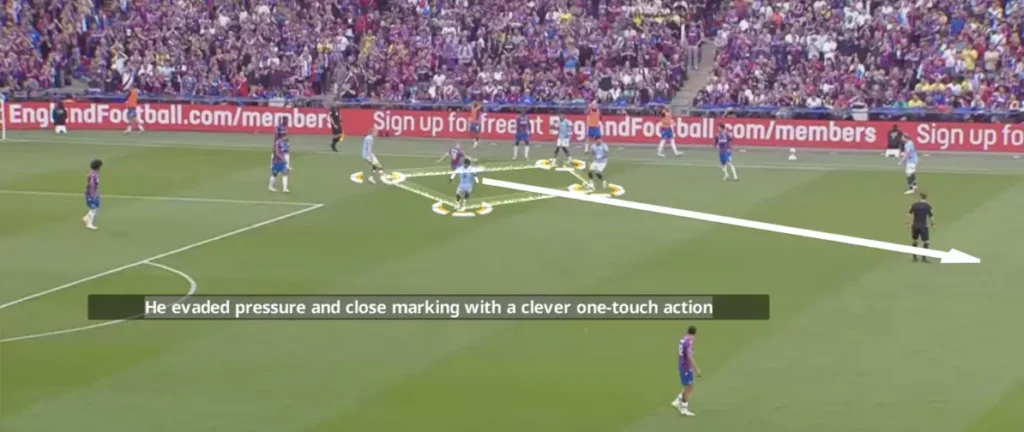
Wharton’s composure under pressure is very good. He uses quick changes of direction, one-two combinations, and clever one-touch actions to evade close marking and break the press.
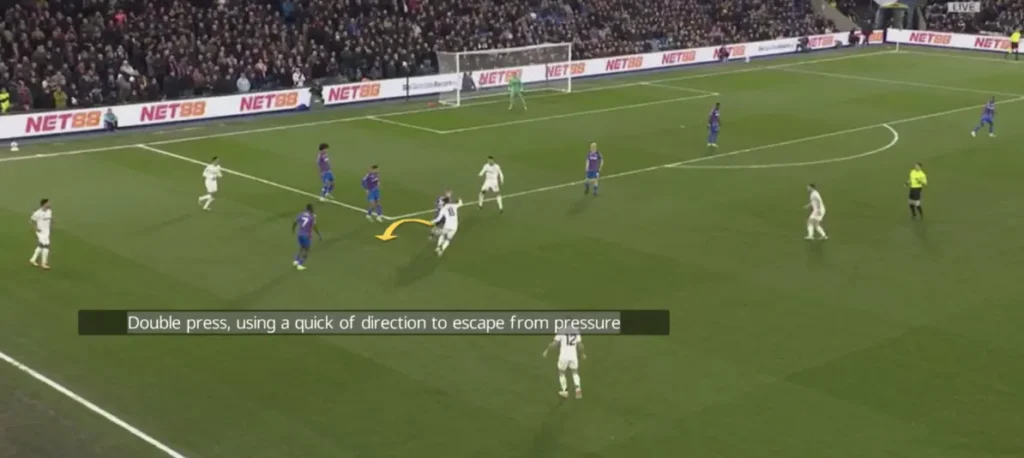
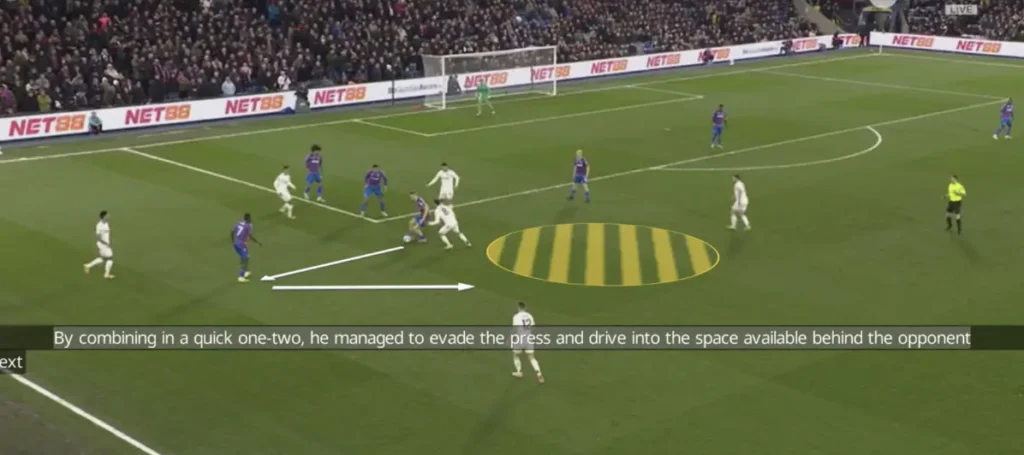
Moreover, his calmness in possession allows him to invite the press, intentionally drawing opponents in to create larger passing lanes or space for teammates behind the pressing line.
Area for Concern
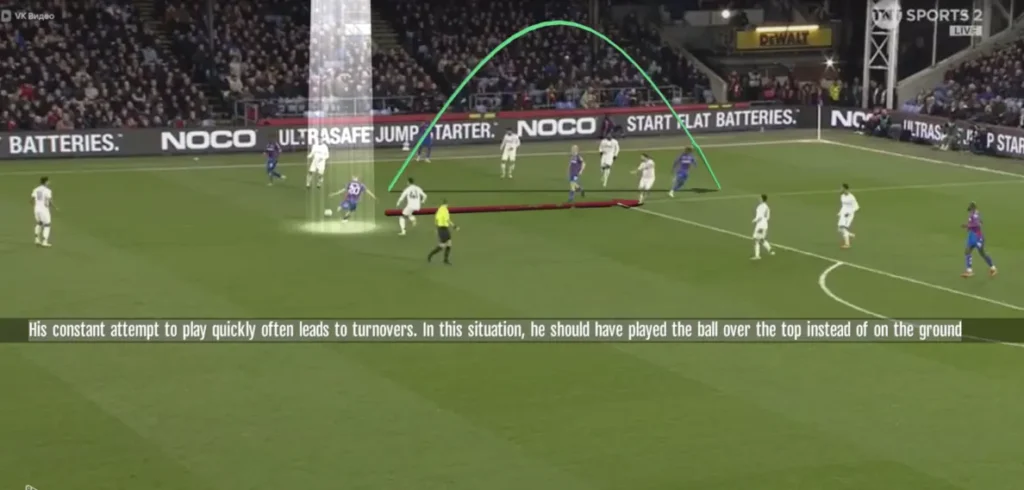
Wharton’s biggest issue in possession is his sense of rhythm. He often struggles to judge when to slow the game down and when to accelerate. In situations that require calm ball circulation and control, his preference for forcing progressive passes can lead to turnovers. He is not a natural tempo-setter or “game controller.” Although his forward passing is ambitious and frequently effective, his execution sometimes lacks accuracy, leading to dangerous losses of possession in midfield.
Out of Possession
Wharton’s strongest defensive quality is his anticipation. His ability to read the game is reflected in his strong numbers for interceptions and blocked passes, ranking him among the Premier League’s best midfielders in these areas. He positions himself well to cut out forward passes and tends to tackle only when the success is almost guaranteed, relying more on positioning and awareness than physicality.
However, his pressing intensity is inconsistent. Despite good positioning, he often appears casual and fails to engage the ball carrier with urgency, which weakens his defensive contribution.
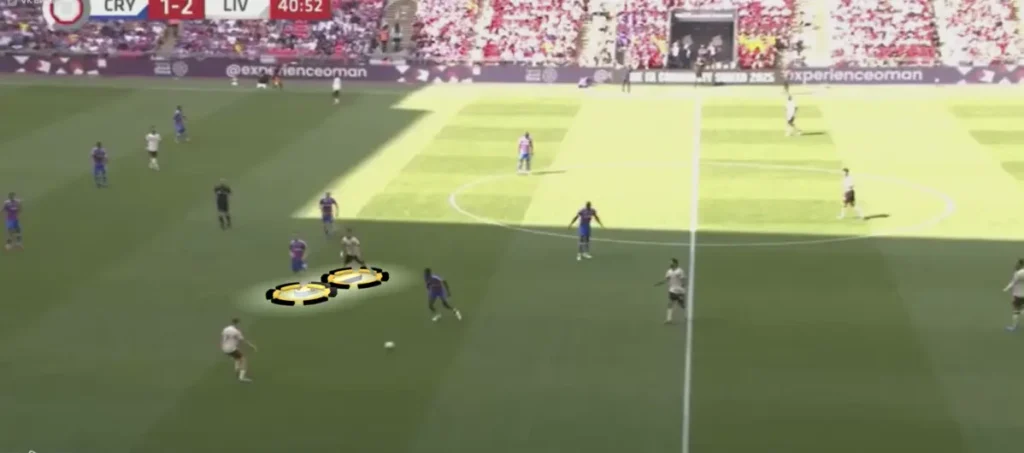
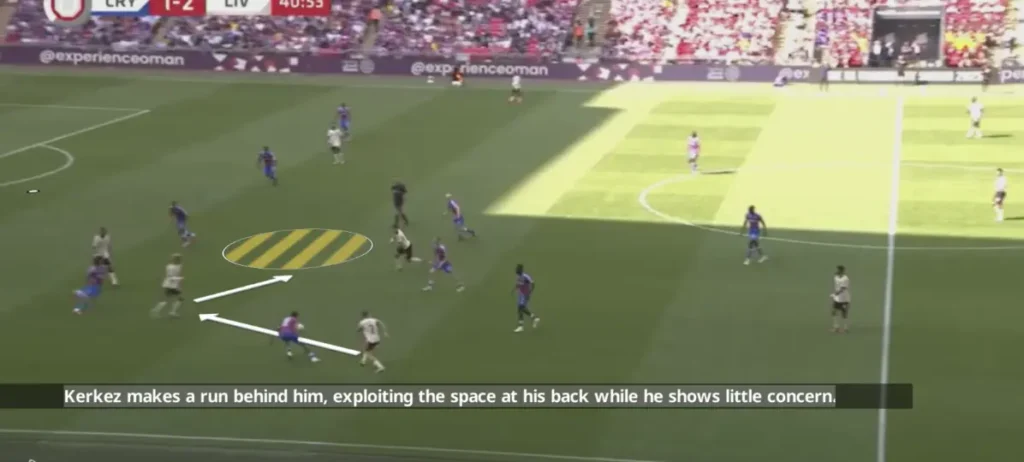
During the build-up phase, he rarely drops into the back line to assist the center-backs. Instead, he positions himself higher up the pitch to receive the ball when his team wins it and immediately looks for line-breaking passes to launch the vertical transition.
Final Thoughts
Wharton is very much a system player, one who benefits from a highly structured tactical environment. He requires a midfield partner with high energy and work rate who can cover ground, win physical duels, and anchor the defensive side.
When used in the right setup — where his weaknesses in dueling and pace are covered — Wharton has the technical ability to become a top-level Deep-Lying Playmaker. However, unless he develops more physical robustness, his vulnerability in central midfield duels will remain the key factor limiting his long-term trajectory.