
Modern football analytics goes far beyond passes, shots, and classic defensive metrics. One of the most revealing concepts in today’s game is defensive line height — how high up the pitch a team positions its last line of defenders. With tracking data becoming increasingly accessible, analysts can now measure this principle with precision and understand how it shapes pressing strategies, territorial control, and transition vulnerability.
This article breaks down what defensive line height is, how it is measured with tracking data, and why it matters tactically.
What Is Defensive Line Height?
Defensive line height refers to the average vertical position of the backline relative to the pitch. In simple terms:
- A high line stays close to the halfway line.
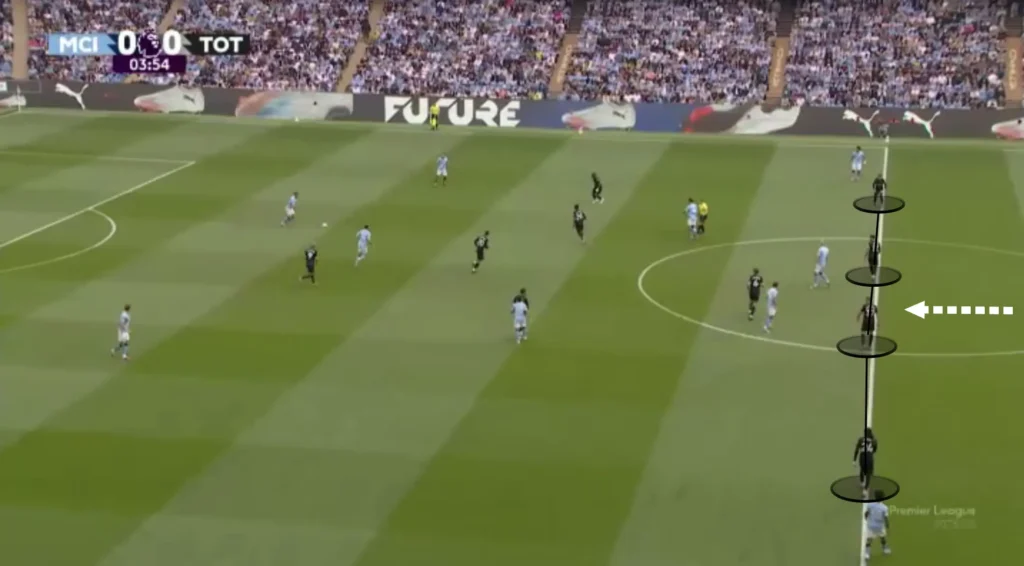
- A mid-block positions itself around 35–45 meters from the goal.
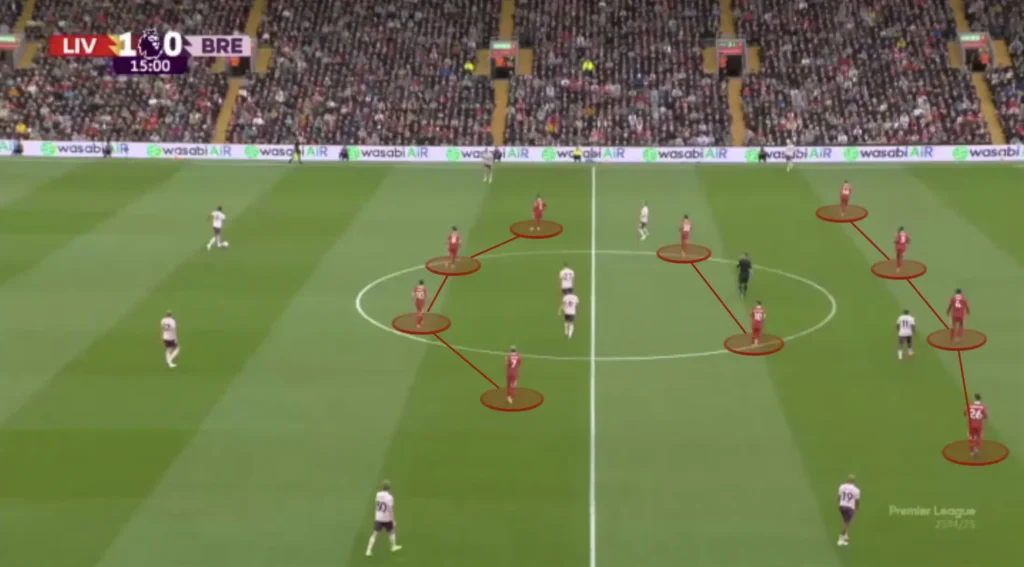
- A low-block sits deep inside or near the penalty area.
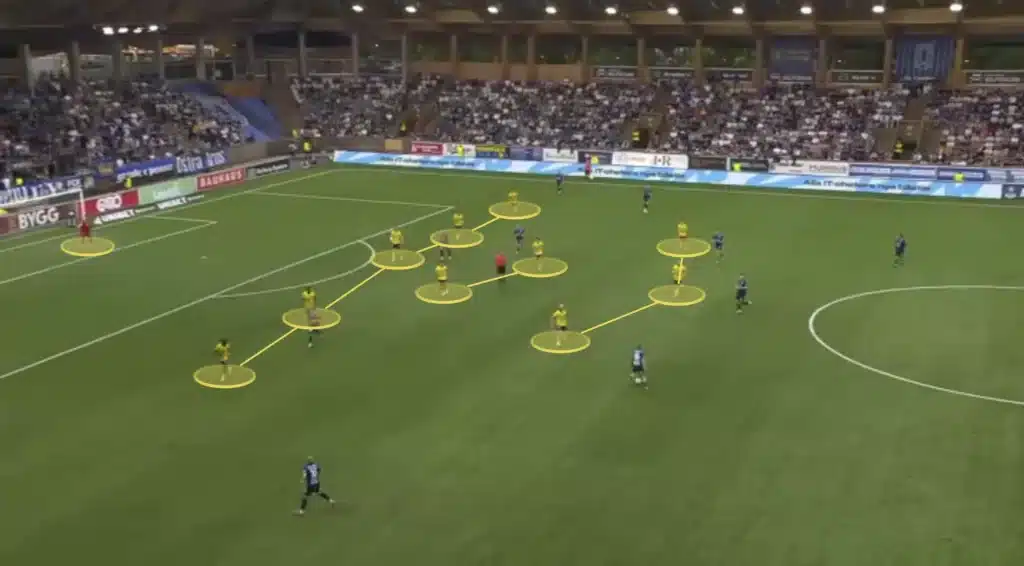
Tracking data allows analysts to quantify this with exact coordinates instead of vague descriptions such as “they defended high” or “they dropped deep.”
How Tracking Data Measures Defensive Line Height
Tracking data provides the X–Y coordinates of every player at every frame, allowing analysts to calculate exactly how high or low a team defends throughout different phases of play.
There are several common methods:
1. Deepest Outfield Defender
Analysts measure the distance between the deepest defender and their own goal line at each frame.
This offers the most conservative interpretation of line height because:
- A single defender dropping deeper instantly lowers the metric
- It captures moments of defensive recovery or emergency defending
- It reflects risk exposure to balls played in behind
This method is useful for evaluating how vulnerable teams are to direct attacks.
2. Average Line Position (Back Four Mean Coordinate)
Here, analysts take the mean Y-coordinate (vertical position) of the back four during out-of-possession phases.
This smooths out the movement of an individual defender and better represents:
- Teams with aggressive center-backs who jump out to press
- Coordinated shifts in high-pressing structures
It shows the “intended” line height rather than isolated individual movements.
3. Defensive Centroid
The defensive centroid is the geometric center of all defenders — essentially a single point representing the unit.
It helps analysts understand:
- How compact the line is
- How quickly the line travels vertically
- How the line behaves during press–retreat cycles
The centroid is especially valuable for identifying shape control, not just depth.
4. Dynamic Line-Height Snapshots
Tracking data makes it possible to measure line height at key tactical moments, such as:
- Immediately after losing possession
- During the opponent’s first build-up actions
- One second prior to a shot
- While executing a high press
- As the block drops into a mid- or low-block
These snapshots reveal:
- How quickly the line retreats after turnovers
- How high the line stays when the team presses
- How deep the line collapses when defending the box
- Whether the line adjusts fluidly or rigidly to ball movement
Together, these methods provide a full picture of how a defensive line behaves — from its default structure to its rapid adjustments in the most important phases of play.
Why Defensive Line Height Matters
1. Pressing Strategy
A higher line compresses the pitch and supports an aggressive press.
When the defense steps up, the midfield can follow — creating short distances in the pressing.
2. Territory and Field Tilt
Teams with a consistently high line tend to dominate territory.
Tracking data helps quantify how much of the match is played in the opponent’s half.
3. Risk Management
A high line increases space behind the defense.
Tracking data highlights:
- Frequency of runs in behind
- Distances defenders must sprint
- The keeper’s sweeping involvement
- Vulnerability to direct balls
This allows analysts to evaluate whether the high line is effective or reckless.
4. Compactness Between Units
Line height affects the gap between:
- Defense and midfield
- Midfield and attack
Tracking data can measure vertical compactness in real time — a key element of preventing line-breaking passes.
Applying Tracking Data: Practical Examples
Example 1: High-Pressing Team
A team defending with an average line height of 52–55 meters signals a high press.
Tracking reveals:
- Short distances between lines
- High pressing rate
- Increased sweeper-keeper actions
This profile fits sides like Bayern, Liverpool, or Barcelona.
Example 2: Low-Block Team
A team averaging 22–28 meters plays a deep block.
Tracking data might show:
- Minimal pressing actions
- Wide defensive line to protect crosses
- Very low space behind the defense
This is common for relegation battlers or teams protecting a lead.
Example 3: Teams With Flexible Line Height
Some sides adapt their height depending on game state.
Tracking shows a wave-like pattern — rising when chasing a goal and dropping when protecting a lead.
What Analysts Should Look For
When evaluating defensive line height with tracking data, focus on:
- Stability of the line during opposition build-up
- Reaction speed after losing possession
- Gaps between defenders
- Whether line height matches the team’s pressing intention
- How opponents adapt (long balls, early runs, direct play)
This helps determine whether a team’s defensive structure is cohesive or easily manipulated.
Conclusion
Defensive line height is more than a tactical detail — it’s a defining feature of a team’s defensive identity. With tracking data, analysts can measure it precisely, monitor its movement across phases of play, and link it to pressing behavior, territorial control, and vulnerability in transitions.
Understanding defensive line height allows coaches and analysts to evaluate whether a team is truly compact, brave, or exposed — and how their defensive decisions shape the entire match.