Robin van Persie’s Feyenoord are one of the most tactically intriguing projects in Dutch football. His ideas blend positional play, verticality, aggressive pressing, and fluid rotations into a dynamic system that constantly pushes opponents into uncomfortable situations. While still early in his coaching career, Van Persie has already shaped a team with a distinct identity: brave in possession, relentless without the ball, and explosive in transitions.
From fluid 3-1-6 structures in sustained attacks to man-oriented pressing systems designed to suffocate build-up, Feyenoord showcase a style that is both modern and unmistakably Van Persie. This analysis breaks down how they build, progress, press, and counter — and why their tactical approach creates both high reward and inherent risk.
Offensive Tactics
Low Build-Up
Robin van Persie structures Feyenoord’s low build-up in a 4-2-3-1, with both fullbacks positioned deep and the double pivot acting as the main reference point to attract pressure. The intention is simple: draw the opponent forward to create exploitable space behind them.
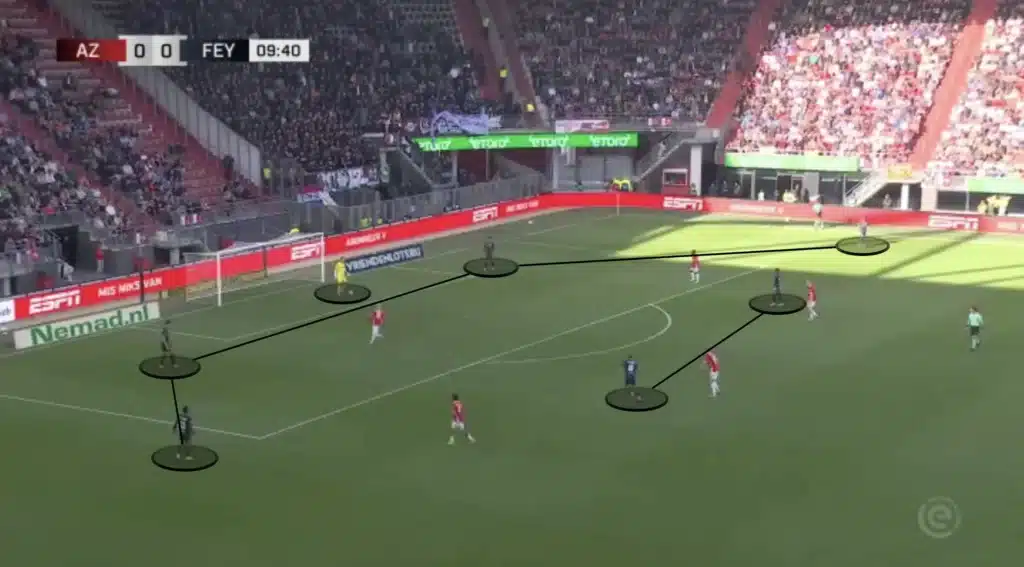
A key mechanism is the use of a dropping striker or attacking midfielder between the opposition midfield and defensive lines. When found, this player often sets (“bounces”) the ball to a holding midfielder facing forward, immediately creating a platform for progression.
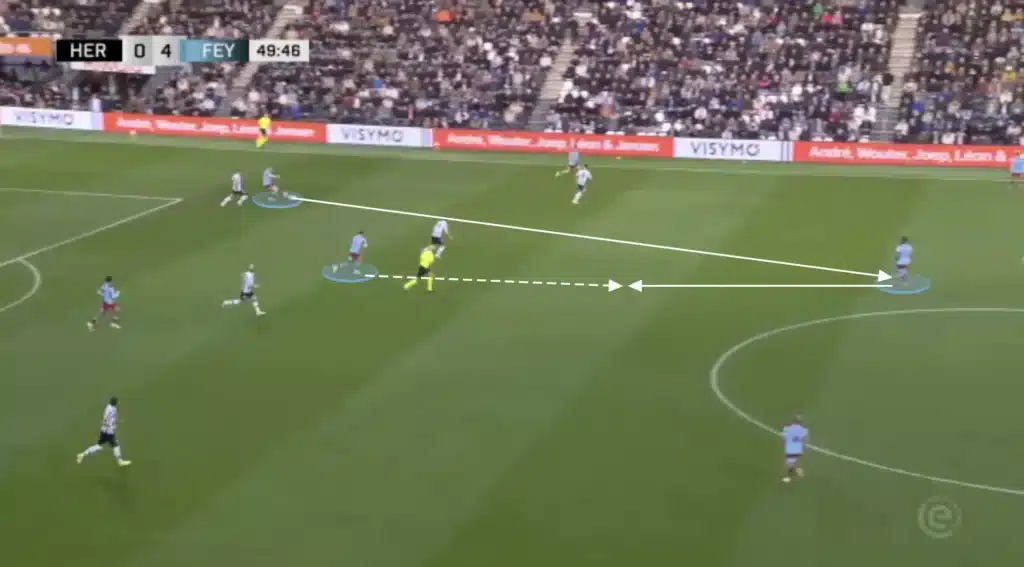
Once the press is broken, Feyenoord’s front line reacts instantly — attackers make aggressive runs in behind, targeting the space left by defenders stepping out to press.
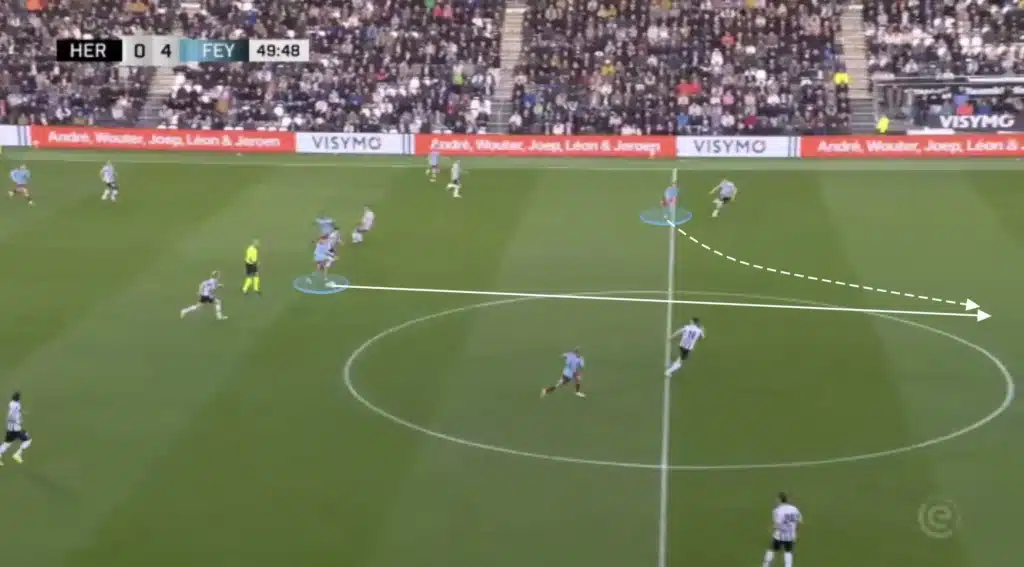
This pattern—invite pressure, connect through a dropping attacker, find the pivot, then release runners—forms the backbone of their controlled yet dynamic first-phase play.
High Build-Up
In the high build-up, Feyenoord show far more fluidity. The nominal shape resembles a 4-3-3, with a single pivot, two number-eights, and a front three, but the structure frequently morphs as they search for progression.
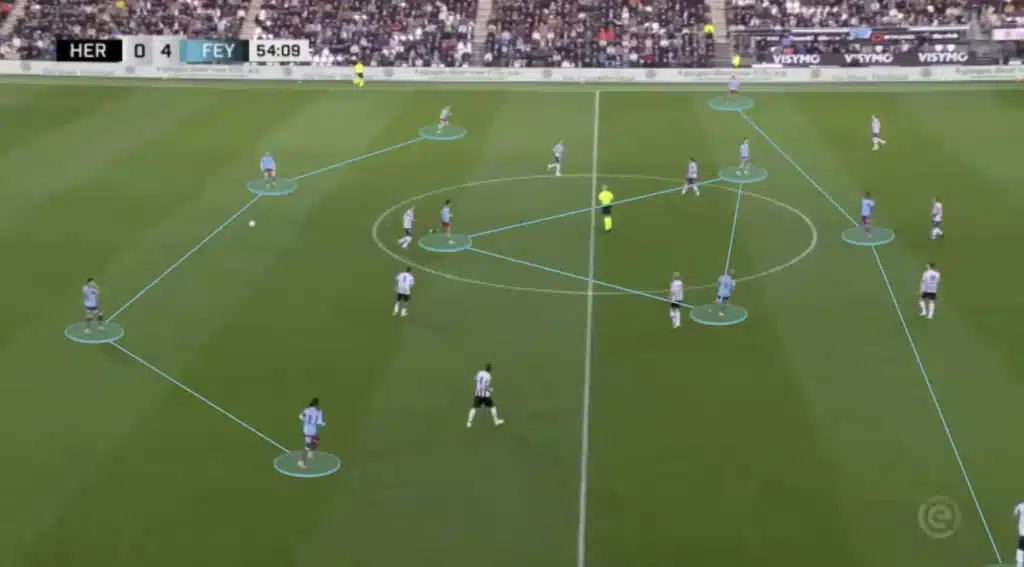
The most common transformation is into a 3-1-6, a highly aggressive positional system designed to overload the opponent’s last line.
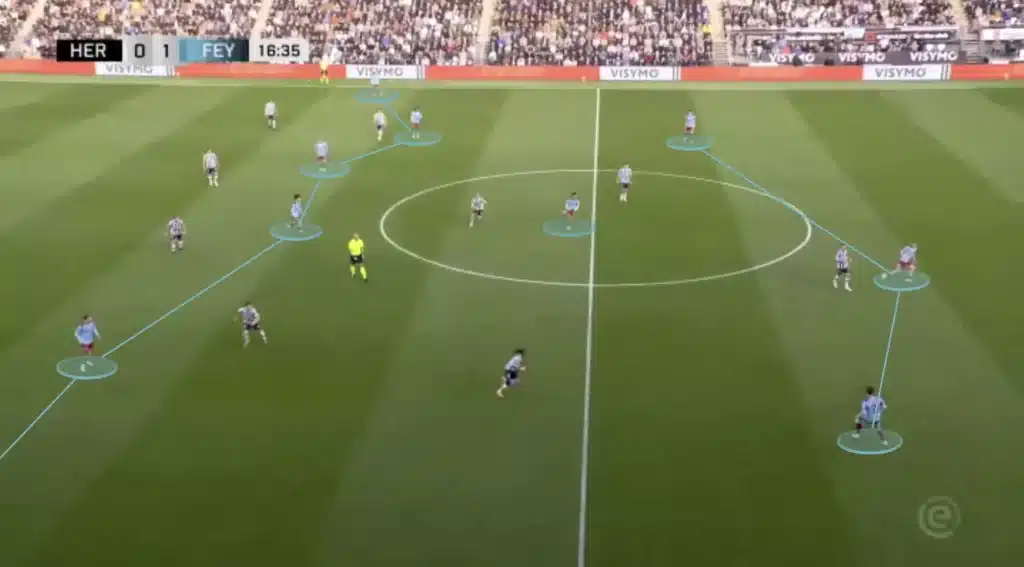
The left-back typically tucks inside to create the back three, while the right-back pushes high — either wide or into the right half-space — joining the forward line. At the same time, both number-eights advance to become part of the attacking six, and the right-winger adjusts accordingly: moving inside if the right-back overlaps, or holding width if the right-back moves centrally.
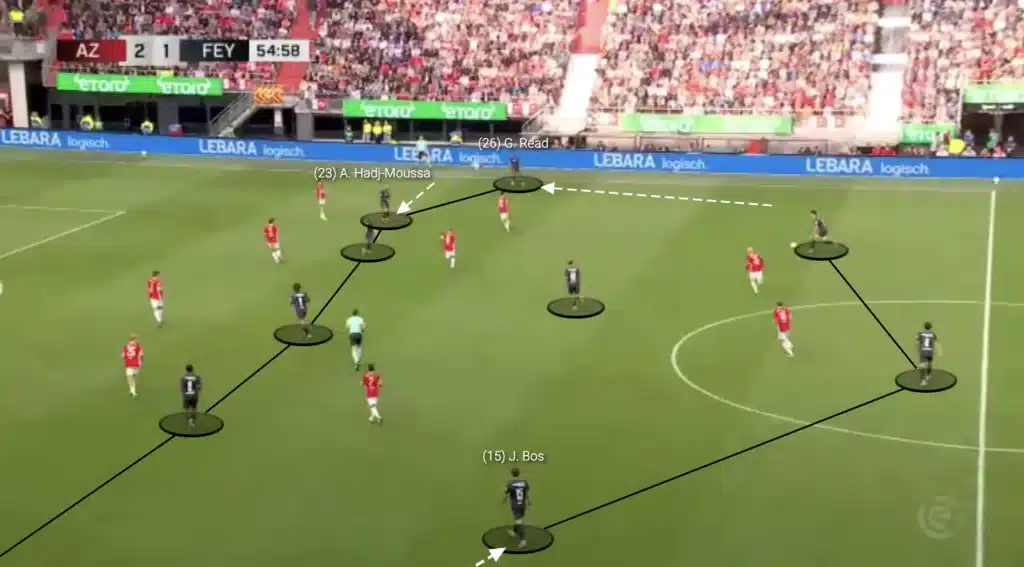
With six players occupying the entire width of the forward line, Feyenoord consistently overload the opposition defense.
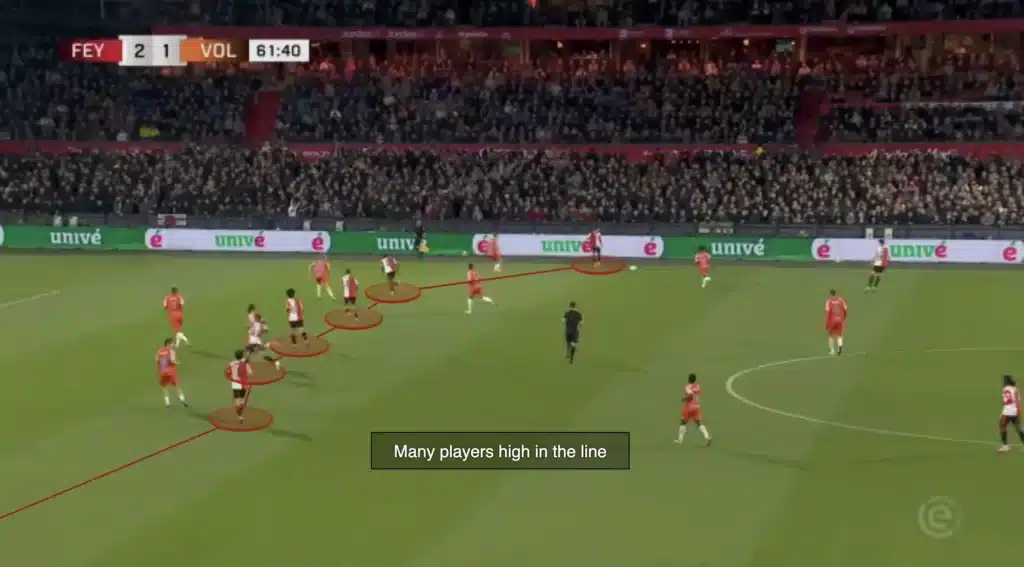
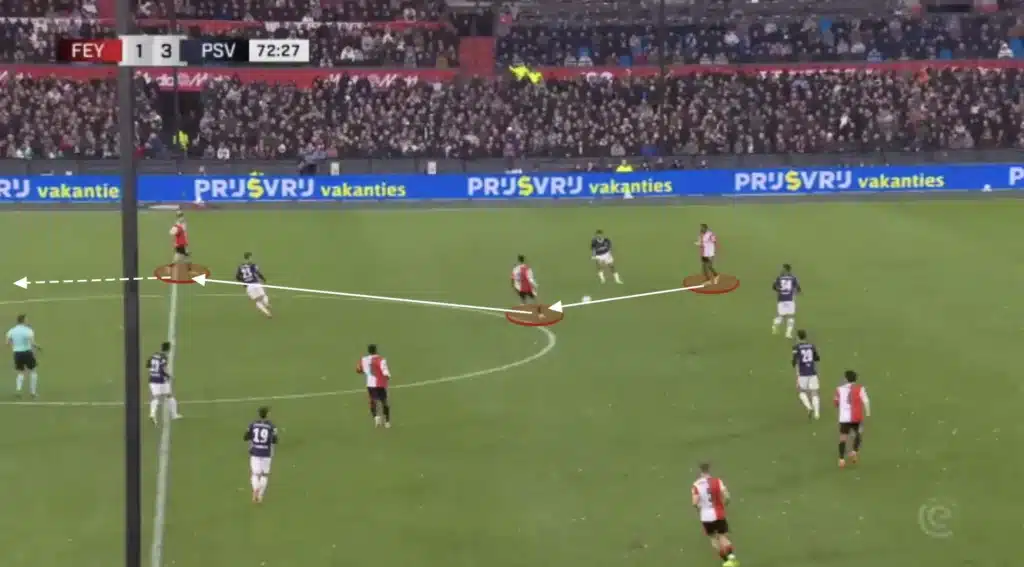
Many attackers position themselves between the opponent’s midfield and defensive lines, creating pockets to receive. Feyenoord look to break lines with direct, straight passes into these areas, allowing the receiver to turn and immediately threaten the backline or slip runners through on goal.
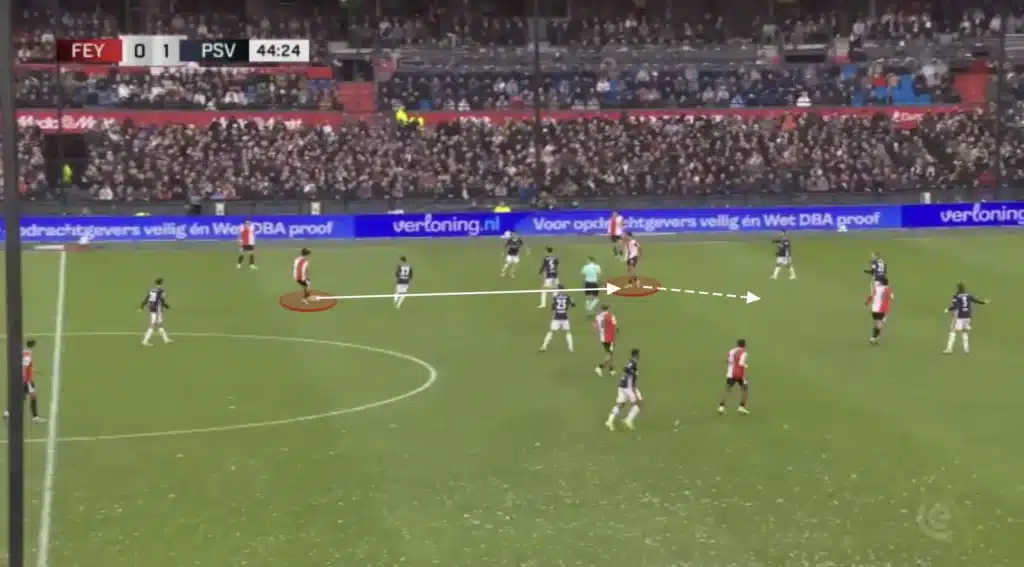
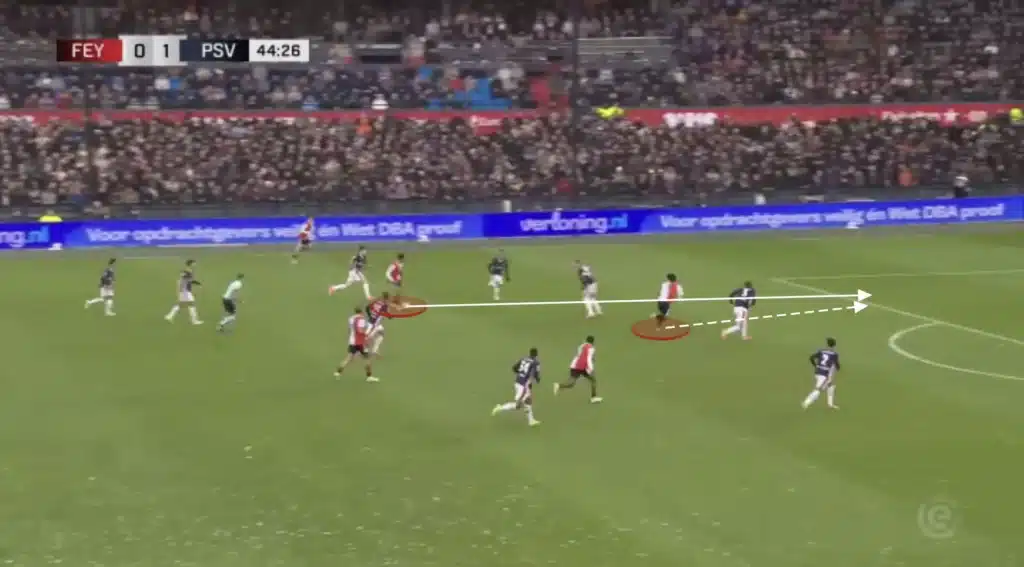
This aggressive occupation of high spaces often forces opponents to drop their midfield line toward their defense. When this happens, the space between the opponent’s forwards and midfielders opens up. Feyenoord’s midfielders then drop into this vacated zone, enabling clean progression.
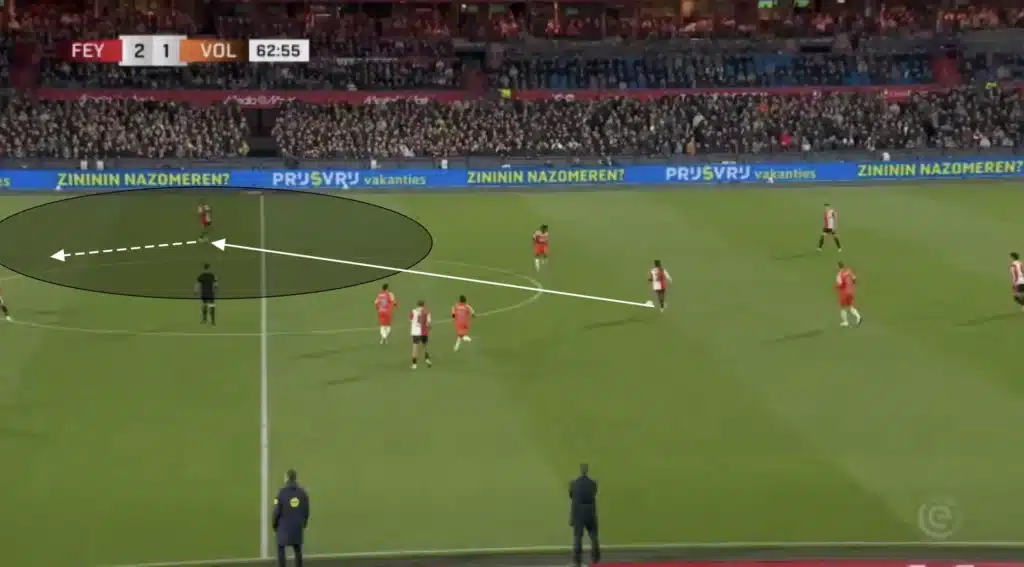
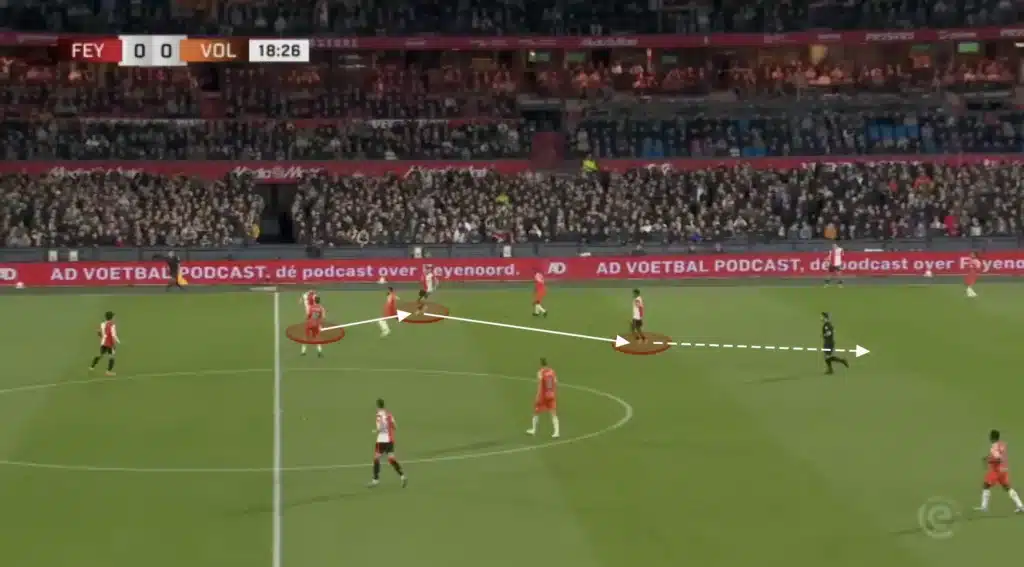
These movements frequently produce third-man combinations: center-back → holding midfielder → advanced midfielder, who receives in the center or half-space, turns, and carries the attack.
Creating Overloads and Manipulating the Backline
With so many attackers high up the pitch, Feyenoord excel at creating local overloads on the opposition back four. Overloading fullbacks is a repeated pattern: two players combine on that side to isolate and break through with overlaps, underlaps, or quick positional rotations.
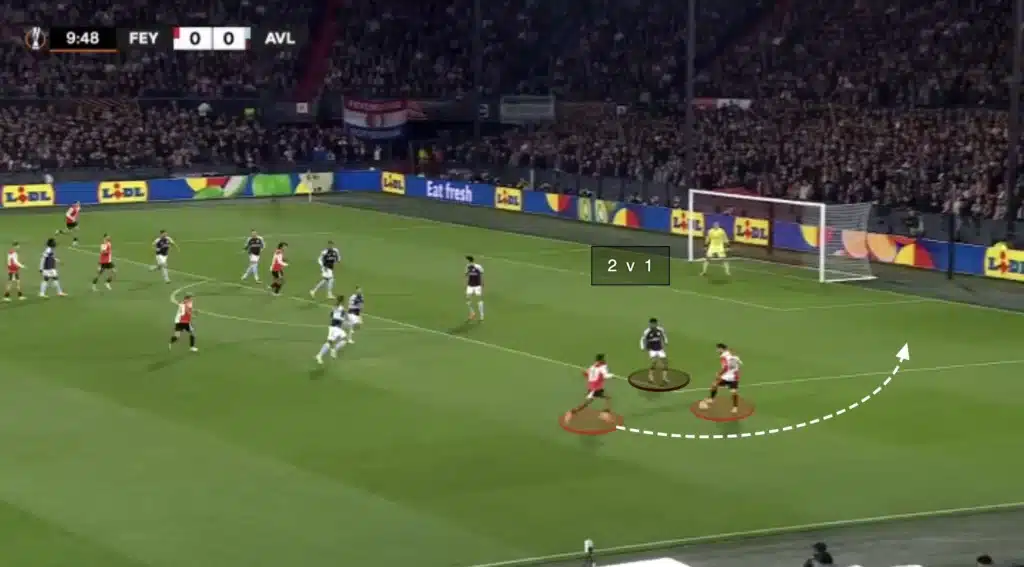
If one attacker drops and draws a defender out, another immediately attacks the open space behind — a constant cycle of vacating and occupying space.
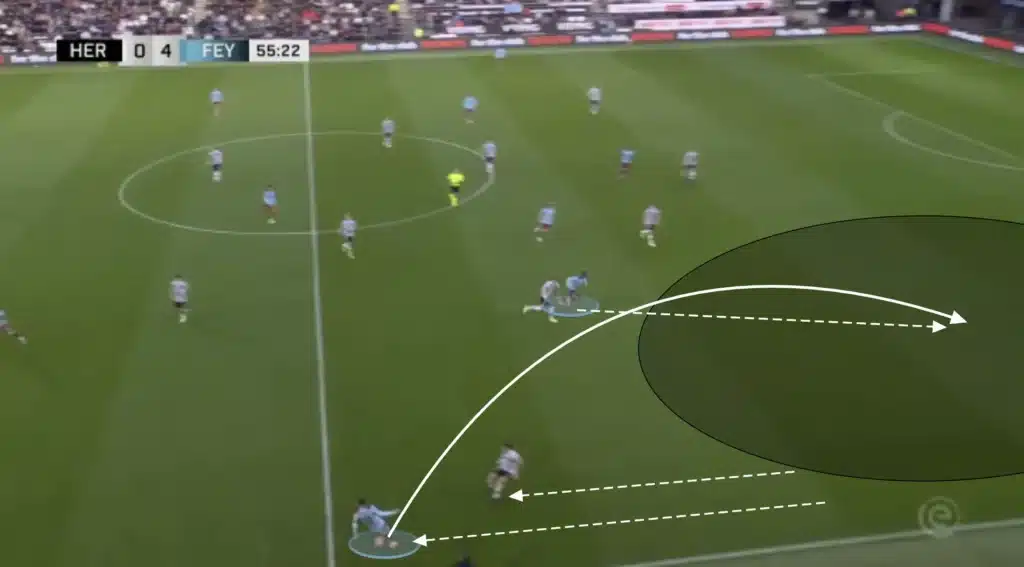
Additionally, because of the volume of players in advanced areas, the opposition fullbacks are often forced to tuck inside to help protect the center. When this happens, Feyenoord frequently find their wingers in space inside the penalty area, giving them strong central opportunities for shots.
Final Third Occupation
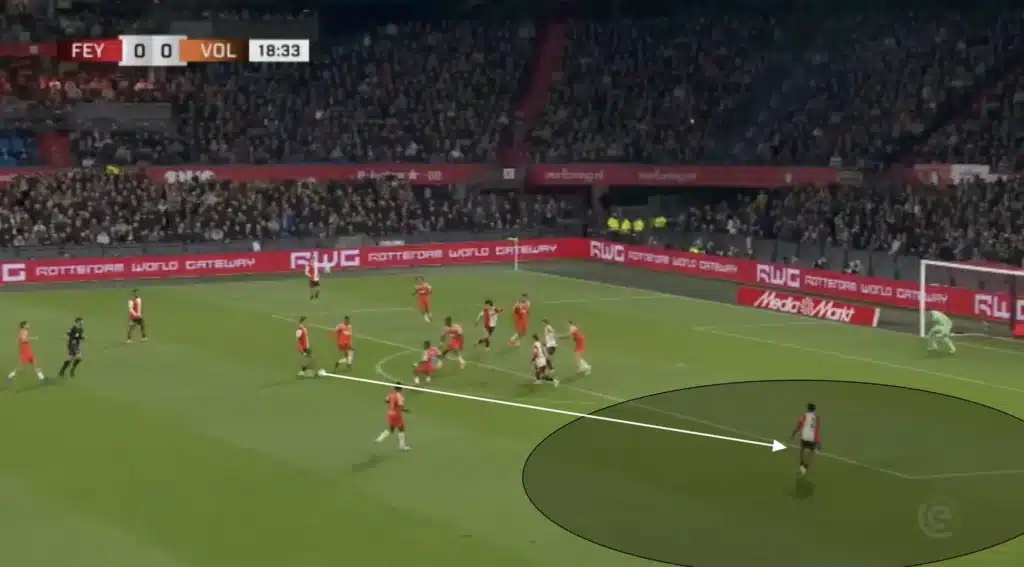
Few teams in the Eredivisie commit as many players forward as van Persie’s Feyenoord. In many final-third attacks, they push eight players into or around the box, with only the two center-backs remaining deeper. This creates intense pressure on the opponent’s defensive block and makes defending crosses extremely challenging.
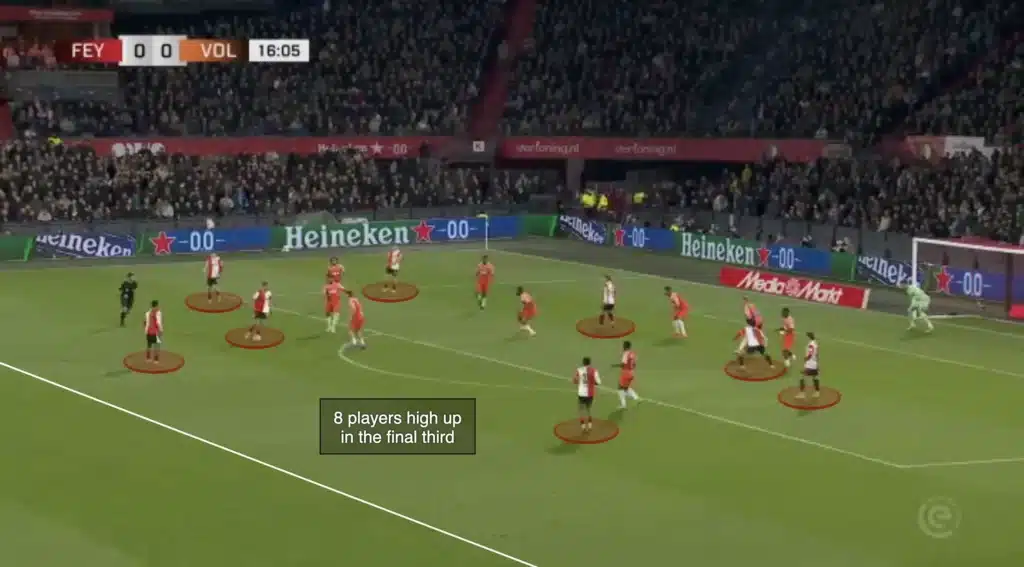
In crossing situations, Feyenoord flood the box with multiple attackers, increasing the likelihood of creating chaos and connecting with deliveries. Their high occupation inside the penalty area forces defenders into constant duels and makes it difficult to track every runner.
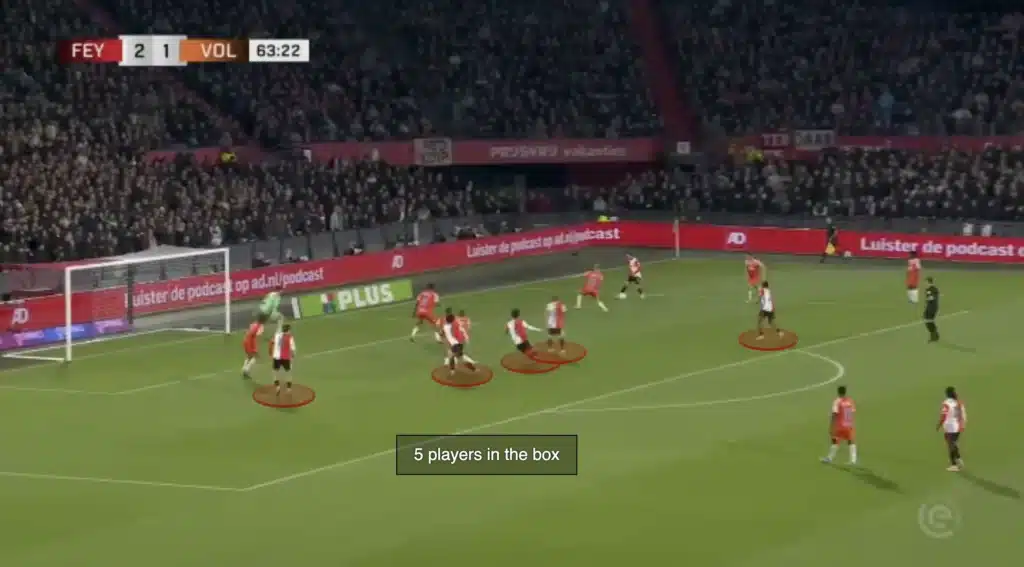
Two or three players also position themselves just outside the area to secure second balls, recycle possession, or attempt shots from distance.
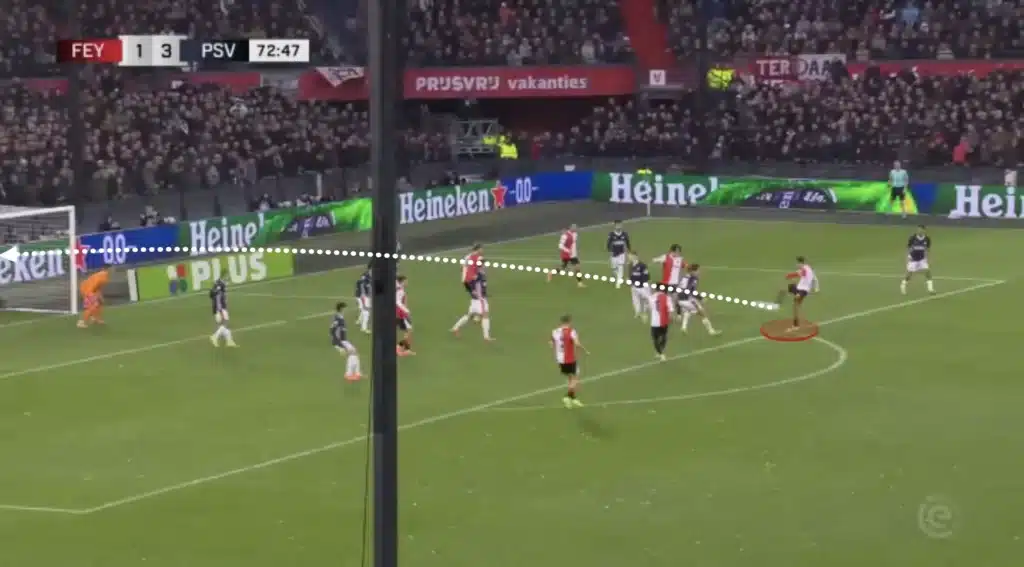
This ensures sustained pressure and allows Feyenoord to prolong attacks even when the first action does not lead to a clear chance.
Structural Risks and Adjustments
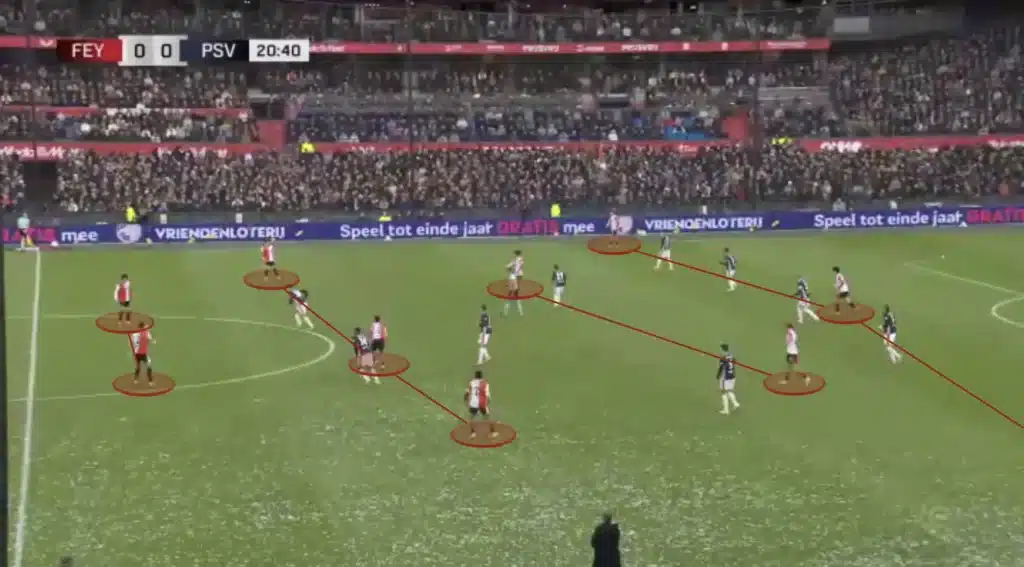
The aggressive 3-1-6 and high occupation of advanced spaces naturally come with defensive risks. With so many players committed forward, Feyenoord often leave large spaces behind their attack and provide limited coverage close to the ball. If the counterpress fails or the opponent immediately plays long, this can lead to dangerous 1v1 or 2v2 situations, demanding exceptional defensive work from the center-backs.
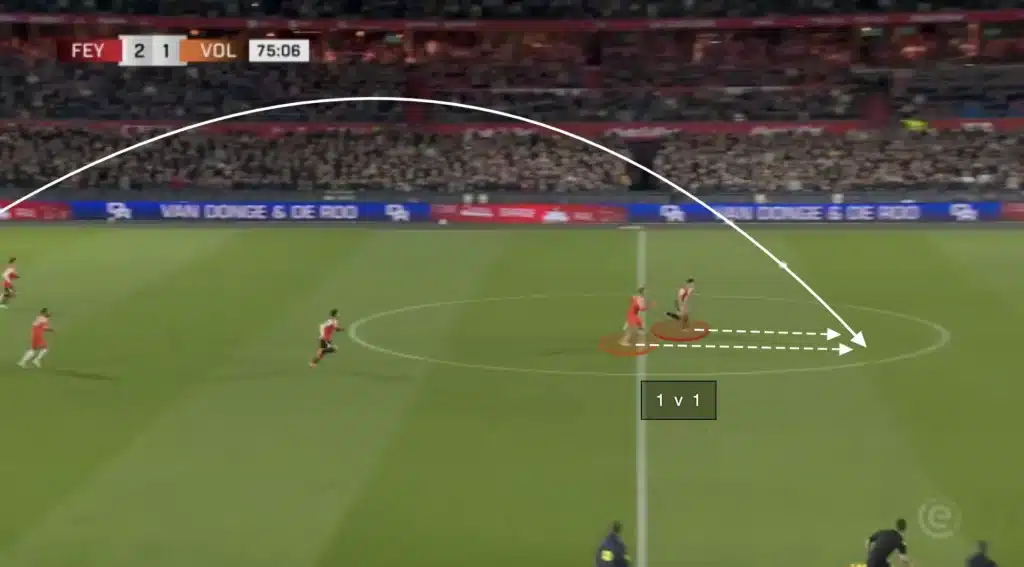
Because of these vulnerabilities, van Persie has occasionally shifted to a more conservative 2-3-2-3 structure in possession. This creates stronger rest-defence, improves central coverage, and reduces exposure to counterattacks—especially in matches where opponents threaten consistently in transition.
Defensive Tactics
High Press
Van Persie’s Feyenoord defend with the same ambition they attack with: high, aggressive, and intensely man-oriented. Their pressing shape typically resembles a 4-3-3 or 4-2-1-3, with the midfield matching up tightly against their direct opponents and the fullbacks tracking opposition wingers closely.
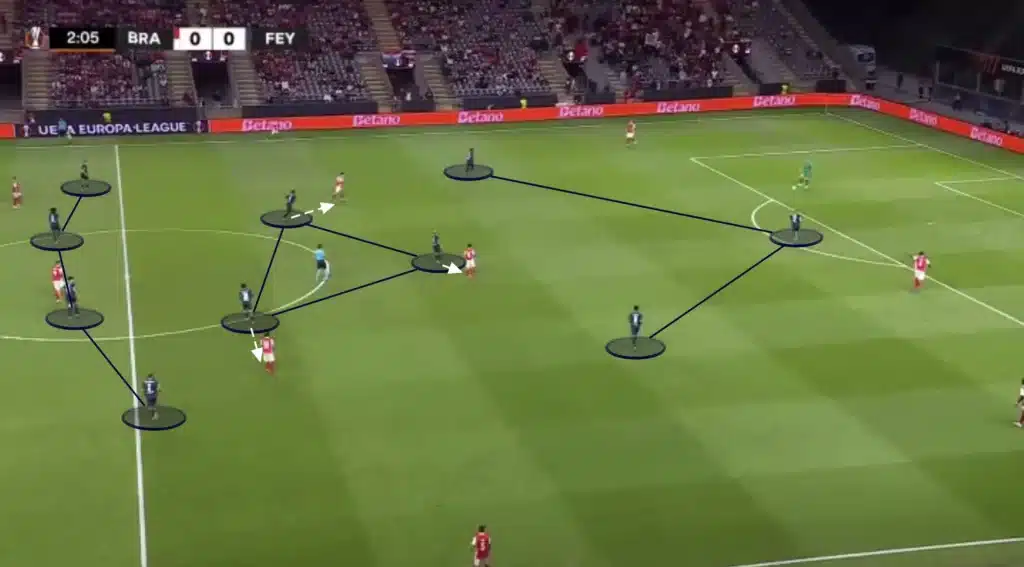
A key advantage of this system is the built-in numerical superiority at the back. With two center-backs against a single striker, Feyenoord always maintain security. If the opponent uses two strikers, one midfielder simply drops in to preserve the +1. However, this superiority at the back naturally creates a numerical inferiority in the first pressing line, where Feyenoord’s front three must deal with an opponent’s back four.
To solve this, Van Persie relies on intelligent pressing mechanics rather than pure man-to-man marking.
- The striker curves his pressing runs to force play to one side.
- The far-side winger tucks inside toward the far center-back, preventing any easy switch.
- The ball-side winger closes down the ball-side fullback.
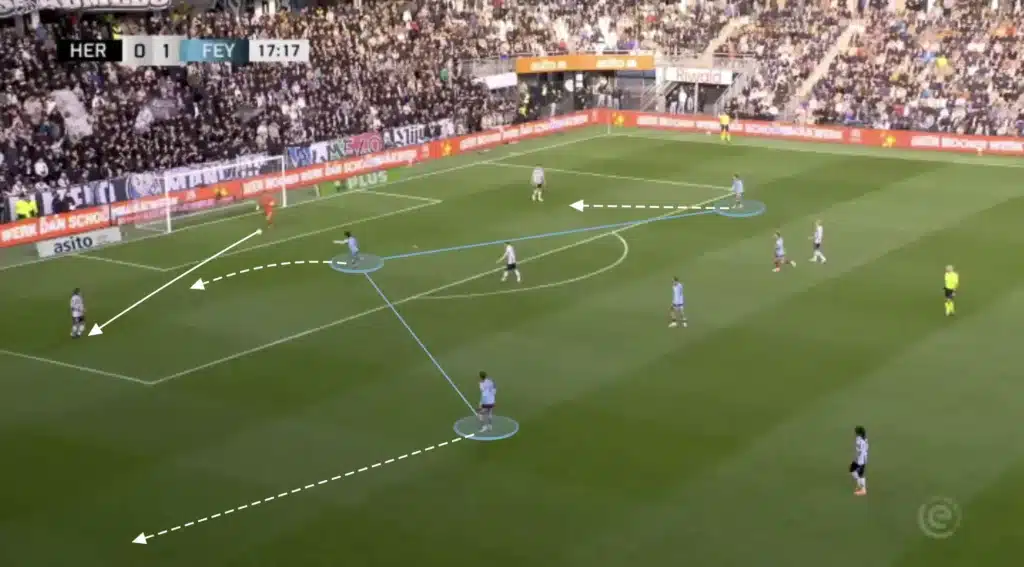
This coordinated funneling locks the opposition into one half of the pitch.
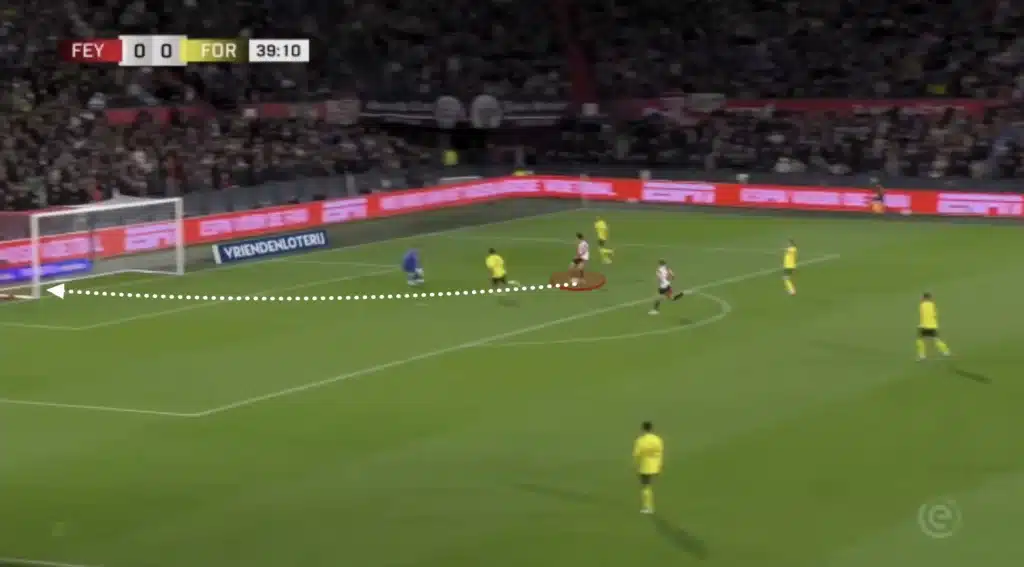
The structure looks open at first glance — because opponents appear to have a free man at the back — but this is precisely what Feyenoord want. Many teams try to avoid man-oriented presses by going long early, but against Feyenoord this becomes harder: the opponent feels encouraged to play short.
As a result, Feyenoord often win the ball high up the pitch, turning defensive pressure into immediate attacking threat. Their high press is not just a way to prevent build-up — it is an attacking weapon, creating turnovers close to goal against unsettled defensive structures.
Low Press
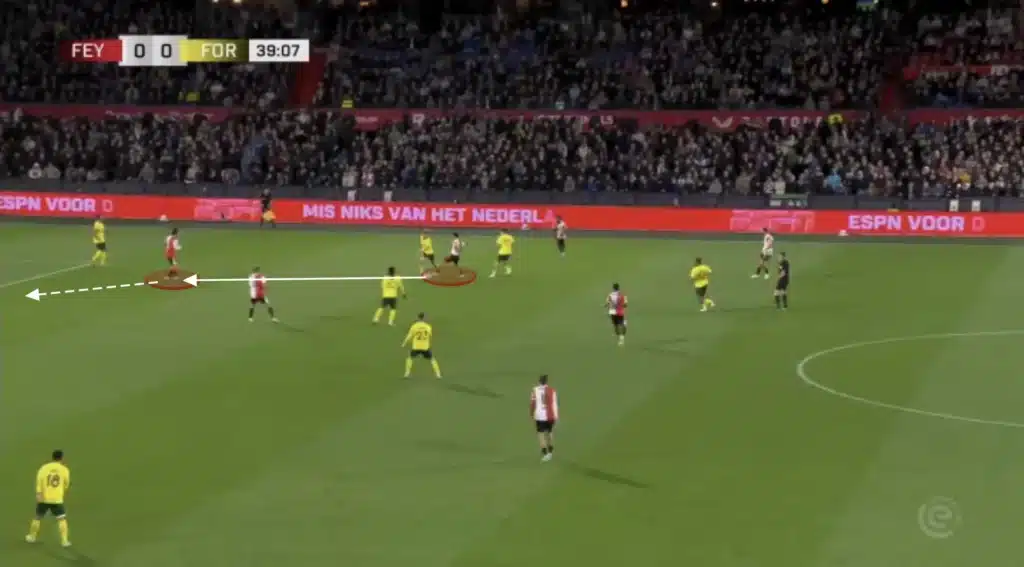
When forced deeper, Feyenoord adjust but maintain the same aggressive identity. Van Persie typically organizes them in a compact 4-4-2, though the exact shape depends on the opponent’s structure.
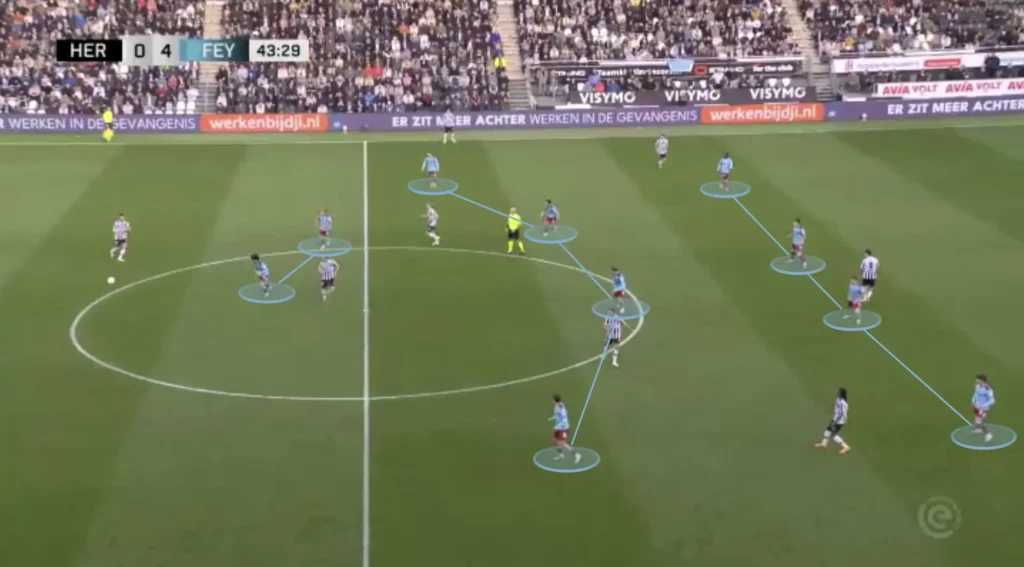
Despite dropping into a mid- or low-block, the team remains quite man-oriented in midfield and the backline, ensuring that opposition players are constantly under pressure.
The priority is to compress the center and funnel the opponent wide. Once the ball is forced to one flank, Feyenoord work to trap the opposition there, preventing switches to the far side. The far-side winger positions himself near the far-side center-back so he cannot receive, turn, and change the point of attack.
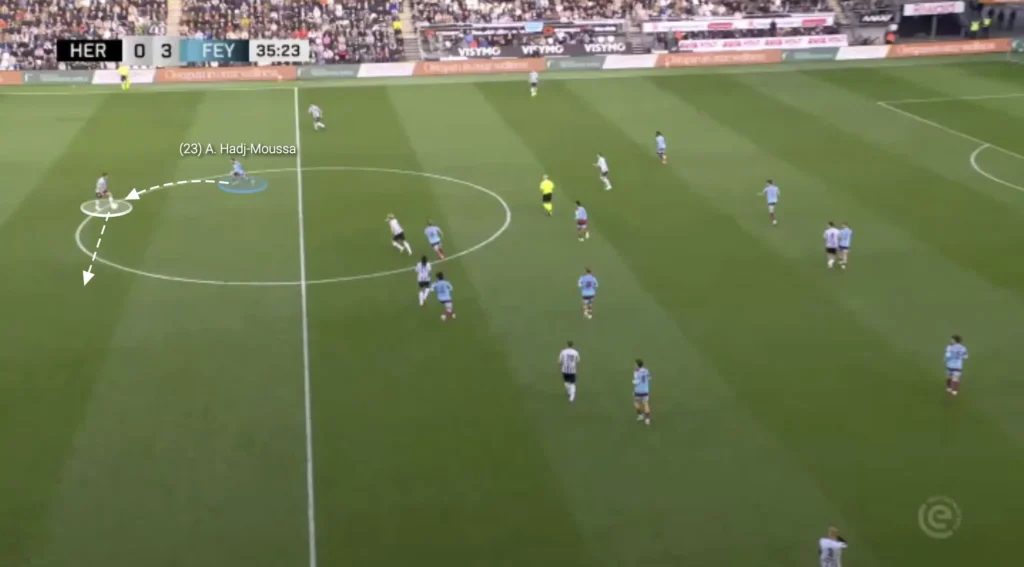
If the opponent plays backward, Feyenoord often respond with an aggressive upward squeeze, stepping out collectively to take space away and push the opponent even deeper.
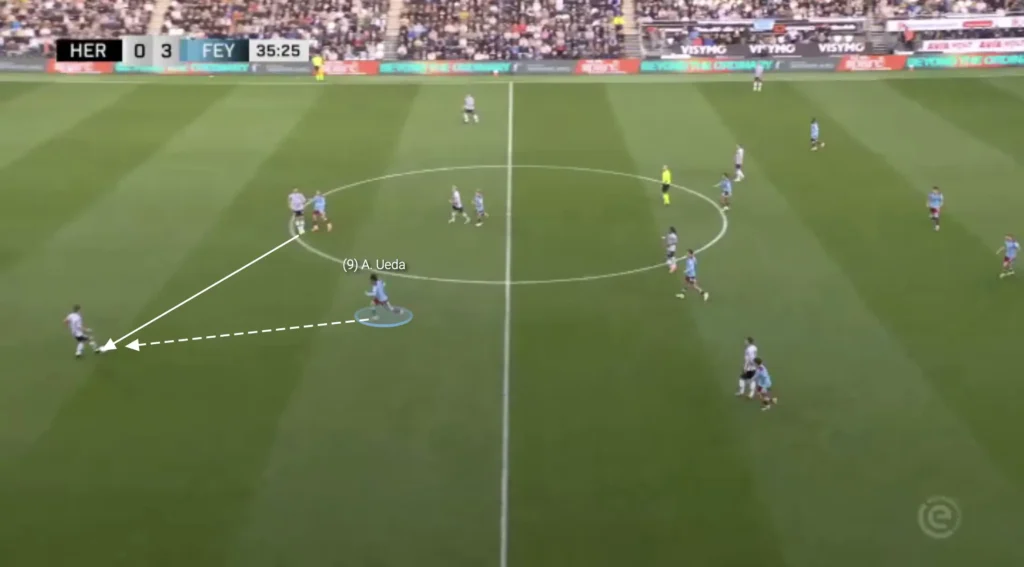
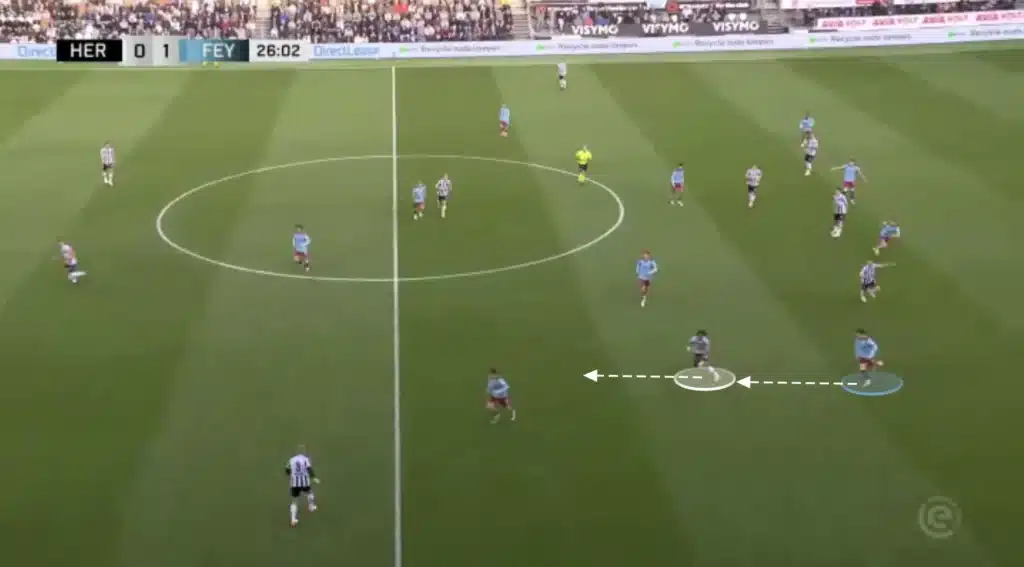
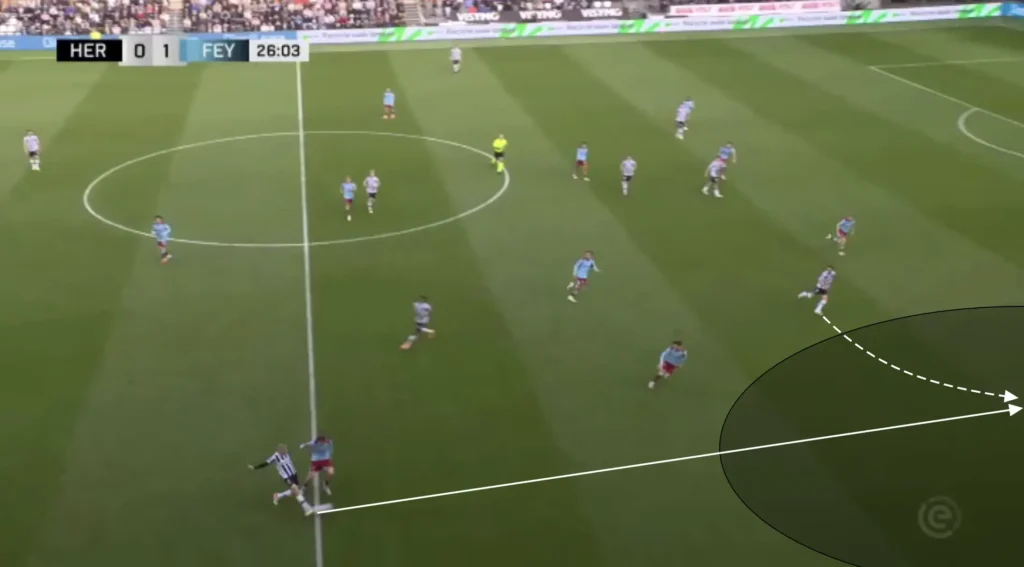
The defenders play with notable bravery. Center-backs or fullbacks will often step out of the line to press tightly, even high into midfield if needed. This proactive behavior disrupts the opponent’s rhythm and prevents them from establishing stable possession.
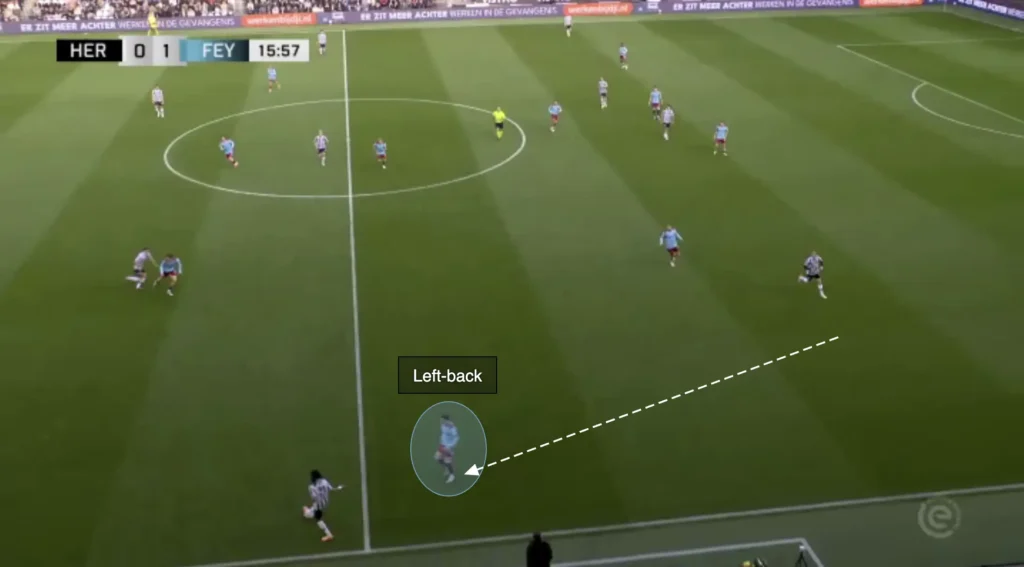
However, the risk is clear: when one defender jumps, the space behind becomes vulnerable. Effective coverage from teammates is essential, and if it comes too late, Feyenoord can be exposed to direct balls into the vacated space.
Transitions
Attacking Transitions
Under Van Persie, Feyenoord attack with explosive intent the moment possession is regained. Their first instinct is always forward, and they look to exploit disorganization before the opponent can reset. Because many players are already positioned high when defending, the counterattack can unfold with speed, numbers, and verticality.
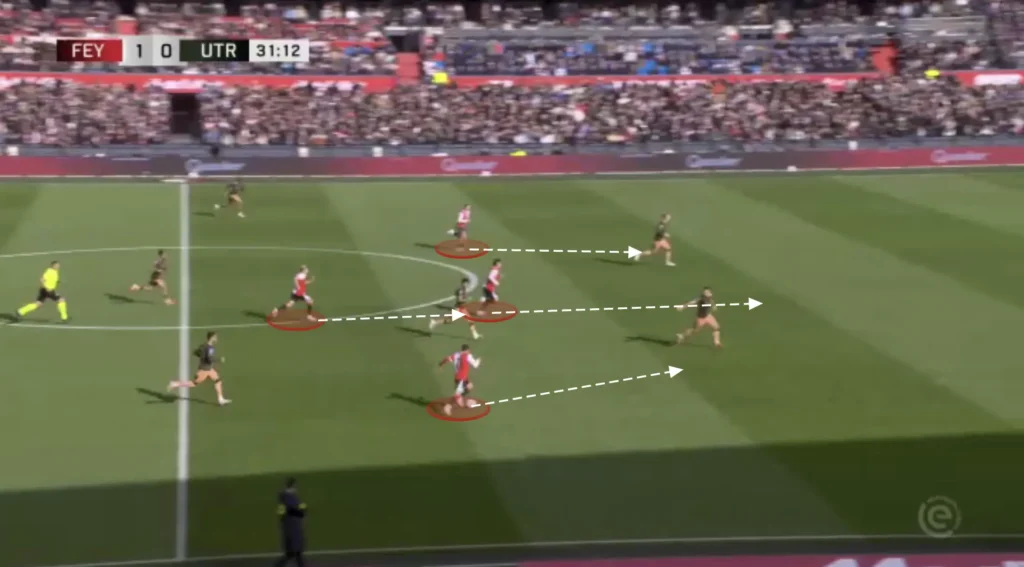
The ball-carrier drives forward immediately, while the nearest attackers sprint into depth to stretch the backline. Wide attackers attack the channels, and at least one midfielder joins to create central support. This coordinated surge often results in quick entries into the final third and high-quality chances before defensive structures re-form.
Van Persie’s side show little hesitation in these moments — the goal is to turn regains into shots before the opponent can recover. Their transitions are not just opportunistic; they are a fundamental part of the team’s attacking identity.
Defensive Transitions
Defensive transitions are approached with the same intensity. When Feyenoord lose the ball, their immediate reaction is a collective, aggressive counterpress. Because they attack with many players high in advanced areas, they often have the numbers to swarm the ball, collapse passing lanes, and force rushed decisions from the opponent. This allows them to regain possession quickly and sustain pressure.
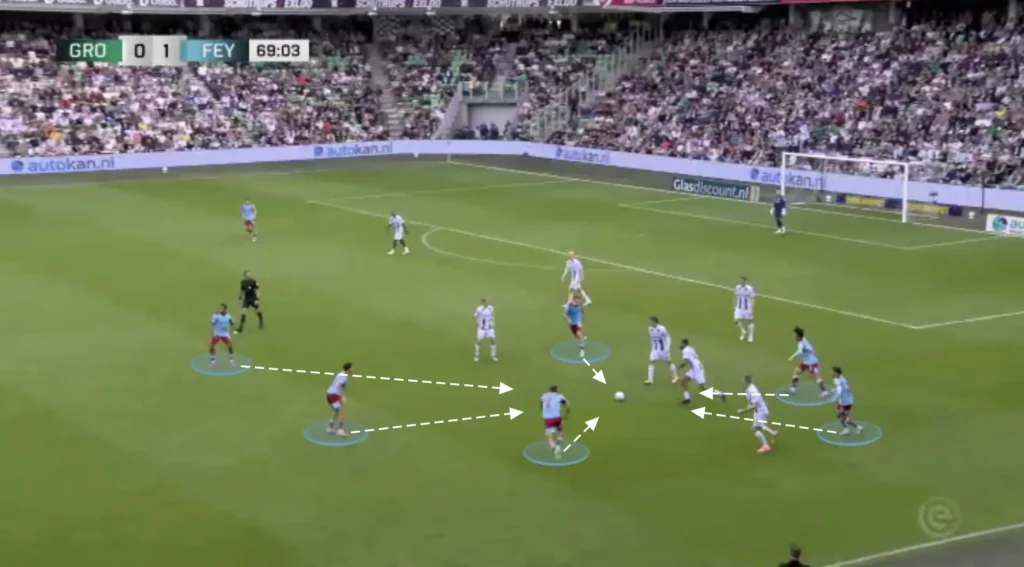
However, as mentioned, this aggressive attacking structure brings inherent risk. If the initial counterpress is broken — especially by a first-time long pass or a quick vertical combination — the opponent can escape into open space. With many Feyenoord players positioned ahead of the ball, the backline is frequently exposed to dangerous counterattacks in numerical inferiority, often 4v5 situations across large areas.
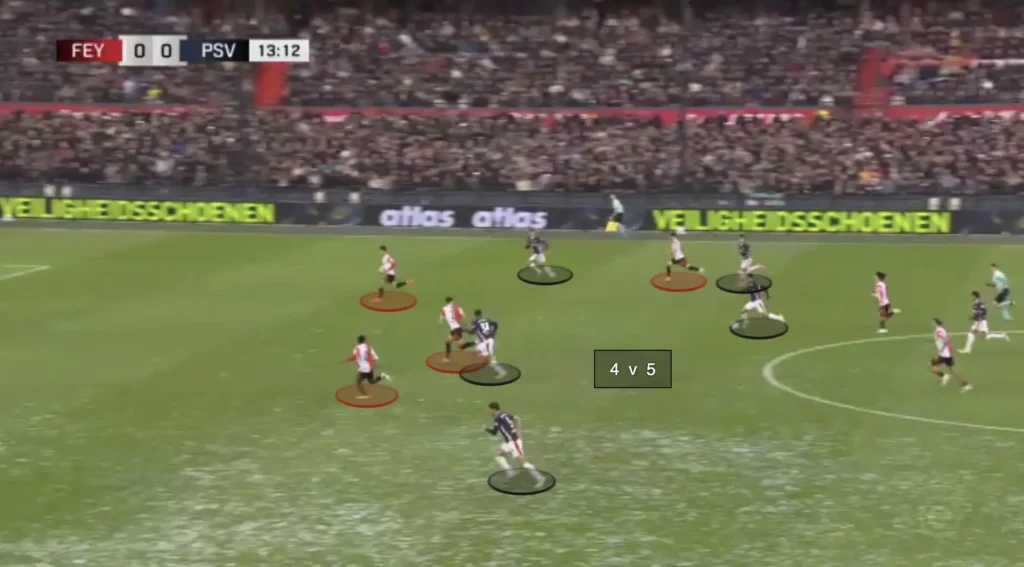
These moments place heavy defensive responsibility on the defenders, who must defend vast spaces and delay the opponent long enough for midfielders to recover. Van Persie’s commitment to attacking fluidity means accepting this risk, and in most matches the reward outweighs the danger — but it remains a structural vulnerability.
Conclusion
Van Persie’s Feyenoord play with a clear tactical signature built on fluidity, aggression, and intelligent occupation of space. Their high build-up structures allow them to overload defensive lines and attack the final third with numbers. Their man-oriented pressing invites opponents to play short, only to trap them and win the ball high. In transitions, they attack with speed and counterpress with conviction.
This approach brings vulnerabilities — especially when the first counterpress is beaten — but the benefits largely outweigh the risks. Feyenoord consistently create dangerous chances, dictate territorial dominance, and impose their style on most opponents.
As Van Persie continues to refine his ideas, Feyenoord are evolving into a team capable of controlling matches through both structure and intensity. The foundations are clear: proactive football defined by bravery, clarity, and constant forward intent.