
Modern football has evolved dramatically over the last two decades, particularly from a tactical perspective. Coaches have refined their game models, developing increasingly dynamic and flexible structures that adapt continuously across different phases of play. Systems are no longer rigid; instead, players occupy hybrid roles that maximise their strengths depending on context.
Alongside this evolution, football analysis has become more detailed and precise, allowing teams to optimise every aspect of performance. One clear outcome of this tactical development is defensive solidity. Compared to football prior to the 2000s, elite-level matches now consistently feature fewer goals. Within this context, box defending principles have become fundamental, regardless of a team’s formation or preferred playing model.
Context: Where Box Defending Occurs
Box Defending principles apply when a team is out of possession and defending in the final 20 metres of the pitch, with the defensive line positioned close to its own penalty area. These moments demand extreme concentration, coordination, and clarity of individual responsibility.
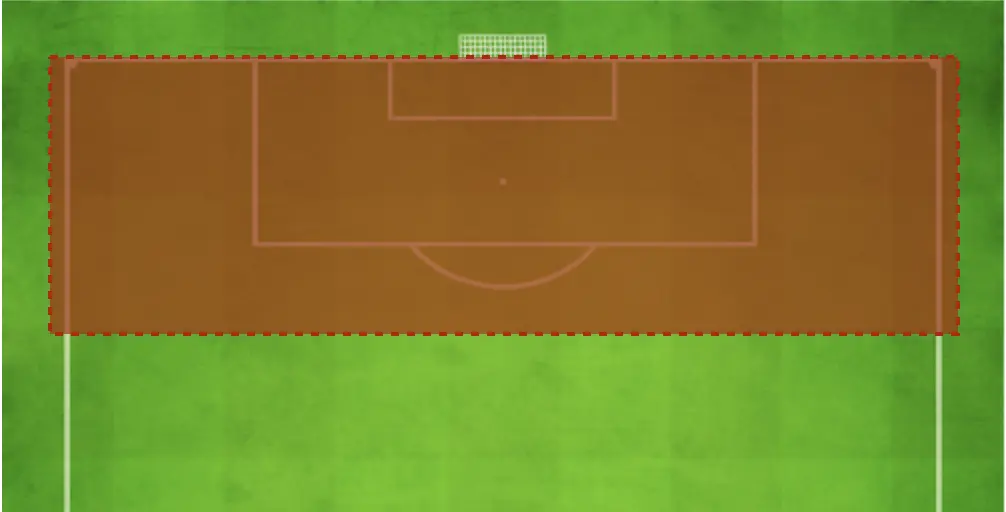
At the elite level, attackers are faster, stronger, and more physically prepared than ever. Any extra meter conceded inside the box can be decisive. For this reason, box defending is best described as a zonal–individual hybrid approach: defenders protect their zone while always maintaining a clear reference to an opponent.
Defensive Principles When Defending Crosses
1. Open Body Shape
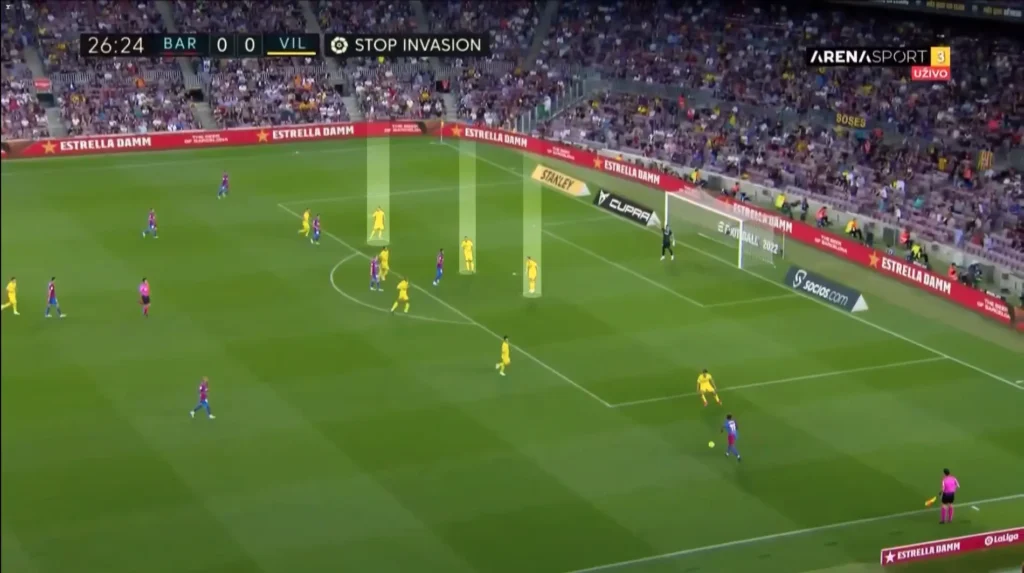
This is the first and most important principle when the opponent progresses down the wide channel. As defenders drop into the box, it is common for them to fixate solely on the ball carrier, losing awareness of attackers arriving in finishing zones.
Defenders must adopt an open body orientation, facing the opponent’s goal while scanning across the box. This positioning allows them to see both the ball and the attacking threats simultaneously, improving reaction time to runs and crosses.
2. Body Contact
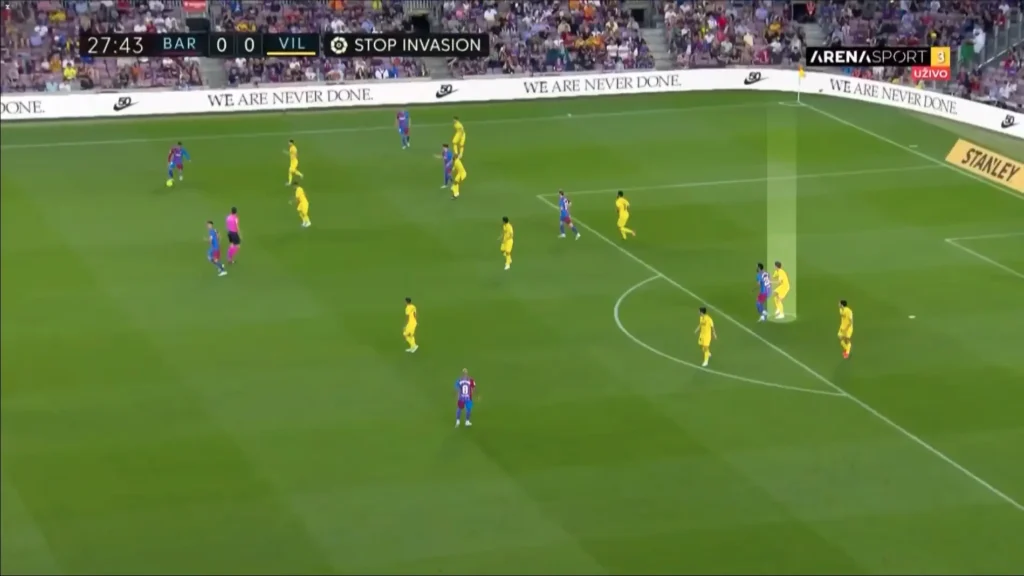
Once correctly positioned, maintaining constant physical contact with the marked attacker is essential. This contact provides valuable sensory information, helping defenders detect changes in speed or direction before visual cues become available.
Effective body contact reduces the attacker’s ability to separate and arrive unchallenged in finishing areas.
3. Bump the Runner
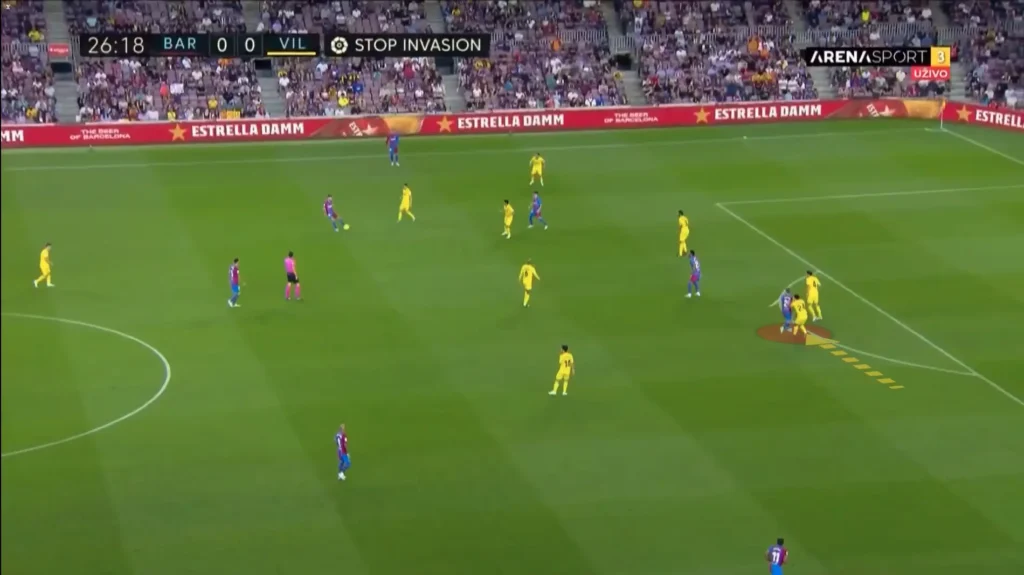
When an attacker initiates a movement to attack space, defenders must disrupt that run early. Using the shoulder or chest—without extending the arms—the defender should impede the attacker’s momentum.
The key principle here is clear: the opponent is more important than the space. Goals are scored by players, not zones.
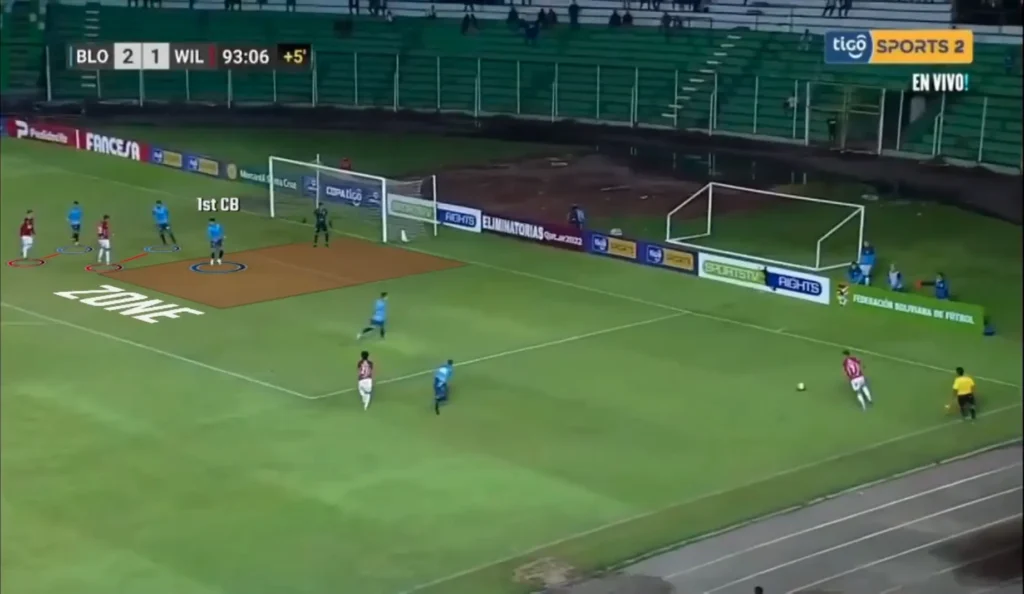
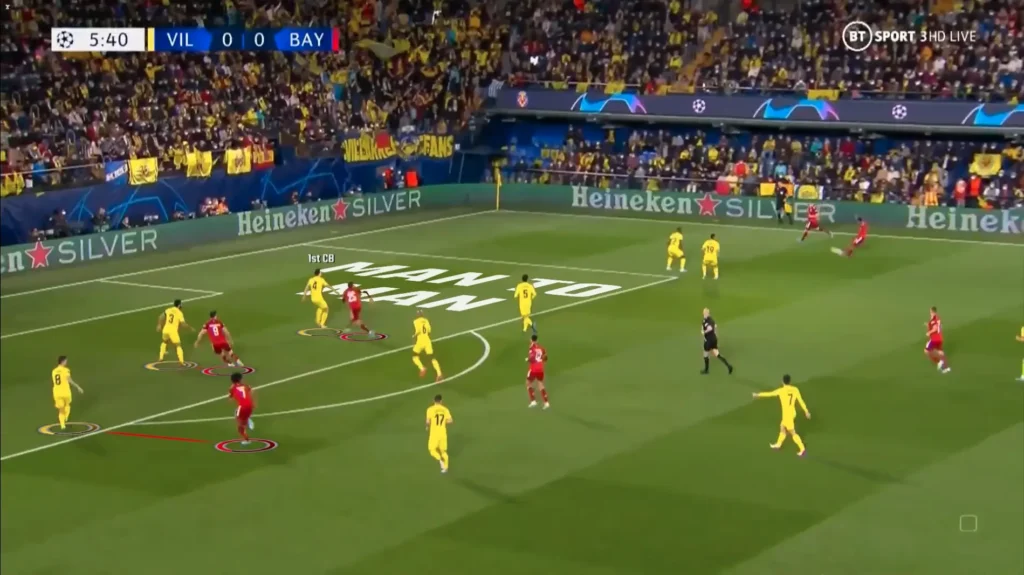
4. Role of the First Central Back (1st CB)
The center-back closest to the ball—usually on the side of the wide duel—may momentarily defend zonally only if there is numerical equality or superiority inside the box.
- In numerical equality, the 1st CB protects the space around the edge of the six-yard box, ready to clear crosses or cover if the wide defender is beaten.
- In numerical inferiority, the priority shifts immediately to picking up the nearest attacker within their zone.
5. Block Crosses
The wide defender or full-back engaged in the duel must do everything possible to prevent the cross. Even delaying or forcing a poorer delivery significantly reduces the attacking threat.
Technical details matter here: quick footwork, balanced body positioning, and the ability to block with either leg without crossing feet when facing feints or cut-ins.
6. First Contact
If a cross is delivered, defenders inside the box must stay tight to their markers. If the ball is directed toward their opponent, defenders should attack the ball aggressively to win first contact.
Clearances should be directed wide and as far from central zones as possible.
7. Step Up the Line
Once the first contact is won, defenders must immediately switch from individual references back to collective behaviour. The defensive line steps out together, reducing depth and regaining territory.
If time allows, players must quickly reorganise into their original roles after any temporary adjustments or emergency cover.
When the Opponent Progresses Through the Centre
When attacks develop through the central channel or half-spaces, defensive behaviour becomes more collective than individual.
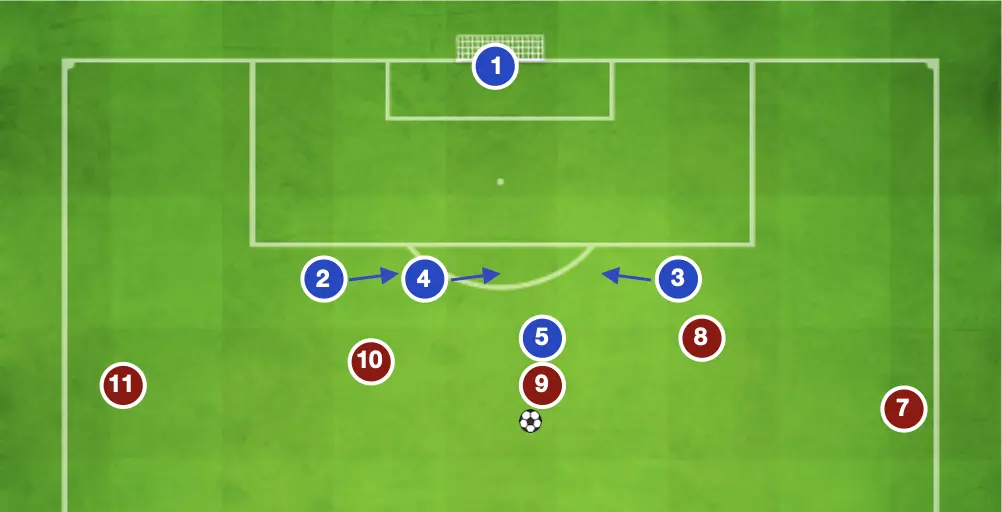
1. Step Out
The center-back closest to the receiver must step out aggressively—ideally before the attacker fully controls the ball. The goal is to disrupt the first touch or force play backwards or sideways.
2. Safety Position
The remaining defenders must immediately adjust into safety positions, compacting the centre and covering the space vacated by the stepping-out defender.
Full-backs and the far-side center-back shift inward, prioritising protection of the goal and forcing play toward wide areas.
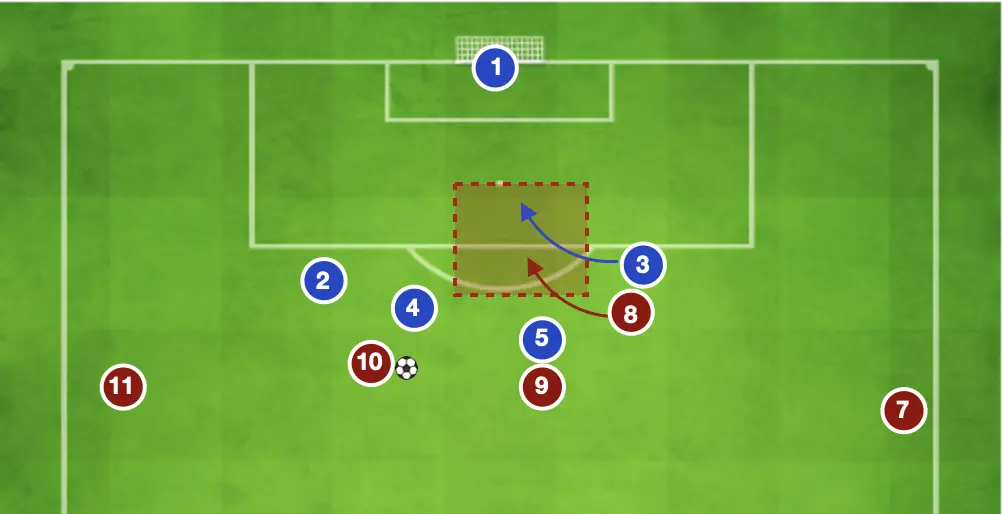
3. Defend the Space
Players in safety positions must protect the space behind them, particularly in the three central channels. Attackers often attempt blindside runs into these areas after a defender steps out.
Defenders should track these runs until the attacker reaches an offside position, then release and snap back into the line—creating a “spring effect” that maintains compactness.
4. Block Shots
If the opponent manages to turn or combine centrally near the box, defenders must act decisively. Blocking shots becomes the absolute priority.
Allowing clean shots from central zones at close range is one of the highest-risk scenarios in football.
Universal Principles in Box Defending
1. Defend After the Shot
Regardless of the origin of the attempt, defenders must immediately move toward the goal after a shot. The objective is to react to rebounds, deflections, goalkeeper parries, or shots off the post.
Secondary actions often decide goals at elite level.
2. Change Your Role
Box Defending is chaotic by nature. Slips, deflections, rebounds, or lost duels are inevitable. In these moments, defenders must instantly abandon their initial role and assume the most urgent one.
Rather than blaming bad luck, players must identify the most dangerous opponent—usually the one closest to goal—and prioritise accordingly. This chain reaction continues throughout the defensive unit, with all players converging toward the ball and accepting temporary imbalances on the far side to protect the goal.
Conclusion
Effective Box Defending is not about reacting—it is about anticipation, coordination, and clarity of principles. Regardless of tactical system or defensive block, these principles provide a universal framework that allows teams to defend their box with consistency and control under extreme pressure.
Very well written article! When pointing defensive principles not everyone will include body contact and bumping the attacker, as they are easy mistaken with not so fair challenges.
Amazing