One of the most effective ways to progress the ball in football isn’t through complex passing patterns or dribbling skills — it’s through intelligent positioning. The concept of splitting players lies at the core of positional play. It enables the ball-holder to manipulate opponents, maintain control under pressure, and consistently find free players between the lines.
The Core Idea
To split a player means positioning teammates on both sides of a pressing opponent. When the ball-carrier faces pressure, having two passing options — one on each side of the defender — forces that opponent to make an impossible choice.
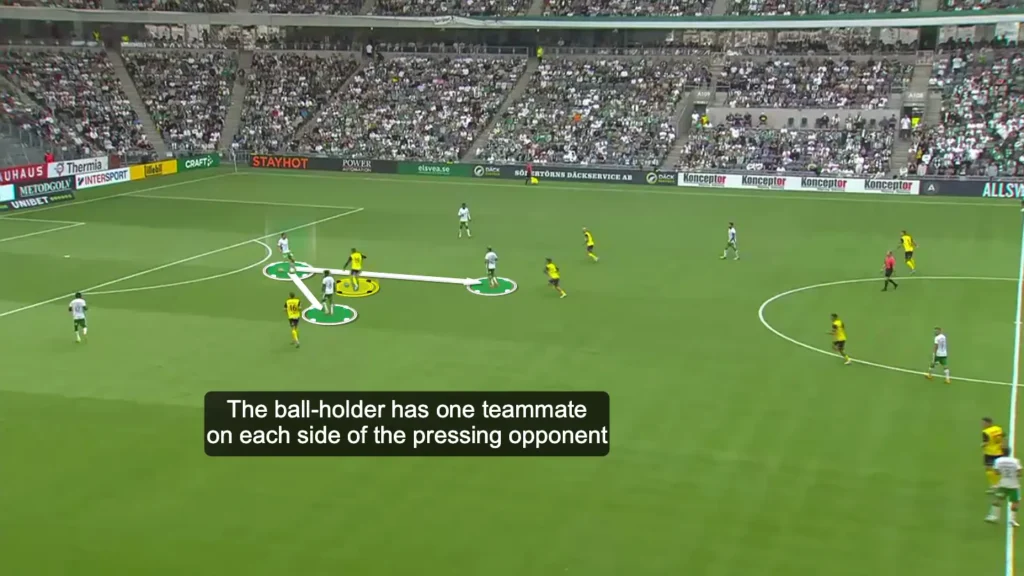
If the defender steps toward one side, the pass can go to the other. If they stay central, both options remain available. The simple geometry of having two passing lanes around one defender breaks pressing lines without requiring risk or speed — only positional intelligence.
This principle is at the heart of the game models used by modern coaches such as Pep Guardiola, Roberto De Zerbi, and Xabi Alonso, whose teams consistently manipulate pressing structures rather than avoid them.
Creating Dilemmas for the Defender
The essence of splitting is about creating dilemmas. The pressing player cannot cover both lanes simultaneously. Their hesitation — even for half a second — gives the ball-holder time and space to progress.
When applied consistently, this principle breaks pressing structures and forces defensive units into constant adjustments. Over time, the team in possession gains control not just of the ball, but of the opponent’s movements — dictating where and how pressure is applied.
Horizontal Splitting
Horizontal splitting occurs when two teammates position themselves on either side of a pressing opponent along the same vertical line.
For instance, if a center-back is pressed by an opposition winger, a midfielder and a fullback will split the presser, giving the ball-holder passing options on both sides. This positioning makes it difficult for the opponent to cut off both lanes and allows play to advance through the press.
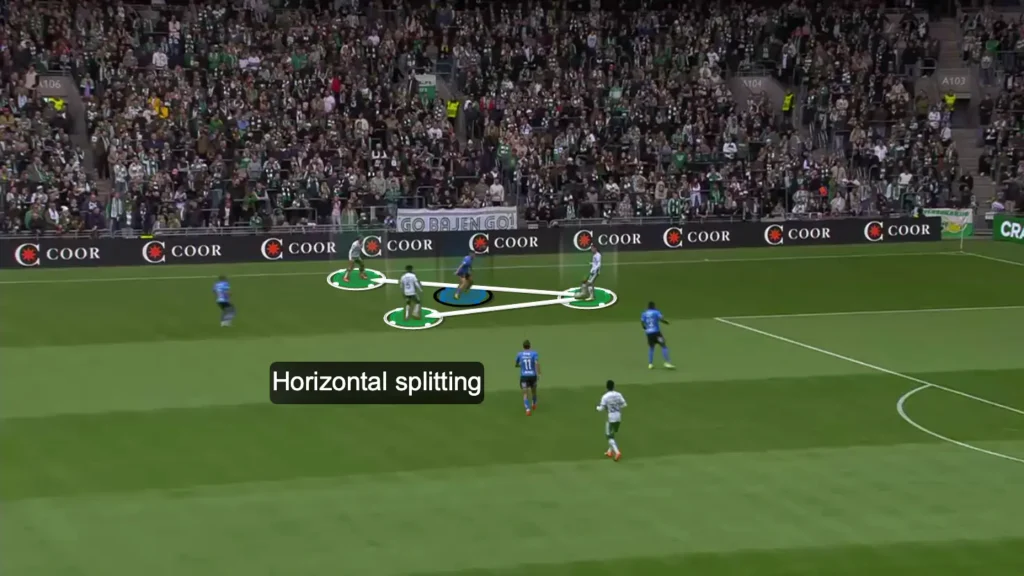
Similarly, when the holding midfielder has the ball, two attackers can split the opposition’s defensive midfielder, offering a forward option on either side.
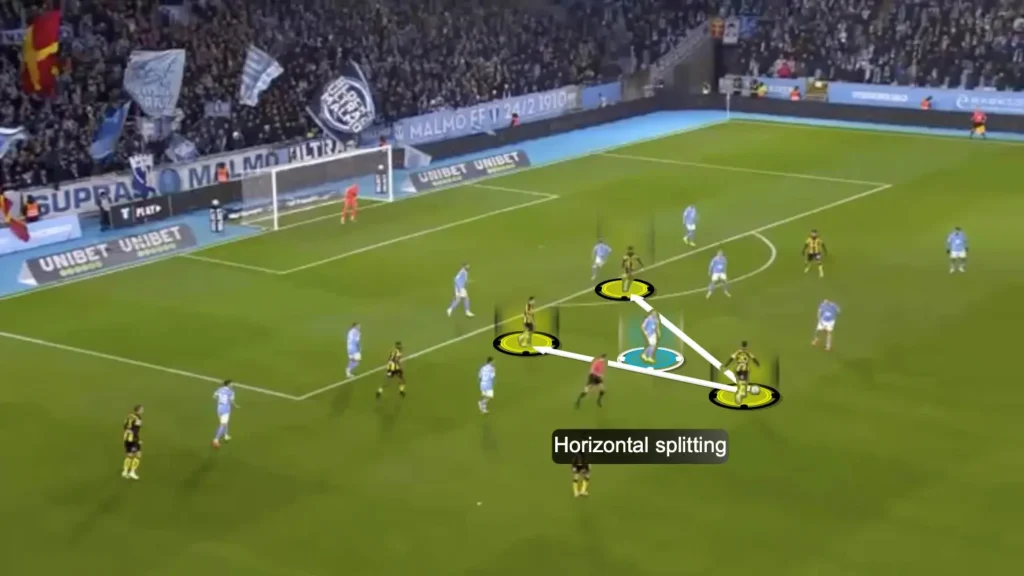
These small adjustments create big tactical consequences. The presser is caught between two options, and even a slight hesitation or wrong body angle opens a lane forward. Horizontal splitting is especially effective in the build-up phase, allowing teams to progress through compact pressing shapes while maintaining control.
Vertical Splitting
Vertical splitting occurs when teammates position themselves on different vertical levels to manipulate the opponent’s defensive structure.
For instance, when the ball is on the wing, an attacking midfielder and a holding midfielder can use vertical height differences to split an opposition midfielder who often remains in an in-between position. One player stays lower to provide support, while the other positions higher to offer a forward option, maintaining a diagonal connection around the opponent.
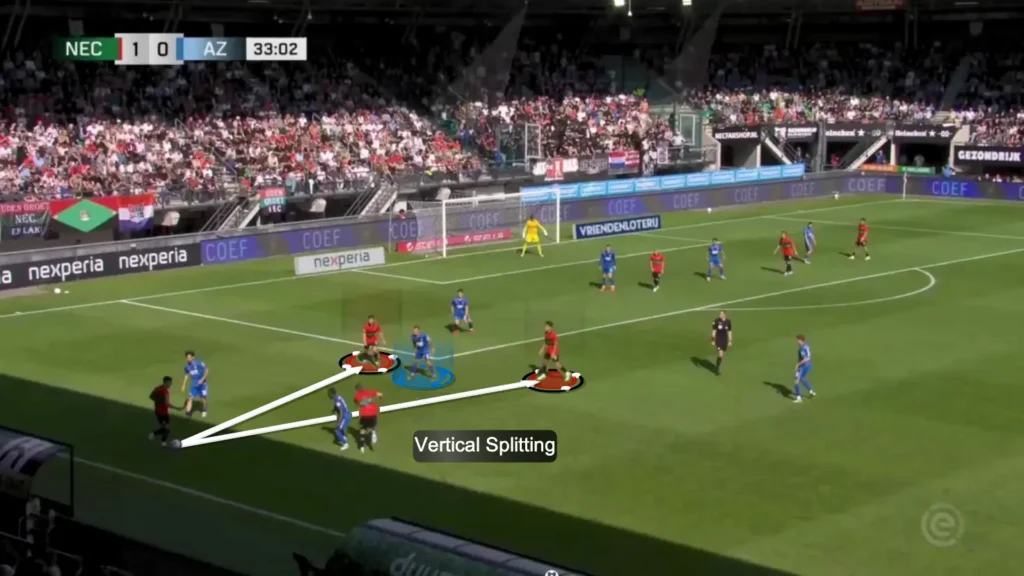
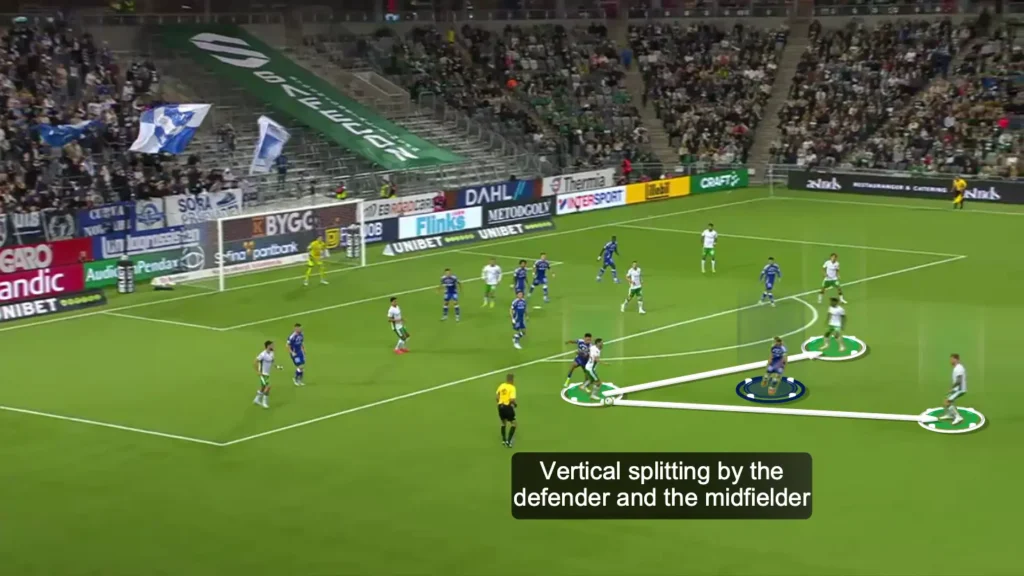
Vertical splitting can also happen between a defender and a midfielder when the midfielder in possession is facing backward or sideways. In that case, the center-back drops slightly deeper while the nearest midfielder pushes higher to split the opposition presser and open a clearer forward lane.
Facilitating Third-Man Combinations
The splitting principle naturally creates situations for third-man combinations. When the ball-holder has options on both sides of the presser, it becomes easier to connect through an extra player. If the first passing lane is blocked, the ball can travel to the other side before finding the original target again — now facing forward and in space.
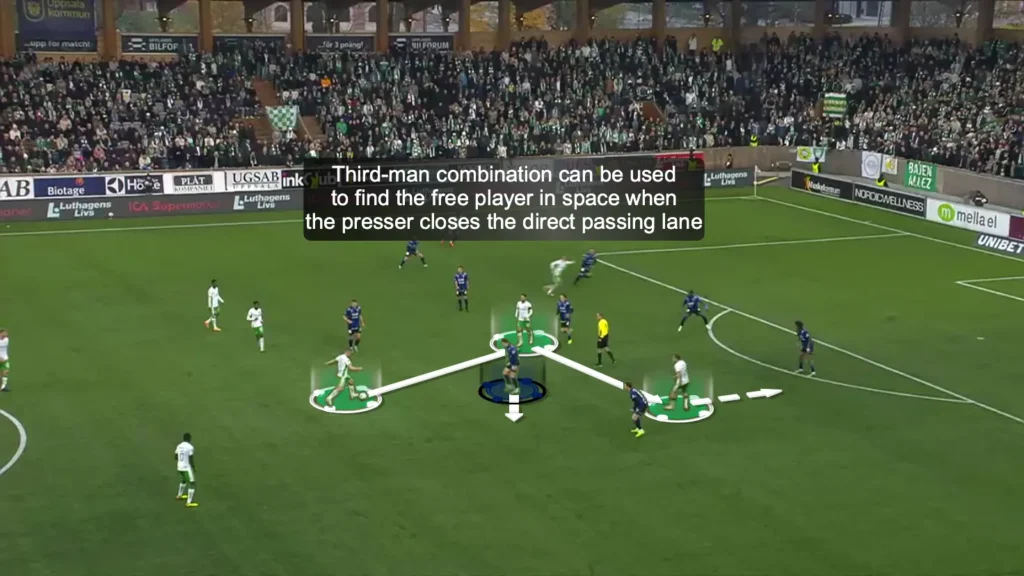
This constant creation of two options around the ball promotes fluid circulation and allows the team to progress through compact defensive structures more effectively.
Constantly Repeating the Principle
The effectiveness of splitting lies in its continuity. It is not a one-time structure, but a constant process that evolves with each pass.
After the ball is played, the new receiver must immediately have two teammates splitting the new presser. Once that pass is made, the same principle applies again — the next receiver must have two supporting players who create options on both sides of the pressure.
This repetition ensures that the team always maintains at least one free player and prevents the opponent from locking the ball in one area. Whether in low build-up or high build-up, the concept remains the same. Maintain double options, stretch the opponent’s coverage, and use positioning to dictate the tempo of play.
The Relationship Between Spacing and Timing
Additionally, for splitting to be effective, spacing and timing are crucial. If players stand too close together, they don’t force the defender to commit. If they’re too far apart, the passing distance becomes risky. The ideal spacing stretches the opponent just enough to create a decision-making problem while maintaining compact support around the ball.
Similarly, the timing of movement matters. The most effective splits occur just before the ball is played — when the defender is already shifting focus toward the ball-carrier and can’t adjust quickly enough to cover both sides.
Conclusion
The principle of splitting players may appear simple, but it forms the base of modern positional play. By placing teammates on both sides of a pressing opponent — horizontally and vertically — teams unbalance defenders, create free players, and progress through pressure with precision.
It’s not about playing faster — it’s about thinking better. The best teams in the world don’t just evade pressure; they use it to create superiority. Splitting players turns pressing into opportunity — and control into progression.
All images and visuals in this article are made with Once Sport — a powerful and easy-to-use tactical analysis platform. It helps you annotate clips, visualize movements, and create professional analysis videos. Readers of The Football Analyst get 10% off plus one month free with the code TFA10 at checkout.
If you enjoyed this article, explore more tactical insights and analysis on The Football Analyst. We break down the game’s most important principles to help coaches, analysts, and players think deeper about football. Follow us on Instagram for new updates each week.